“Getting used to God’s love is a delightful experience.“
WHAT IS MOST IMPORTANT? I cannot think of anything more important than love. Without love there is really no reason to live. None at all. Love is an irresistible force that draws us into oneness with what we love. What do you love most? Your spouse? Your children? Your career or job? Perhaps your new car? You become that which you love, and that which you love becomes you. It’s simply the nature and power of love. Love cannot be resisted. Try to resist love and you will fail every time.
“WHERE LOVE REIGNS SUPREME”
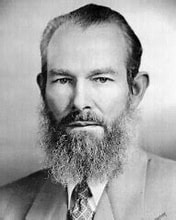
I received a blog post from Great Cosmic Story this week — as perhaps you may have as well. In this post my dear friend, David Barnes, shares a consideration on the topic of love given by Lloyd A. Meeker (Uranda) back in 1952 entitled “Where Love Reigns Supreme.” His words touched me deeply, in that “secret place” where love for our Lord and King reigns supreme in the heart.
I wish to share an excerpt from Uranda’s consideration in this post, mostly because it is the most important thing I could ever write about and share. I’ll start toward the beginning.
I always feel at a loss for words when I approach the subject of God’s love, the love of the Lord of Love. Our KING so loved the world, the earth and the people in it, His whole creation, that He came into the world to restore that pattern of relatedness, that whosoever believeth in Him, the Lord of Love, might not perish but have everlasting life. What does it mean to believe in the Lord of Love? What is there in your consciousness tonight which will allow you to have a deeper awareness of what it means to believe in the Lord of Love?
What if every question, if every problem, all the things which might be deemed a necessity in any way, shape or form, could be dismissed from consciousness so that the whole attention, the whole of the heart or feeling nature, the whole of the mind and the whole of the body, might be brought to point in this one thing?
When there is love on earth, for instance, between a man and a woman, and it is real and it has a spiritual quality, it has a depth, the mutuality of that love establishes a timelessness. When there is a centering in relationship to that love, other things, though they be essential, are seen as secondary to love, no matter how important they might be, no matter how necessary it may be to do the essential work or consider other matters. It is not that they are set aside as meaningless, but the quality of that which is known and felt, the timelessness, and the recognition that that love is primary, gives meaning to everything else. Without that love what meaning would there be? Without love somewhere, somehow—not necessarily limited to marital love—but without love somehow, no human being can live a normal life. Without love there is only emptiness, coldness, meaninglessness. Whatever else there may be, only love can give it meaning. Whatever the need may be, only love can provide the starting point for filling that need. No matter what problem, without love there is no way of really solving the problem, no matter how much the human being may try. The basic pattern of love open to each and every one, without regard to anything else, is the most precious of all, the most priceless of all aspects of love: the love of God, the love of the Lord of Love.
When that love begins to work in and through the human being, and it is held sacred, the human consciousness and heart remain true to it, changes begin to take place. All changes are fundamentally adjustments either to the pattern of life or to the pattern of decay. Sometimes the human being resists the necessity of adjustment, but without adjustment the true expression of love is impossible, because the means of manifestation must become fitting to the expression of love. The endlessness of love is that which makes eternity desirable. Without love one could rightly abhor the thought of eternity. But love is of sufficient importance so that from God’s standpoint the centering of all things, including God Himself, is established in love. Our KING, Supreme in heaven and earth, is the Lord of Love, the Apex of All. Love, then, is of sufficient importance so that from the standpoint of God’s design, of expression in His own Being, disregarding the human being for the moment, in the Body of God made up of many God Beings the One who provides the apex is the Lord of Love. Not the Lord of Truth, not the Lord of Life, not the Lord of something else in the various aspects of God’s Being, but the Lord of Love. He is the Center, the Supreme One, the Apex.
From the standpoint of God, then, in relationship to God Himself, Love is Supreme. To that end we have the second shortest verse in the Bible. The shortest one was caused because someone failed to recognize the truth of the second shortest. The shortest verse in the Bible has two words; the second, three: the simple statement, “God is love.” The shortest verse in the Bible: “Jesus wept.” Why did He weep? Not for the cause that human beings suppose. Not because Lazarus was in the tomb, not because all the others were weeping. He told them plainly, even before He wept, “Lazarus is not dead, but sleepeth.” But when Mary of Bethany forgot to remember that God is love and that the power of God is supreme, when she betrayed the trust He had placed in her to hold the pattern, when Mary doubted God’s love, when Mary, who to the Master symbolized the centering of all the fulfilments for which He hoped on earth, yielded to the pattern of appearances and broke and became subject to the things to which the world is subject, then He wept; for in that moment He knew that what could have been would not be. He wept because there was not one, not even Mary of Bethany, who remembered “God is love,” who remembered the importance of staying centered regardless of appearances—not one, of those who should have provided the pattern in that hour. I feel the question rise in your mind with respect to the Disciple John. The pattern of which I am speaking had no direct relationship to him. I am not suggesting that John failed to maintain the pattern. I am talking about something else.
“Jesus wept.” Do you think the Master’s life was without love? No. Mary of Bethany was His sweetheart. Mary of Bethany provided the centering, from the standpoint of the negative aspect of Being, for that outworking for which He was on earth, for which He labored. That provision of God’s love we can say should have held—but Jesus wept. Why? Because the one whom He had trusted to hold the centering of the pattern in what we would speak of as the negative response of the world, to provide the key, forgot her responsibility. She forgot God’s love, and “Jesus wept.” Mary yielded to the wrong precedent. Since the fall there was no other precedent but that of failure; but there was a precedent going back beyond the fall of man, and God’s love had to have meaning on earth. There was a keynote of response in the outworking of things, a point where love reigned supreme, where nothing else mattered, and when something else was allowed to matter, Jesus wept.
So from the standpoint of God, from the standpoint of our LORD on earth, love was first. He said the first commandment had to do with love, God’s love: to love the Lord thy God with all that you are. When there is this yielding to God’s love, letting go in it, what happens? In the world there are crystallizations of every sort, distorted patterns wherever one may turn, nothing exactly the way God intended it to be. In the whole realm of humanity there is that which is moving toward that pattern of fulfilment, the Divine manifestation of the Divine Design, in the flesh of human beings, in their minds and hearts, but so often something other than God’s love matters first. “God is love.” The centering of God is love; the expression of God is love; the nature of God is love. If, then, the reality of love is allowed to begin to work through the human heart there is the beginning of the relatedness with God. But the working of that love must do something. It must melt the crystallizations. It must bring about a yielding which allows adjustment to the Divine pattern, so that the delicate factors of the Divine Design may begin to have meaning.
One of the strangest things to me—and, I might mention, to all the angels of heaven—is this: That human beings so often seem to imagine that the essential adjustments are difficult, something to be resisted, something to be avoided as much as possible, that there is somehow suffering in those adjustments. Such an attitude reveals a tremendous ignorance with respect to love and truth and life. One of the greatest joys which any man or woman may know is the joy of going through the patterns of attunement or adjustment necessary to the ever-increasing reality of love, God’s love, in life. Instead of resisting the necessities of change the human being should accept them willingly, gladly.
Why is eternity a reality? Fundamentally because of love. When one begins to know love as it centers in our KING, the Lord of Love, one begins to realize that even eternity can never exhaust the newness, the wonder, the joy of love. Love, true love, is something that never grows old. It is not subject to time. It is not subject to space or distance. It simply is, and it is eternally new. If there is anything which is not showing forth the quality of eternal newness it is because of a lack of love, a lack of centering in the God of Love, the Lord of Love.
How can the body be healed if there be no change in the body according to the Divine Design? It can’t. Only as changes come by reason of the control according to the Divine Design can healing come to the body. Only so can healing come to the mind or heart. These changes are not painful unless the human being makes them so. And if they are painful they are not the true changes; they are partial changes wherein factors other than God’s are allowed to play a part, where human factors are imposed. Getting used to God’s love is a delightful experience. Remaining true to God’s love gives a sense of wholeness and wholesomeness, a consciousness of something holy and sacred. There is such a sweet spirit which pervades, and all fear is cast out, and there is no cause for suffering in any real sense. There is relaxation. There is letting go. There is yielding. There is a response which permits God’s power to make changes. How deep does God’s love go? To the intellectual level, so that one may say, “I love God”? If so, the moment the attention is centered on the necessities of our daily lives God’s love is forgotten. But if it goes deep, deep into the heart, the feeling nature, and penetrates the body, it is there no matter what may demand attention, no matter what one may be under the necessity of doing. It is there all the time.
There is no adequate way to convey in words that which love is. It can be called a fire, and that would be true, but some would be afraid of it. It can be called a consuming fire; not because it destroys, but because it enfolds and contains, because it takes unto itself that which yields—to change, not to destroy it; not to bring it to an end, but to give it meaning. There are so many delicate factors in love, so very delicate, and only as there is an appreciation of delicate design, in truth, can the full beauties of love be known. . . .
If you wish to read the rest of Uranda’s consideration, simply click on this link. I enjoy hearing from my followers and readers. Feel free to drop me an email, or post your comment in the Comment feature. Until my next post . . .


 Healing Tones
Leave a comment