
The Seven Sisters of the Pleiades
“Myth is how pattern is remembered.”
IN THE BOOK OF JOB of the Old Testament of the Bible, the Lord is said to have come to Job in a whirlwind and demanded of him answers to fundamental questions relating to the creation of the worlds and of specific governing factors relating to cosmic forces. One of these interesting questions related to two constellations: Orion and Pleiades: “Canst thou bind the sweet influences of Pleiades, or loose the bands of Orion?” (Job 38:31) This has to do with the dynamic and co-creative masculine and feminine energies.
There are a number of questions that follow this one, and a few others preceding it. I will spare you the mental frustration attempting to make sense of them. You can read them for yourself and be filled with wonderment: “What do they mean?!”
In chapter forty, Job finally blurts out a response: “Behold, I am vile; what shall I answer thee? I will lay my hand upon my mouth. Once have I spoken; but I will not answer: yea, twice, but I will proceed no further.” His answer was not sufficient to the Lord, who replied: “Gird up thy loins now like a man: I will demand of thee, and declare thou unto me.” The Lord wasn’t going to give Job answers to His demands, nor let him off the hook. He had demanded answers from Job at the top of chapter 38: “Answer thou me. Where wast thou when I laid the foundations of the earth? Declare, if thou hast understanding.”(38:3-4)
I love this book. For me it’s profoundly personal, for I was there. I am Job. You are Job. We comprise the Body of Job and have returned to Earth to give the Lord the answers He demands of us. We were all there with Him when WE laid the foundation of the earth and participated in manifesting the creation of this world and of Man, male and female, whom we created in our own divine image and likeness and breathed the breath of life into molded clay to create a “living soul.” Note the clear implication here relative to the nature of the outer form of Man as to it’s function and purpose as a “soul” — living because of the breath of life, that in which I AM and you are incarnate as divine Creator Beings. I write eloquently and poetically of all this in the fourth edition of my legacy work SACRED ANATOMY ~ Temple of the Living God. Go to Amazon Books to order this powerfully inspiring and sacred book.
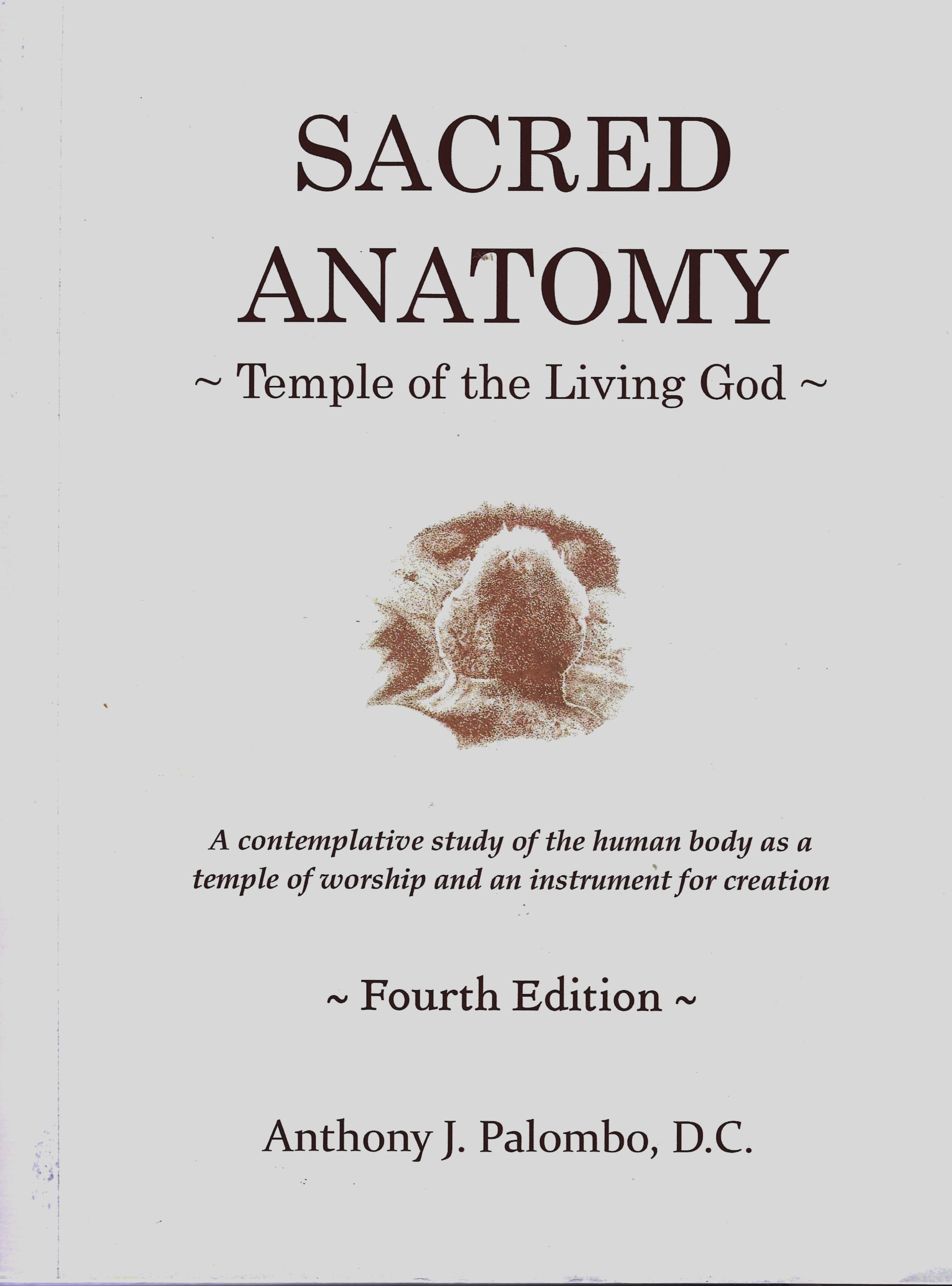
I think it is a helpful and luminous guide for all who have awakened to their angelic presence on Earth and asking “Why? Why am I here? What am I here to do? What is my purpose for incarnating in this limiting humus form — and on this amazing planet inhabited by so many wonderful, and sometimes peculiar, people who go to war and slaughter one another to settle their differences and defend their rights, beliefs and territories. I truly believe you will find answers to these questions and more in my book. I did writing it three decades ago, and updating it recently to share more current realizations and wisdom. I continue being inspired reading it.
Now to the story, which continues along the theme of story and myth as messengers of wisdom and truths. Reflecting back on my previous post, rogue scholar, author and friend Hugh Malafry weaves a captivating story in his trilogy BLUE SHAMAN. Volume II, “Caverns of Ornolac,” is such a messenger of principles for living and self-discovery. I’ll share bits of the story in this post.
From BLUE SHAMAN ~ Caverns of Ornolac
Flegetanis and Caron had just ridden stormy waters and sought refuge in a cavern the old adept had taken shelter in once before, a time when the continent of Atlantis was swallowed up in the days of the Great Deluge. The stormy waters brought back memories of those cataclysmic days to the old man.
His humor on the waters seemed to have given way to a kind of reverie and invitation to Caron. “You’ve come here before,” Caron said, rising to it.
“To remind myself,” he replied. Flegetanis walked toward the cavern mouth where he could feel the spray of rain beating through the fig trees. “We paused here in our journey. Fifty of us, if you can imagine, sheltered nine days from a rage of elements in this cavern. The sea was rising and we thought the sun would never rise again.”
“Where did you sail?” “We were three ships bound for Egypt. We lost one vessel but not the lives, and landed near what is now Sais in the Nile delta.”
“You missed landfall in Alexandria?” Caron had a small fire going and Flegetanis warmed his hands before it. “It was in the time when first the Lord Osiris journeyed to the land of Jeserit.”
Caron looked up at Flegetanis, and for a moment saw him an old wizard through the smoke and flame: He was distracted, turned inward and full of thought, and must have misunderstood. But Flegetanis was firm in his purpose. “We sailed on the flood from Atlantis through the storm and diving rain to where our helmsman said the sun would rise again.”
“It is a myth you recall?” “You think I’m dotty?” Flegetanis was angry. Caron had rarely seen him irritable. “I didn’t mean that.”
“We sheltered in this in this cave in a tempest of elements, in the time of the Flood, when the rider of the storm returned,” he said. “In his passage he cracked the lovely earth in her bones, loosed the foundations of the deep, and the mantle of waters above fell in the great deluge. We were swallowed up in darkness and sailed in search of the wellspring of the day.”
Caron was humbled by his intensity, and feared he had deeply offended the old man. But Flegetanis took up the small fish, gutted and cleaned out the bloodline, split its back and set it in the pan. “I read once words of an eastern sage, ” Flegetanis said. “he advised ruling a kingdom as one would cook a little fish.”
“How is that?”
Flegetanis sprinkler a little wine from the skin he carried in the pan. “Hardly at all,” he said.
Caron laughed and returned to tending the fire. “It is a good story, Atlantis,” he said. “Plato attributes it to an Egyptian priest.”
“A good story,” Flegetanis agreed.
“And stories like this, I think, are your way of remembering things?”
“If they remind us of the kinds of things that happen stories are useful,” Flegetanis said.
“Better, I think, history. If we think on what we have done, we may restrain ourselves from doing so again,” Caron replied.
“And what is history but myth let loose in time,” Flegetanis said.
Caron came close and warmed himself before the fire. “I think we are all driven by old sorrows,” he said.
“Older than sorrow is the way of the First Time,” Flegetanis replied. “Its seed is yet in us, and we may always choose to live.”
“Choose the way of the shining ones?”
“We are travelers in time, Caron: You, I, others, in every generation enter into time to affirm the essences of the First Time. We make no display in the ways of men, nor seek rewards, for men too readily reject what reminds them of their hurt. Our service is selfless and of necessity secret.”
“What do you do to keep the way open?” Caron asked.
“Man has free will but thinks to act without consequences. We offer choice until there is time no more: At Jeezeh I offered those who came against us a chance to choose life; they chose death.”
“At Jeezeh I was not as patient as you,” Caron said.
“You were too involved; you have yet to learn to stay in your place and let evil destroy itself.”
Flegetanis had not spoken of what happened at Jeezeh, but Caron knew. A rent in the veil had opened, and for a moment he was a sun kindled upon the earth. He knew it was Flegetanis who loosed this apocalypse of light; not the sometimes eccentric and wizened sage had done this; but the fire, the light and the cloud of glory that dwelled within, manifest when the desert fathers uncloaked revealing the shining one.
“Then the night journey is no myth” Caron said.
“Myth is how pattern is remembered.”
“A journey from darkness to light, through chaos to rebirth in the rising sun,” Caron said.
“No one is excused the journey; in life we are justified by our choices, and by reason of it go into darkness or awaken in the light. . . .”
“. . . . It was not this body of course that first time here, but me nonetheless,” Flegetanis said. “There are still times and seasons even in those who abide; and like you I have had many bodies before this one. Even when they endure an age there comes a time, be it a thousand years, when to complete a cycle of incarnation the angel comes forth, the flesh ascends, and another cycle of creation is initiated. Even so, I was here when we journeyed with the Lord Osiris to the end of the night.”
“I think it must be so.” Caron said.
“There are those who dwell in the land of eternal snows who understand this, Caron. Did not your shaman [Morgan Kara] tell you that when you awaken you will remember all of your incarnations; who and what and when you have been and why?” “He helped me in a time of need.”
“He has need of you. He sees in you the means to the end he desires; he intends by possessing you as others before you, to magnify himself in the earth.”
“All of this; it is about the Aton isn’t it,” Caron said. . . . “Am I in danger from this one?” Caron asked.
“Flegetanis waved it off. “His influence is much diminished, and you are conscious of his wiles. No, it is more Maia that concerns me. I have known this one an age, and she is caught up in her own illusions. . . .”
__________________
The story takes on more complex and intriguing dimensions as Caron continues his journey aware of the influence that Siduri, Flegetanis’s beautiful daughter, has on his heart. Resolved not to let her beauty influence him or avert his mission and purpose, he and Flegetanis continue their dialogue on the “sweet influences” of the feminine in a man’s heart, which are his to master and bind in order to maintain clarity of thought essential to a man’s integrity and balanced function. Caron declares he is beyond the influence of a woman.
___________________
“I am not so easily subject to such influences.” Flegetanis laughed pleasantly. “No? Are you saying no woman can sway your heart, Caron? Has such a man been born?” Caron was cautious. “Siduri, perhaps, but I am aware of this.”
“Of course,” Flegetanis agreed, “so then you admit Siduri has influence in you, but do you understand how she does it?”
“Her beauty — she has a thousand and one ways to enchant.”
“And most of them you know nothing of. Already she is very skilled in the arts of shaping men, and from what I’ve seen has on occasion the power to stop them thinking altogether.”
“And should she not have influence in me?”
“Of course she should, for without these sweet influences there would be no life in form. What that influence engenders in your heart is another matter. Maia tried and you resisted her. Denial is one thing, but can you accept and master these influences?” “And if I cannot?”
“Then you live in a mirage world. It is possible to beguile the heart with influences so compelling that the mind surrenders, and you believe everything you experience is real when it is not. Kingdoms go to war and men die for their illusions.”
_______________________________________
The influences of the Pleiades work their influence, both sweet and bitter, through the heart. The bands of Orion relates to the mind bound, set free for true thinking when these influences of the feminine essences are held in check by the incarnate angel who exercises dominion over both heart and mind by means of the masculine energies. These two energies need to be used wisely and in harmony under the dominion of the Lord of one’s house of Being — the One I Am and we each are part of. This message is skillfully inserted in the story.
Now you surely must want to know the rest of the story, and what has gone before. Well, simply go to Amazon Books and order your copies. I hope you’ve enjoyed the story so far . . . and perhaps been enlightened and even inspired . . . inspired to unveil you divine identity and experience your own apocalypse of light. I welcome your comments. Until my next post,
Be love. Be loved.
Anthony ~ tpal70@gmail.com
 Healing Tones
Leave a comment