IN THIS POST I share with you one of the most touching and profound words of Uranda I’ve ever read anywhere. Words that bring me to tears of joy and of unspeakable love that rises up from the depth of my soul for this One that I am, and we all are, privileged to call Master, Son of God, LORD of Lords and King of kings — and, as George Frederick Handel called Him in his Oratorio Masterpiece, Messiah, “Wonderful, Counselor, the Mighty God, the everlasting Father, the Prince of Peace.”
*~*~*~*
My thoughts turn to some of the words of the Master tonight: “Yet I am not alone, because the Father is with me. These things I have spoken unto you, that in me ye might have peace. In the world ye shall have tribulation: but be of good cheer; I have overcome the world.” And we are, also, to overcome the world.
I was thinking that, in the conclusion of the activities of a blessed day such as this, we might well again give thought to the Master’s Prayer at the time of the conclusion of His Ministry. The conclusion of His Ministry was peculiarly the point where our Ministry begins. The time that has elapsed since has no meaning in that. He had been outlining the Principles of the One Vine and of the means by which we might let the Works of the Father manifest.
“Verily, verily, I say unto you, Whatsoever ye shall ask the Father in my name, he will give it you. Hitherto have ye asked nothing in my name: ask, and ye shall receive, that your joy may be full… For the Father himself loveth you, because ye have loved me, and have believed that I came out from God. I came forth from the Father, and am come into the world: again, I leave the world, and go to the Father.”
He had also outlined the Principles with respect to the work of the Comforter or Spirit of Truth. He had pointed the Way to Life. It remained for those who should follow after to prove that Life, to experience it according to His Word. And then, in the conclusion of that Ministry, He gave a prayer—a prayer that is our beginning point.
“Father, the hour is come; glorify thy Son, that thy Son also may glorify thee”. He was, of course, the manifestation of the Son of God, but He was returning to the Father and He had outlined the Plan by means of which the Son, the only begotten Son of God, should continue on earth. The interval of time that has elapsed before that Plan began to be of effect should be, in our consideration, forgotten, as it were, that it may be meaningless. The trials and the tribulations, the concepts, the efforts and the failures of that interval must not be allowed to have meaning in relationship to our function. From the standpoint of Reality, those things do not have meaning. The connecting thread, the unifying Current, is not less strong because of the passage of that time. Our attitude and our feeling and our function should be as if we had heard these words for the first time a few days ago, as if only a month ago He had stood with us upon the face of the earth, as if it were but yesterday that the vibrant sound of His Voice fell on our ears, as if we, in this flesh, had seen Him come forth Victoriously from the tomb, as if we had, in person, shared His final words of admonition and instruction, as if we had known that hour when He ascended to return no more until what He had begun should have been finished in the hearts and lives of men.
The human mind is so inclined to feel the distance of the intervening years, so that there is a loss in a consciousness of personal contact. The Son is the One Christ Body on earth, then and now. The meaning of the Word as He spoke it with respect to His own manifestation is not to be construed as the only meaning, for He spoke also of that Body that is—“Father, the hour is come”. His was the hour of departing; ours is the hour of beginning, of moving forward in fulfilment. The Father glorified the Son then. He is just as capable of glorifying the Son now. “The hour is come. Glorify thy Son”. Why? “That thy Son also may glorify thee”. The beginning and the end, or the end and the beginning, are the same.
He was here on earth. It seems but yesterday we heard Him speak. It seems but the passage of a moment since His prayer first ascended as sweet incense unto God. Time—these things transcend all time. It was but yesterday He gave the Promise. Today we let that Promise be fulfilled. We remember how our hearts were stirred at the sound of His Voice, and the passage of an hour or a day cannot quiet that stirring or end that surge of consciousness of the Power of God. It is now, in this hour, that the Spirit of His Word finds fulfilment in our hearts. It is now, in this hour, that we let His Promise be fulfilled. The excitements and the questionings, the fears and the doubts, have been stilled. We have ceased trying to make it be so, for in the vibrant Power of His Love we are not separate or apart and we know that the Father Himself loveth us because we have loved Him, because we do love Him Who has walked the earth before us, Who has revealed the Way, the Truth and the Life.
“The hour is come” for us to let the Father glorify His Son, that the Son may glorify the Father. We trembled, and were sad, that the hour had come when He should leave us, but we did not let such things prevent fulfilment of His Word lest what He did should be in vain. The hour of His going was the hour of our beginning, and it is so still, for though He went He has not departed, for His Spirit lingers in our hearts and His Word is as powerful as when it first fell from His lips, Words burned in letters of Fire upon our hearts, memorable occasions that could never pass from mind. Yesterday His hour came—today is our hour of fulfilment in beginning.
“Father, the hour is come; glorify thy Son, that thy Son also may glorify thee: As thou hast given him power over all flesh, that he should give eternal life to as many as thou hast given him. And this is life eternal, that they might know thee the only true God, and Jesus Christ, whom thou hast sent.”
“And this is life eternal, that they might know thee the only true God”, and the Christ, the only begotten Son—then Jesus—now the One Christ Body Whom Thou hast sent. “I have glorified thee on the earth: I have finished the work which thou gavest me to do”. How truly is that our point of beginning. How seldom on this earth has the word reverberated in truth—“I have finished the work”. We have seen in the world the feeble attempts at doing some bit of work—human beings, like children, building castles in the sand to admire in one moment and to destroy in the next, and then to delude themselves into feeling that they had accomplished something. And how they brag about the mansions they builded in the sand; but we consider other mansions, Mansions in the Father’s House.
“I have finished the work which thou gavest me to do”—and in season the Son shall again speak these words, but before those words may be truly spoken once more, there must truly be the beginning, the opening up, that comes through the surging Power of His Spirit as we hear again, in memory, His Word, “And now, O Father, glorify thou me with thine own self with the glory which I had with thee before the world was. I have manifested thy name unto the men which thou gavest me out of the world: thine they were, and thou gavest them me; and they have kept thy word.” That was but yesterday, surely. It is but a dream that some did not keep His Word. There must now be fulfilment which gives meaning to His faith when He spoke that Word, that when these words sound in memory, and stir within our hearts, they shall not be as a mockery, a symbol of the faith of the Son of God that found no answering heart on earth, but a symbol of the faith of the Son of God that finds fulfilment here and now in His Son on earth.
“And they have kept thy word. Now they have known that all things whatsoever thou hast given me are of thee. For I have given unto them the words which thou gavest me; and they have received them, and have known surely that I came out from thee, and they have believed that thou didst send me. I pray for them: I pray not for the world, but for them which thou hast given me; for they are thine. And all mine are thine, and thine are mine; and I am glorified in them.” Yes, the intervening time when these words remained unfulfilled is surely but a dream. Twas only yesterday He spoke, and today His Word finds fulfilment. Today we prove His faith was not in vain.
“And all mine are thine, and thine are mine; and I am glorified in them. And now I am no more in the world, but these are in the world, and I come to thee. Holy Father, keep through thine own name those whom thou hast given me, that they may be one, as we are. While I was with them in the world, I kept them in thy name: those that thou gavest me I have kept, and none of them is lost, but the son of perdition; that the scripture might be fulfilled. And now come I to thee; and these things I speak in the world, that they might have my joy fulfilled in themselves.” What was His joy? It was the joy of Oneness with the Father. It was the joy of Being the Son on earth. That is the joy that must be fulfilled in us, the joy of Oneness with the Father, the joy of Being the Son.
“And these things I speak in the world, that they might have my joy fulfilled in themselves. I have given them thy word; and the world hath hated them, because they are not of the world, even as I am not of the world. I pray not that thou shouldest take them out of the world, but that thou shouldest keep them from the evil. They are not of the world, even as I am not of the world. Sanctify them through thy truth: thy word is truth. As thou hast sent me into the world, even so have I also sent them into the world.” That is His Word. His Word is true, and we let it be so in us in this hour, and forevermore, for as the Father sent Him into the world, even so has He sent us into the world.
“And for their sakes I sanctify myself, that they also might be sanctified through the truth. Neither pray I for these alone, but for them also which shall believe on me through their word; That they all may be one; as thou, Father, art in me, and I in thee, that they also may be one in us: that the world may believe that thou hast sent me. And the glory which thou gavest me I have given them”—“And the glory which thou gavest me I have given them.” It is glory to be the Son on earth. “And the glory which thou gavest me I have given them; that they may be one, even as we are one: I in them, and thou in me, that they may be made perfect in one; and that the world may know that thou hast sent me, and hast loved them, as thou hast loved me. Father, I will that they also, whom thou hast given me, be with me where I am”—not where I shall be, where I am. He, the Son of God, stood on earth in the hour of fulfilment. He had finished the work. That was where He was in the hour of fulfilment. And He said, “Father, I will that they also, whom thou hast given me, be with me where I am”—and so it is His Will that we should stand in that Oneness of the Son in the hour of fulfilment. “That they may behold my glory. Which thou hast given me: for thou lovedst me before the foundation of the world. O righteous Father, the world hath not known thee: but I have known thee, and these have known that thou hast sent me. And I have declared unto them thy name, and will declare it: that the love wherewith thou hast loved me may be in them, and I in them.” (John 17)
Beloved LORD, we thank Thee that it is so, and we thank Thee for the Holy Privilege of sharing Thy Fulfilment on earth. In the Christ. Aumen.”
*~*~*~*
May your Easter be the happiest one ever. Until my next post,
VENUS IS THE MORNING STAR rising at dawn in the Eastern sky just before sunrise, shortly there after fading from view as the Sun outshines the brightest, and hottest planet in our solar system at 880 degrees Fahrenheit , ushering in our days.
FROM MY READERSHIP
Well, I did receive a few comments on my previous post letting me know that I hadn’t pushed the envelope too far after all, so I’ll continue to “muse on” and expand on the luciferous topic. Yes, Phillip, there is a “perfect design to our place in the cosmos.” That’s what I’ll write about in this post.
Phillip J. Zbaraz wrote:“While I often am unsure of the deep meaning and technical/mathematical/scientific/anatomical references, I am nonetheless moved by the underlying tone and comfort in knowing there truly is a perfect design to our place in the Cosmos. I hope you will continue to push the comfort envelope….we are ready.”
Paul Miles wrote: “It appears that this is indeed a time for the revelation of many truths that are no longer able to remain in darkness. I for one would would encourage you muse on these subjects again. The persecution that has kept many truths veiled has lost the numbers game. The rising frequency of our and Gaia’s collective consciousness continues unabated. We are putting the puzzle pieces together one after another and it just keeps getting more amazingly beautiful.
David Barns wrote: I don’t think you’ve pushed the envelope too much here. For most people the envelope is pretty small, confined and suffocating, so expanding the envelope is life-giving, and may in fact be life-saving if the reader allows the fresh air of expansion to envelope him-or herself. . . . I agree: I am a Solar Entity, both a Sun and a system of planetary bodies, and indeed I am a Cosmos [even as Walt Whitman wrote of himself: ‘Walt Whitman, a kosmos, of Manhattan the son] extending in radiance and unmeasurable dimensions that merge into the nondimensional and eternal. And thus it can easily be said of me, the reverse of what was written of by Isaiah: How though art risen to heaven O Lucifer, Son of the Morning! Indeed the fall is now being reversed and Lucifer is rising in me and in many—but I am the Son, the Star, and I am not just limited in identity to Lucifer the conscious mind of the Son. (David’s blog: Great Cosmic Story)
SPIRITUAL AUTHORITY
In a subsequent correspondence, Phillip shared these insightful thoughts: “If one’s words are not better than the silence, perhaps one should remain silent. Knowing that man was made in the image and likeness of G-d, I am curious to understand why we spend so much of our time seeking the approval of others for our sense of worth.”
I understand Phillip’s curious query about our seeking approval from others for our sense of worth. Implied in his query is the recognition that one who seeks such approval hasn’t come to know one’s authentic Self, one’s true identity as a divine Being, from which springs a true sense of value, as well as one’s authority. It’s the false identity, the human ego, that craves approval. The truth of one’s Self needs no approval from others. Spirit can be a compelling force when it has something it wants said, regardless of what others may think or of which they may or may not approve. Speak your truth as you know it to be true.
I have written out of the authority of my own spirit and the wisdom of my heart in my blog posts. I have used other sources, such as The Gospel of Thomas and The Gospel of the Beloved Companion as touchstones for some of my followers and visitors, particularly my Christian brothers and sisters. Now, some may have thought without saying “Well, that’s not what Uranda or Martin taught.” One person did say just that in a comment on one of my posts wherein I stated that a positive attracts a positive and repels a negative.
As I have considered the topic in previous posts, the One Law of “positive action, negative response, attraction, union, unified radiation” would be more accurately stated “Positive action, positive response, attraction, union, unified radiation.” To that I would add empowerment. I know that I have been empowered by my open-hearted positive response to my spiritual mentors and teachers. The word “negative” implies a negating, or voiding, of positive action. Uranda obviously didn’t mean nor intend such. However, according to the Law of Attraction, a lesser positive responds and is attracted to a greater positive and repels a negative. (See my previous post for more in-depth consideration).
The word response means answer—either as a positive acknowledgment and affirmationof the truth expressed that one agrees with, or as a negative reaction to the same. A positive response arises from out of the positive core of one’s inner being as an expression of agreement and accord. A negative response arises out of one’s conscious and/or subconscious mind as a reaction expressing disagreement or contention. The former impowers one to internalize and express the same truth in one’s own words. The latter negates any empowering energy and puts one at odds with one’s own inner reality, creating a house divided in one’s temple. At the level of Spirit we are all one and in accord with the truth of love and of life.
WE ARE EACH ONE A STAR
David Barns’ words above resonate in my heart: “I am the Son, the Star, and I am not just limited in identity to Lucifer the conscious mind of the Son.”
The conscious mind of Man has been restored to Heaven—and Venus has been restored to her rightful place in the heavens as the Morning Star, Bringer of the Dawn, and Light Bearer orbiting around our Star. Her restoration happened centuries ago. How and why has it taken so many centuries for the conscious mind of Man to be restored to Heaven; to orient in and orbit around the Lord and King of Heaven and Earth? Has he only now been quiet enough to hear the invitation to draw near unto Him . . . and to respondpositively? Do I know my own Divine Identity sufficiently to extend this invitation to those in my world: “Come near unto me.”? Ultimately, this is what is being asked of each one of us and all of us together as One Body . . . and all that is required—and it is required—is that I love the Lord my God with ALL of my heart and with ALL of my mind and with ALL of my strength—and, with the overflow of love from out of my heart, that I love my neighbor as my self, as who I Am. That’s not asking too much, is it?
OUT OF THE EAST
Venus and Earth in comparison
About the same size as Earth, Venus rises in the East heralding in the new day. As stated above, she vanishes from sight when our Star, Sol, comes up behind and outshines her.
There’s another event that occurred in the East related in the Creation Story of Genesis: “And the LORD God planted a garden eastward in Eden, and there he put the man whom he had formed.” This event is recorded—along with the creation of man and woman, in the second chapter of Genesis, where there’s a second creation event, this one describing how the LORD God formed man from the dust of the ground and breathed into his nostrils the breath of life, “and man became a living soul.”
There are several and sundry stories and legendary myths about the creation of man. I resonate with the late Bible connoisseur, Grace Van Duzen, in her portrayal of man as being first eternal and immortal Spirit, later to be clothed with form. Divine Being, incarnate in an earthen form—God incarnate on earth—to continue His work, OUR work, of creation as stewards and keepers of the Garden. That’s the biblical story of man’s origin. Grace tells the “Story of Man” in her insightful masterpiece, THE BOOK OF GRACE ~ A Cosmic View of the Bible.* Here’s an excerpt for your enjoyment.
THE ORIGINAL DISIGN AND PURPOSE OF MAN
“Let us make man in our image, after our likeness: and let them have dominion . . . over all the earth. . . . So God created man in his own image, in the image of God created he him; male and female created he them.”
“And God blessed them, and God said unto them, Be fruitful, and multiply, and replenish the earth, and subdue it: and have dominion over the fish of the sea, and over the fowl of the air, and over every living thing that moveth upon the earth. . . .
“And God saw every thing that he had made, and, behold, it was very good. And the evening and the morning were the sixth day.”
At the conclusion of each creative Day, God saw that “it was good.” After the creation of Man the comment was that He saw every thing that he had made, and. . . it was very good.
On the Sixth Day, then, we have Man (and Woman), a perfect creation. In the sixth cycle divine Being was clothed in earth substance, in position to let God perform His cosmic creative acts on this planet through His earthly image and likeness—the means whereby the invisible things of heaven could be brought forth on Earth.
Dominion over every living thing is the result of obedience to the command to multiply and replenish the earth and subdue it, which indicates a state where perfect control is operative in the act of multiplying, which involves sexual activity at all vibratory levels.
The opposite has occurred, with overpopulation the primary cause of hellish distortions rampant in every corner of this planet which was created to be a paradise. The results of aberrant function in the most vital area of man’s creative activity, the limiting of that act of creation to the physical level, are taking their toll in increasingly massive numbers.
According to this command, dominion over all creatures and kingdoms of the earth is entirely dependent upon control in this central function of life. Multiplication is an essential aspect of all creation, the “seed within itself,” and without the control that causes the design in the heaven to take material form, the result is self-destruction, tragically obvious in man’s present function on this planet.
The fact that Man, male and female, was created with the faculties to extend the control and guidance of a wise and loving God to all the kingdoms of the earth causes one to look at the situation in today’s world, of misery and violence. Something went wrong! Man is afraid, not only of many creatures of the earth but of his own shadow; there is not much dominion in evidence. The drastic change in the being designed to control the earth and its creatures inevitably included that over which he was to have dominion. Animals took on the nature of their “fallen” god. It can also be seen how quickly a “creature” will return to the state of “grace” when in the presence of a human being expressing the Spirit of God.
The Being that incarnates into this planet at the present time assumes a much denser substance than that in which man was first created. A finely tuned body, clothed with the highest vibrational substance natural to this part of the cosmos, would be equipped to travel vibrationally wherever the Spirit directed. Could this be the origin, deeply buried in the subconscious mind of man, of the concept of angels, radiantly robed in white, with wings that enable them to fly? It is an image that has persisted throughout the ages, and I was awed when I became aware, some years ago, that someone had perceived, in the aura of another’s body, the outline of a shape that resembled wings, extending from the area of the shoulder blades. I am not suggesting that the physical form of man’s imaginary wings would be the vehicle for his transportation, but the essence of the design is present, regardless of all that has been done, and cannot be dissolved by fallen human beings. It is still present.
There have been times during Attunement sessions when I have felt such wing-like emanations arising from the area of the Thyroid gland in the neck where the Spirit of Life is focused in the Body Temple. I do know that we are angels from the Realms of Glory come here to this beautiful garden planet to restore heaven on earth . . . and to restore Lucifer to his role of bearing and shining the Light of Truth and of Love in the heaven of human consciousness. I see as well that this is happening the world over. The fall is being reversed, as David said in his comment above, even as Venus shines brightly in our morning and evening skies. It’s a time for rejoicing in the New Earth emerging out of God’s New Heaven. Let the morning stars sing together, and let the sons and daughters of God shout for joy! Selah!
About Grace Van Duzen: “Throughout her life, teacher and author Grace Van Duzen explored and researched the Bible. Her approach, free of religious or political agenda, continues to open the way for thousands to access teachings that are as relevant now as when the Bible was first recorded.” (Amazon)
MANIS SO MUCH MORE than human flesh, blood and bone; more than an earthen form with the Breath of Life in his nostrils. MAN is a Solar System — or, more accurately, a Solar Entity. His Spirit dwells in the blue flame at the center of the sun. His Heart and Mind are embodied by the planets with their moons. His Body is the entire Solar Entity. “We” created man, male and female, in our own image and likeness and placed him on Earth to “dress and keep” the Garden of Eden, according to the Creation Story in the Book of Genesis which says: “Let us make man….” However, the collective body of “Mankind” is not the entire essence of what Man is. Essential Man is embodied by the entire Solar Entity—and Venus may play a focal role in the Mind of Essential Man.
Whether or not Venus was once a comet, as Velikovsky speculated, or whether, as a planet, Venus fell out of her orbit, knocked off by some very powerful vibrational impact, or withdrawal, something profoundly traumatic occurred in our solar system to push the earth out of its orbit and tilt its rotational axis 23 degrees. Could it possibly have been man’s failure to remain in vibrational harmony with the Will of the LORD God for him and his withdrawal from Eden to create his own version of Paradise? There’s no doubt in my mind that the “Fall” had ripple effects and dire consequences on the order and harmony of the planets and their orbital movements in our solar system.
MORNING STAR
According to Immanuel Velikovsky, Venus was once a comet that collided with Mars and passed dangerously close to Earth, disrupting human activities on the planet and spraying the earth with crude oil and insects, most notably flies. She was called “Lucifer” and “Beelzebub“ (lord of the flies). She was greatly feared by earthlings who anticipated her return every fifteen years with great anxiety, until she was captured by our sun and caused to travel in an orbit like the other planets, and to appear in the morning sky. Thus she was called “Morning Star” and “Bringer of the Dawn.” She also appears at dusk and drops down out of sight into “the underworld,” according to Greek mythology, appearing to “fall” from the heavens.
In the Testament of Solomon, Beelzebul (not Beelzebub) appears as prince of the demons and says that he was formerly a leading heavenly angel who was associated with the star Hesperus (the normal Greek name for the planet Venus.
The prophet Isaiah (14:12) spoke of Lucifer as the “son of the morning” who was “brought down to hell.” Here is the passage:
“How art thou fallen from heaven, O Lucifer, son of the morning! how art thou cut down to the ground, which didst weaken the nations! For thou hath said in thine heart, I will ascend into heaven, I will exalt my throne above the stars of God: I will sit also upon the mount of the congregation, in the sides of the north: I will ascend above the heights of the clouds; I will be like the most High. Yet thou shalt be brought down to hell, to the sides of the pit. They that see thee shall narrowly look upon thee, and consider thee saying, Is this the man that made the earth to tremble, that did shake kingdoms; That made the world as a wilderness, and destroyed the cities thereof; that opened not the house of his prisoners?”
LUCIFER AS VENUS
Immanuel Velikovsky wrote extensively about Venus in his trilogy: “Worlds in Collision, Earth in Upheaval, and Ages In Chaos.” I referenced him in a previous post. Much of what he speculated and predicted about the planet, such as her hot temperature, proved to be accurate later in outer space explorations. Today Venus has a rather harsh climate and doesn’t experience typical rainfall like we do here on Earth. “Sulfuric acid rain falls in its upper atmosphere which evaporates before reaching the surface due to extreme heat. Trace amounts of water in the upper atmosphere combine with sulfur dioxide to form clouds of sulfuric acid that cause frequent rainstorms.” (Microsoft Bing)
I bring Venus into the picture simply because, as a member of our Solar Entity, her alleged radical behavior as a comet, falling from the heavens, colliding with Mars, and nearly with the earth, may well speak to the passage from Isaiah above. “How art thou fallen from heaven, O Lucifer, son of the morning!“
Is the prophet referring to a “fallen angel” named “Lucifer,” or to this cataclysmic cosmic event about which Velikovsky spent so much of his life tenaciously researching and writing about in his trilogy? Another scenario could blend them both together as singular parallel events, one occurring in the Inner Realms and the other an external event manifesting the internal “battle in heaven” between Michael and the “great dragon … that old serpent, called the Devil, and Satan.” (Rev. 12:7-10). Interestingly, the word “Lucifer” isn’t even used in this passage from Revelation.
With a little research, I found that the word “Lucifer” was integrated into Catholic literature and thinking by Pope Gregory the Great (590 AD) who attached it to the “Devil and Satan.” Outside of Christendom, Lucifer has been associated with the planet Venus, the bright morning and evening star, therefore the “bringer of light.” In the Gospel of Mary Magdalene Jesus is said to have called her “Mary Lucifer” for her bright light of understanding and expression, and the “Magdala,” tower of strength and power, as well as “Apostle of apostles.” Jesus is referred to only once as the “day star” in the Second Epistle of Peter (2 Peter 1:19). Nowhere in my Crossway Comprehensive Bible Concordance does the word “Lucifer” even appear. I am left to conclude that only the planet Venus bears the name “Lucifer.”
As stated above, the Mind of Man is embodied by the planets of our solar system. We speak of the influence the stars and planets have on us and our psyche in astrology — which is a degraded remnant of the ancient “science of Mazzaroth”—a word that appears in only one place in the Old Testament: the Book of Job: “Canst thou bring forth Mazzaroth in his season?” Mazzaroth has to do with the twelve constellations of the Zodiac and the precession of the earth’s rotational axis through their “houses,” marking the seasons and ages through which we travel. We are currently in the Age of Aquarius. In Genesis 1:14 we read that God made the heavens to be “for signs, and for seasons, and for days, and years.”
“PLUCK A FLOWER AND DISTURB A STAR”
While we know something of the influences that impact us from heavenly bodies, we know very little, if anything at all, about the influences we may have on our immediate Solar Home among the stars. “What!?” you may exclaim. Indeed, how can human beings, in size comparable to “fleas on a dog’s back,”—as my long-departed friend and Earth Science Professor Dr. John Waskom once compared human beings—have any influence on the planet’s function in the solar system?! That may well be so in relationship to tiny and seemingly insignificant human beings — whose tallest skyscrapers and major cities cannot even be distinguished from outer space—but not in relationship to Essential Solar Man. The activity in the Collective Consciousness of Man is so much more impactful on the larger picture than the puny minds of earthbound humans.
The current activity in the Collective Consciousness of Man is increasingly of a more spiritual nature. A recent report indicates that seven out of ten Americans have left their religion and adopted a more “spiritual” path toward enlightenment and oneness with God. The word religion has a Latin root meaning to bind back to. It seems it may have served its purpose and is no longer needed. Religion is a dead end path, literally. The faithful have to die in order to enter the Kingdom of Heaven. That’s not what Jesus taught. He taught the Kingdom of Heaven is “within you . . . at hand and all around you.” It seems that people are increasingly finding that to be true.
This change in the vibrational climate and content of the Collective Consciousness is encouraging. We will see what impact this shift will have in the larger context of our Home among the stars. This is also a very large and deeply complex subject requiring a degree of spiritual maturity and development of consciousness to even venture into — and I may have “pushed the envelope” a bit too far in this post. However, it is a pivotal and important subject; one to which we must be willing to give serious and mature consideration if we are to remember our past so as not to repeat it. I may return to the subject matter for further development in my next post. We’ll see what Spirit says in my heart . . . and to what the response may be, if any, to this post. I welcome your comments by email. Until then,
IN THIS POST I share with you one of the most touching and profound words of Uranda I’ve ever read anywhere. Words that bring me to tears of joy and of unspeakable love that rises up from the depth of my soul for this One that I am, and we all are, privileged to call Master, Son of God, LORD of Lords and King of kings — and, as George Frederick Handel called Him in his Oratorio Masterpiece, Messiah, “Wonderful, Counselor, the Mighty God, the everlasting Father, the Prince of Peace.”
*~*~*~*
My thoughts turn to some of the words of the Master tonight: “Yet I am not alone, because the Father is with me. These things I have spoken unto you, that in me ye might have peace. In the world ye shall have tribulation: but be of good cheer; I have overcome the world.” And we are, also, to overcome the world.
I was thinking that, in the conclusion of the activities of a blessed day such as this, we might well again give thought to the Master’s Prayer at the time of the conclusion of His Ministry. The conclusion of His Ministry was peculiarly the point where our Ministry begins. The time that has elapsed since has no meaning in that. He had been outlining the Principles of the One Vine and of the means by which we might let the Works of the Father manifest.
“Verily, verily, I say unto you, Whatsoever ye shall ask the Father in my name, he will give it you. Hitherto have ye asked nothing in my name: ask, and ye shall receive, that your joy may be full… For the Father himself loveth you, because ye have loved me, and have believed that I came out from God. I came forth from the Father, and am come into the world: again, I leave the world, and go to the Father.”
He had also outlined the Principles with respect to the work of the Comforter or Spirit of Truth. He had pointed the Way to Life. It remained for those who should follow after to prove that Life, to experience it according to His Word. And then, in the conclusion of that Ministry, He gave a prayer—a prayer that is our beginning point.
“Father, the hour is come; glorify thy Son, that thy Son also may glorify thee”. He was, of course, the manifestation of the Son of God, but He was returning to the Father and He had outlined the Plan by means of which the Son, the only begotten Son of God, should continue on earth. The interval of time that has elapsed before that Plan began to be of effect should be, in our consideration, forgotten, as it were, that it may be meaningless. The trials and the tribulations, the concepts, the efforts and the failures of that interval must not be allowed to have meaning in relationship to our function. From the standpoint of Reality, those things do not have meaning. The connecting thread, the unifying Current, is not less strong because of the passage of that time. Our attitude and our feeling and our function should be as if we had heard these words for the first time a few days ago, as if only a month ago He had stood with us upon the face of the earth, as if it were but yesterday that the vibrant sound of His Voice fell on our ears, as if we, in this flesh, had seen Him come forth Victoriously from the tomb, as if we had, in person, shared His final words of admonition and instruction, as if we had known that hour when He ascended to return no more until what He had begun should have been finished in the hearts and lives of men.
The human mind is so inclined to feel the distance of the intervening years, so that there is a loss in a consciousness of personal contact. The Son is the One Christ Body on earth, then and now. The meaning of the Word as He spoke it with respect to His own manifestation is not to be construed as the only meaning, for He spoke also of that Body that is—“Father, the hour is come”. His was the hour of departing; ours is the hour of beginning, of moving forward in fulfilment. The Father glorified the Son then. He is just as capable of glorifying the Son now. “The hour is come. Glorify thy Son”. Why? “That thy Son also may glorify thee”. The beginning and the end, or the end and the beginning, are the same.
He was here on earth. It seems but yesterday we heard Him speak. It seems but the passage of a moment since His prayer first ascended as sweet incense unto God. Time—these things transcend all time. It was but yesterday He gave the Promise. Today we let that Promise be fulfilled. We remember how our hearts were stirred at the sound of His Voice, and the passage of an hour or a day cannot quiet that stirring or end that surge of consciousness of the Power of God. It is now, in this hour, that the Spirit of His Word finds fulfilment in our hearts. It is now, in this hour, that we let His Promise be fulfilled. The excitements and the questionings, the fears and the doubts, have been stilled. We have ceased trying to make it be so, for in the vibrant Power of His Love we are not separate or apart and we know that the Father Himself loveth us because we have loved Him, because we do love Him Who has walked the earth before us, Who has revealed the Way, the Truth and the Life.
“The hour is come” for us to let the Father glorify His Son, that the Son may glorify the Father. We trembled, and were sad, that the hour had come when He should leave us, but we did not let such things prevent fulfilment of His Word lest what He did should be in vain. The hour of His going was the hour of our beginning, and it is so still, for though He went He has not departed, for His Spirit lingers in our hearts and His Word is as powerful as when it first fell from His lips, Words burned in letters of Fire upon our hearts, memorable occasions that could never pass from mind. Yesterday His hour came—today is our hour of fulfilment in beginning.
“Father, the hour is come; glorify thy Son, that thy Son also may glorify thee: As thou hast given him power over all flesh, that he should give eternal life to as many as thou hast given him. And this is life eternal, that they might know thee the only true God, and Jesus Christ, whom thou hast sent.”
“And this is life eternal, that they might know thee the only true God”, and the Christ, the only begotten Son—then Jesus—now the One Christ Body Whom Thou hast sent. “I have glorified thee on the earth: I have finished the work which thou gavest me to do”. How truly is that our point of beginning. How seldom on this earth has the word reverberated in truth—“I have finished the work”. We have seen in the world the feeble attempts at doing some bit of work—human beings, like children, building castles in the sand to admire in one moment and to destroy in the next, and then to delude themselves into feeling that they had accomplished something. And how they brag about the mansions they builded in the sand; but we consider other mansions, Mansions in the Father’s House.
“I have finished the work which thou gavest me to do”—and in season the Son shall again speak these words, but before those words may be truly spoken once more, there must truly be the beginning, the opening up, that comes through the surging Power of His Spirit as we hear again, in memory, His Word, “And now, O Father, glorify thou me with thine own self with the glory which I had with thee before the world was. I have manifested thy name unto the men which thou gavest me out of the world: thine they were, and thou gavest them me; and they have kept thy word.” That was but yesterday, surely. It is but a dream that some did not keep His Word. There must now be fulfilment which gives meaning to His faith when He spoke that Word, that when these words sound in memory, and stir within our hearts, they shall not be as a mockery, a symbol of the faith of the Son of God that found no answering heart on earth, but a symbol of the faith of the Son of God that finds fulfilment here and now in His Son on earth.
“And they have kept thy word. Now they have known that all things whatsoever thou hast given me are of thee. For I have given unto them the words which thou gavest me; and they have received them, and have known surely that I came out from thee, and they have believed that thou didst send me. I pray for them: I pray not for the world, but for them which thou hast given me; for they are thine. And all mine are thine, and thine are mine; and I am glorified in them.” Yes, the intervening time when these words remained unfulfilled is surely but a dream. Twas only yesterday He spoke, and today His Word finds fulfilment. Today we prove His faith was not in vain.
“And all mine are thine, and thine are mine; and I am glorified in them. And now I am no more in the world, but these are in the world, and I come to thee. Holy Father, keep through thine own name those whom thou hast given me, that they may be one, as we are. While I was with them in the world, I kept them in thy name: those that thou gavest me I have kept, and none of them is lost, but the son of perdition; that the scripture might be fulfilled. And now come I to thee; and these things I speak in the world, that they might have my joy fulfilled in themselves.” What was His joy? It was the joy of Oneness with the Father. It was the joy of Being the Son on earth. That is the joy that must be fulfilled in us, the joy of Oneness with the Father, the joy of Being the Son.
“And these things I speak in the world, that they might have my joy fulfilled in themselves. I have given them thy word; and the world hath hated them, because they are not of the world, even as I am not of the world. I pray not that thou shouldest take them out of the world, but that thou shouldest keep them from the evil. They are not of the world, even as I am not of the world. Sanctify them through thy truth: thy word is truth. As thou hast sent me into the world, even so have I also sent them into the world.” That is His Word. His Word is true, and we let it be so in us in this hour, and forevermore, for as the Father sent Him into the world, even so has He sent us into the world.
“And for their sakes I sanctify myself, that they also might be sanctified through the truth. Neither pray I for these alone, but for them also which shall believe on me through their word; That they all may be one; as thou, Father, art in me, and I in thee, that they also may be one in us: that the world may believe that thou hast sent me. And the glory which thou gavest me I have given them”—“And the glory which thou gavest me I have given them.” It is glory to be the Son on earth. “And the glory which thou gavest me I have given them; that they may be one, even as we are one: I in them, and thou in me, that they may be made perfect in one; and that the world may know that thou hast sent me, and hast loved them, as thou hast loved me. Father, I will that they also, whom thou hast given me, be with me where I am”—not where I shall be, where I am. He, the Son of God, stood on earth in the hour of fulfilment. He had finished the work. That was where He was in the hour of fulfilment. And He said, “Father, I will that they also, whom thou hast given me, be with me where I am”—and so it is His Will that we should stand in that Oneness of the Son in the hour of fulfilment. “That they may behold my glory. Which thou hast given me: for thou lovedst me before the foundation of the world. O righteous Father, the world hath not known thee: but I have known thee, and these have known that thou hast sent me. And I have declared unto them thy name, and will declare it: that the love wherewith thou hast loved me may be in them, and I in them.”
Beloved LORD, we thank Thee that it is so, and we thank Thee for the Holy Privilege of sharing Thy Fulfilment on earth. In the Christ. Aumen.”
“I am come that they may have life and have it more abundantly. . . that my joy might remain in you, and that your joy might be full.” — Gospel of John
VICTORY OVER DEATH
While attending a memorial servicefor a departed friend recently, I sat down in one of the pews waiting for the service to begin. When I looked up toward the closed casket, my eyes were met by a large crucifix on the wall behind it with the graven image of the crucified Jesus. I felt a sudden pall of sadness; not for our departed friend and his family, but for our Lord and King whose crucifixion is still being celebrated by Christians two-thousand-plus years after his victory over death and his glorious resurrection.
I long for the day when Christians take down the crucifixes in their churches and elsewhere — ideally, do away with “Good Friday” altogether and only celebrate Jesus’s victory over death and His Resurrection from the tomb. It’s not that He didn’t make the best use of what was imposed upon Him by the world. He did ask His Heavenly Father to take that cup from Him in the Garden of Gethsemane, yet He yielded to His Father’s Will. He knew well what was ahead and yet embraced it fully and used it for a higher purpose: a victory over death and the opening of a portal to eternal life for all of mankind.
His victory is what I celebrate during Holy Week . . . and I invite all of my Christian readers and friends to celebrate with me. Let the joy that was His be fulfilled in our hearts and souls this day.
THE CRUCIFIX AS A CROSSOVER SYMBOL
The crucifix can be seen as a crossover symbol, with its vertical and horizontal aspects joining and crossing at the point of the Golden Mean, the Divine Proportion (1.618) — the vertical representing Heaven and the horizontal representing Earth. The Spirit of God descends from Heaven and touches the Earth. Angels descend from the Realms of Light and incarnate in earthen forms in order to extend that Spirit below the horizontal into the world; to serve the Creator on Earth and bring Heaven here. By extending your arms, like the statue of Christ the Redeemer in Rio de Janeiro demonstrates, you assume the posture of a cross, signifying that your body temple provides a crossover point between the invisible and visible realms — between Heaven and Earth.
This is the true meaning and significance of the Cross of Jesus. He came to Earth not to die but to demonstrate for us how to live in union with His Father and bring the experience of Heaven on Earth into our lives. Sadly, the world rejected Him and redacted His teachings to align with the traditional religious concepts held sacred in the human mind . . . then crucified His body on the cross at Golgotha, the “place of the skull.”
We are a death-oriented people. We worship death as a necessary evil; a way of escape from pain and hardship, as well as the way to enter Heaven. Truth is, HERE on earth is where the ultimate experience of life take place. Angels in the realms of Light long to have the experience of living on this beautiful planet where Mother God, the Queen of Heaven, creates a Paradise of Edenic beauty and bounty on Earth — Her Queendom. Where delicious fruits and crisp vegetation can be tasted and lifted up in flesh temples as loving tithes to Her Lord and King.
THE “PLACE OF THE SKULL”
It is said that Martin Luther threw an inkwell at the devil upon awakening one night, and that he was plagued by many demons. My mentor used to cite this incident and then would suggest that he must have smashed the inkwell against his own skull, making and bringing home the point that our demons are in our own heads and projected out there; that the crucifixion of the Christ Spirit is taking place in the skull of human beings where the self-active mind of man shuts out the Kingdom of God from being experienced, by the priesthood and by the faithful. Christians pray unceasingly “Thy will be done on earth as it is in heaven” but they do not allow it to be done. They have their own wills to exercise and fulfill in their lives, individually and collectively.
Am I being too harsh or irreverent? I don’t think so. After all I include myself among those who once recited the Lord’s Prayer daily in seminary while studying to become a Catholic priest. I, too, believed that Jesus died for my sins and that we had to die in order to go to Heaven. How well I recall the many times I knelt at the foot of a large crucifix in the seminary chapel gazing up into the eyes of the image on the cross depicting the brutal crucifixion of Jesus and feeling a deep sadness while trying to get in touch with the anguish and pain He must have felt, abandoned by His world He came to save, with hands and feet nailed to a wooden cross. As I recall those formative days of that fourteen-year-old young man’s life — responding to a calling, a “vocation,” to serve the Lord as His priest — words come to mind the Master spoke to the weeping women of Jerusalem as he carried His cross up the “Via Dolorosa” in the “Holy City” of Jerusalem on the way to Golgotha:
“Daughters of Jerusalem, weep not for me, but weep for yourselves, and for your children. For, behold, the days are coming, in the which they shall say, Blessed are the barren, and thewombs that never bare, and the paps which never gave suck.“
There’s so much prophecy encoded in that response to the weeping women. Those days have come for millions in war-torn countries such as Ukraine, and where earthquakes and torrential floods have displaced millions from their homes and devastated villages leaving mothers nothing to bring their children home to and raise a family; husbands and fathers gone off to fight their country’s battles and defend their homelands from enemy invaders; too many never to return home, dead or alive.
I feel in my gut that those days have arrived for the entire world and they will be apocalyptic for the human race and for all life on Earth — unless we turn away from our self-centered destructive ways and return to our LORD and KING of Heaven and Earth. This is His world, after all, as are we His body.
A passage from the Book of Malachi (3:7) in the Old Testament wants to be brought forward here:
“Ever since the time of your ancestors you have turned away from my decrees and have notkept them. Return to me, and I will return to you,” says the Lord Almighty.”
OUR CATACLYSMIC PAST
There have been six documented mass extinctions, the last one being at the end of the last ice age 12,800 years ago with the Younger Dryas meteor impact that melted the ice cap and caused an apocalyptic deluge that washed away entire advanced civilizations in North America and in parts of Europe and Asia, raising sea levels and sinking the great civilization on the island of Atlantis. Evidence of this massive rush of waters over land can be seen here in the scablands of Washington State and the region around the Great Lakes and the lakes themselves. We may well be headed for a seventh mass extinction.
I highly recommend Graham Hancock’s “Ancient Apocalypse” now streaming on Netflix. It’s a well documented series on our cataclysmic past, a topic well worth visiting at this time — as it seems humanity needs a sobering splash of cold water in the face in order to wake up to reality.
It could well happen again as conditions in the heavens are similar in the Winter Solstice of today as they were in the Summer Solstice 12,800 years ago when Earth wandered into the thick debris tail of the Taurid comet and got showered by a raining mass of meteors. The Zodiacal science of Mazzaroth is an exact science, and our absence from the crossover point of dominion over the whole earth has allowed our planet to be knocked off of its appointed orbit and start wobbling on its axis. Like the Children of Israel, we are wandering in the wilderness of the cosmos into dangerous areas where cataclysms have happened in times past. The Taurid comet observes a 26,000-year cycle, according to Graham Handcock’s documentary. That’s approximately the length of two precession cycles of the earth’s axis around the 12 Zodiac constellations, each cycle being 12,700 – 12,800 years.
I don’t mean to be a prophet of doom and gloom here. But, based on our cataclysmic past, we earthlings would do well to take heed — or as my parents would say “You better straighten up and fly right!”
I will close with those uplifting words from Psalm 24 immortalized in Handle’s Messiah:
“Lift up your heads, O ye gates; even lift them up, ye everlasting doors; and the King of glory shall come in. Who is this King of glory? The Lord of hosts, he is the King of glory. Selah.”
“Don’t be afraid to face the facts, and never lose your ability to ask the questions: Why? and How?” Immanuel Velikovsky
CONSCIOUSNESS IS NO MYSTERY. Like a seedbed wherein ideas are planted, nurtured by unwavering belief, and given birth in their seasons, consciousness is the matrix for creation. It is very fertile soil, so fertile that one has to be very careful about the nature of the seeds one plants.
This fertile soil can be cultivated and seeded from below as well as from above and within. Our physical bodies and the natural world are the fruits of seeds planted by Life from above. The world that man has constructed and imposed upon the surface of this planet, with its skyscrapers, concrete roadways and parking lots, industrial and commercial complexes, along with its burgeoning landfills, are all the product of seeds planted by human beings from below . . . none of it compatible with the fine living, breathing fabric of our beautiful Home among the stars.
Not all is a burden to the Earth, as many of our ideas and dreams, visions and asperations are creative and harmonious with the natural climate of Gaia. There is a saying among the spiritually awake when an idea presents itself for manifestation, “Put it in the heaven.” A more common expression is “Put it on the back burner.” If it is resonant with Life, it may be useful to the creation of a living world. What we now have is a dying world created by dying human beings.
Weeds find their way into this sacred soil as well, deposited there by birds-of-sorts in their fertilizing poop. There’s a biblical passage that cautions “Beware the snare of the fowler,” the web-like net of the human mind that snares fleeting ideas. The soil of consciousness can become cluttered with weed-yielding seeds, so we have a responsibility to “Tend and keep the Garden.”
The content of human consciousness is generally a clutter of “false ambition’s restless schemes” . . . busy thoughts and self-serving ideas and concepts—many of them like concrete: thoroughly mixed up and permanently set . . . and ardently defended when challenged. Just consider the “narrative” put forth by the official guardians of the nation’s health with regard to the current global health crisis. Try and put forward an alternative narrative on social media, even amongst friends and family, and you’ll find yourself quickly censored and cancelled. Mark Twain had something to say about this: “It’s easier to fool people than to convince them they’ve been fooled.”
THE “OFFICIAL NARRATIVE”
Human consciousness, in its state of uncertainty and insecurity, greatly values official and popular narratives, and will ardently defends them against any and all challenges to the contrary. It’s an addiction affording a sense of comfort, though false, in knowing what’s going on in the world, especially in a life-threatening crisis. Most are fear mongering motivators.
There are a number of crises constantly going on in our world of many problems. One such crisis is in the Christian world of religious beliefs and doctrines. I ran into this one several months ago during a fairly pleasant conversation with a nephew who is heavily invested in the Pentecostal narrative that “All men are sinners”—until I suggested he consider the passage in Genesis that says he is made in the image and likeness of God and is therefore Divine. He vehemently objected to even the suggestion of a different narrative about the nature of man. “Oh No! I am a sinner! The Bibles says all men are sinners.” I recall a biblical passage that declares “All men are liars.” (Psalm 116:11). It was Paul who declared all men to be sinners, but Paul didn’t know the Master, nor did he ever hear Him speak of His Gospel of the Kingdom of Love.
Then, there’s this “pandemic” which has polarized the population of the world in two different camps believing in two opposing narratives. Friends and families have been torn apart by this controversy. The attitude is taken, on both sides, “Don’t mess with my belief if you don’t want to start a heated argument. I need to believe in this for my own sanity and security.” Apparently, this is not a good time nor topic for inquiry and critical thinking.
People have been censored and imprisoned, even scrubbed out, for putting forth a narrative that radically differs from the “official” narrative . . . and not only in modern times. We have the historical precedent of the crucifixion of Jesus. He was denied not once but three times by a disciple, abandoned by all but two or three, and crucified by those to whom he had come to offer salvation and a Way into the Kingdom of Heaven without having to die—all for proclaiming his divinity and the divinity of all men, male and female, made in God’s image and likeness. He brought forward a narrative that was radically different from the long-standing Hebrew doctrines, and it was rejected by staunch believers in an ancient narrative that a Messiah would come and set things to right here on earth. “My kingdom is not of this world” he told Pilate . . . yet another narrative that no one in his day could quite comprehend much less adopt. The narrative of a temporal kingdom with a Messiah as king was deeply invested in by the religious authorities of the day, as well as the Zealots among the people, who cried out for his crucifixion.
OUR YOUTH IN THE “CLIMATE CRISIS”
Then there’s the “climate crisis” everyone’s polarized in . . . well, almost everyone, most actively our youth since it’s their future that’s at stake. Here’s a report by Somini Sengupta, Global Correspondent on climate issues for the New York Times from a recent survey of 10,000 young people on the issue of climate change.
HOW THE YOUNG GENERATIONS VIEW THE WORLD
Four Takeaways on the youth climate movement: They’ve grown up in a pandemic. They’ve come of age in an era of strongman leaders. The climate crisis looms over their very lives. Generation Z, the cohort born after 1996, has inherited a set of compounding uncertainties. It explains, in some measure, the vibe of the youth climate movement. Powered by rage and distrust, it is decentralized and it is increasingly focused on the inequitable effects of global warming.
The global youth movement known as Friday for the Future has called on its members to organize protests around the world this Friday, March 25 (yesterday). Its rallying cry is “climate reparations and justice.”
Here’s what I find most revealing about this generation of climate activists: They distrust government.
In a survey of 10,000 people between ages 16 and 25 in 10 countries, three-fourths said they think “the future is frightening.” The survey was funded by an advocacy group, Avaaz, led by researchers at the University of Bath in England and published in The Lancet in December. It asked respondents to answer “yes” or “no” or “prefer not to say” to a series of questions.
More than 64 percent said their governments were not “doing enough to prevent a climate catastrophe”; more than 61 percent said they did not have trust in their government; and more than 58 percent said their governments were “betraying” them. In the U.S., they are mostly female and white.
This state of protest in the consciousness of our youth, seeded and nurtured by fear of extinction of our species, and anger toward the government for not doing more to avert an existential crisis, ignores the fact that the government has little real control over the climate of the planet. The climate of the earth and all the planets is largely controlled and determined by what’s happening with the Sun at the center of our solar system. Earth is part of a unit and moves with what is moving within it—which for the past several years has been a gradual heating-up, bringing about climate changes on all the planets, severe storms and turbulences just like those here on Earth.
Our planet is not in jeopardy of extinction. We are. Not by climate change alone but by our own hand. We’re poisoning our water, our air and our earth with our waste and industrial pollution. The fourth Creative Force, fire, cannot be polluted, and is at work cleansing and purifying the earth and its inhabitants.
THE OFFIIAL CHRISTIAN NARRATIVE
Returning to the ill-conceived cancellation of Jesus by the radical fundamentalists of his day—a cancellation that was echoed and repeated at the ecumenical Council of Nicaea in A.D. 325, a council of Christian bishops convened by Roman Emperor Constantine, in which Jesus’s message of the Kingdom of love was literally redacted and the official narrative of Christianity for the entire world established and published in the Nicaean Creed, a narrative recited at Sunday Services in the Christian world year ’round. The narrative Jesus brought and offered to the world hasn’t been successfully cancelled but continues to be offered by the Lord of lords and King of kings. His Kingdom is the Kingdom of Heaven from which his Father, who is Love, seeds the sacred soil of Consciousness from which Mother God brings forth the fruits of the Tree of Life in the Garden of the Natural World and so-called “wild kingdoms,” even with a few faithful stewards on hand to tend and keep it.
The youth of today protest to the government for its lack of doing more about the “climate crisis.” The truth is, WE are the government. As youth choirs sing out these days, “We are the world. We are the people.” It’s our job to set things to right here on Earth. We are the designated keepers of Eden.
IT’S A WONDERFUL WORLD SEEDED BY LIFE
When was the last time you looked around and marveled at the beauty of Mother Nature’s wonderful world? The wondrous works of the Creator, seeded from above by Father Sun, as the Native American Indians saw the world and honored the Earth and the Great Spirit whose world it is? As I stated earlier, we must take great care for what seeds we sow in the garden of human consciousness. Seeds of fear for what the climate prophets predict lies ahead for mankind and the planet invite that which we most fear to come upon us. The narratives we uphold and hold sacred in consciousness have the potential of doing more than simply defining what is thought to be going down in our world. They have the seminal potential of determining what will transpire down the road, if not sooner.
“IT’S WHAT IT IS”
When I think deeper about it, why do we need a narrative at all? About anything? Why, indeed? A narrative is not needed to define what’s going on in the world. It’s plain to see. As the current popular quip puts it, “It’s what it is.” The world is what it is . . . and how we’ve made it. There’s a saying in the Bible “Unless the Lord build the house, they labor in vain that build it.” The New World—the biblical “New Jerusalem”—comes down from God out of Heaven . . . “adorned as a bride for her husband” . . . all ready to be received and established on Earth. That’s why we’re here. The only reason why we were put here: to know the ordinances of Heaven and to set their dominion in the Earth. Let us lift up our hearts unto Heaven and welcome the New Earth . . . even as we totter on an existential precipice “between the devil and the deep blue sea,” as the ancient saying goes.
I leave you with these timeless words in the form of a poem composed by a remarkable spiritual teacher, Lord Martin Exeter. May they quicken the angelic spirit of love for the truth of life in you, my cherished reader and follower.
Time held me green and dying, though I sang in my chains like the sea. —Dylan Thomas
I GREET YOU ON THIS CHRISTMAS MORNING in the Spirit of the Christ, whose birth we celebrate today. Let peace reign in your heart today and throughout the New Year.
Cynthia Bourgeault takes this chapter of her book, THE WISDOM JESUS, home to an unveiling of love. Recapping the previous two paragraphs for continuity of thought, here is the final installment of this series on the incarnation of Jesus.
♦ ◊ ♦
LET ME BE VERY CLEAR HERE. I am not saying that suffering exists in order for God to reveal himself. I am only saying that where suffering exists and is consciously accepted, there divine love shines forth brightly. Unfortunately, linear cause-and-effect has progressively less meaning as we approach the deep mysteries (which originate beyond time and thus have no real use for it). But the principle can be tested. Pay attention to the quality of human character that emerges from constriction accepted with conscious forgiveness as compared to what emerges from rage and violence and draw your own conclusions.
At any rate, I have often suspected that the most profound product of this world is tears. I don’t mean that to be morbid. Rather, I mean that tears express that vulnerability in which we can endure having our heart broken and go right on loving. In the tears flows a sweetness not of our own making, which has been known in our tradition as the Divine Mercy. Our jagged and hard-edged earth plane is the realm in which this mercy is the most deeply, excruciatingly, and beautifully released. That’s our business down here. That’s what we’re here for. ♦ (Emphasis added)
Unveiling Love
IF MY HUNCH IS CORRECT, you can see how it significantly rearranges the playing field. Our earthly existence, then, is not about good behavior in preparation for a final judgment. It’s not a finishing school in which we “learn what we need to learn,” nor a sweatshop in which we work off our karmic debt. Right here and now we are in the process of speaking into being the revelation of God’s most hidden and intimate name. That’s a difficult assignment, particularly when “success” and “failure” mostly wind up being the complete opposites of what we would normally expect in life. But the most productive orientation for our time here is not to focus on how quickly we can get back to our spiritual homeland, but to give ourselves fully to the divine intimacy being ventured right here and now. We might reassure ourselves that in some conscious (or deeply trans-conscious) way, we have chosen to bear our part in what mystical tradition calls “the suffering of God”: the costliness that is always involved in the full manifestation of divine love. We’re doing it here and now, through the marrow of our own human lives, consciously lived. And these space-time conditions, as fragile and as frustrating as they are, are precisely the conditions which allow it to happen. As the poet Dylan Thomas expresses it in the beautiful lines with which this chapter began, “Time held me green and dying, though I sang in my chains like the sea.” It is the reality of the chains that creates the beauty of the song.
Mediator as Bridge
From a God’s-eye view of creation, the real operational challenge is not sin and evil; it is posed by the vastly unequal energetic frequencies between the realms. How can the sun touch a snowflake? How can the divine radiance meet and interpenetrate created life without incinerating it? This is the ultimate metaphysical koan—to which Christianity proposes as its solution the mystery of the incarnation.
This realization, in turn, opens up a whole new line of insight into John’s statement, “For God so loved the world that he gave his only Son.” The Son, in this wider metaphysical context, is no longer the one who bails us out or who rescues us from our fallen state but the one who becomes our bridge between the realms. Recognizing the enormous difficulty of our mission, Jesus comes to accompany us on it, advocating for our human finitude in a way that respects its integrity but doesn’t allow us to get trapped in it. As in the traditional theological understanding (but with a very different flavor), he becomes our mediator. Standing at the confluence of two vastly different orders of being, he offers his own life as the sanctuary between them.
“Become All Flame”
As we have seen already, these great metaphysical paradoxes lend themselves more easily to poetry and metaphor than to the theological scalpel. One of the classic images Christian mystics have used to portray this cosmic mediation is actually very ancient, from the Old Testament. In the book of Exodus (3:1-6) the story is told of how Moses, while tending his father-in-law’s flock of sheep in the Midianite wilderness, suddenly comes upon a bush fully engulfed in flame and yet miraculously intact. The miracle is quickly revealed as an angel of God speaking through the flame. But for the Christian desert hermits later inhabiting that same wilderness, the burning bush became a symbol of Jesus himself: all flame, yet perfectly intact within his finite container. And there were those among that desert fellowship who yearned for that same incandescent ground. In one of the most famous of the desert parables:
Abba Lot went to Abba Joseph and said to him, “Abba, as far as I can I say my little office, I fast a little, I pray and meditate, I live in peace, and as far as I can, I purify my thoughts. What else can I do?” Then the old man stood up and stretched his hands towards heaven. His fingers became like ten lamps of fire and he said to him, “If you will, you can become all flame.
Would it be possible for us, too, to “become all flame”? Could our own lives become such a perfect fusion of infinite love and finite form that light would pour from our being as an actual physical radiance? I have indeed seen this light in more than a few realized masters toward the end of their earthly journeys; it is the fully revealed mystery of human life lived as a conscious sacrament. How we get there is the secret Jesus will unfold for us through the course of his own consciously sacramental life. But our first step in joining him on this journey is to recognize that his incarnation is not about fall, guilt, or blame, but about goodness, solidarity, and our own intimate participation in the mystery of love at the heart of all creation. ♥
♦ ◊ ♦
Life is sacred wherever it is expressed in Nature. A life lived with love is truly a sacrament. I love Cynthia’s passionate presentation of the incarnation and life of Jesus. Speaking of passion, I was listening to Bishop Michael Curry on NBC’s Today Show this Christmas Eve morning give his Christmas message, which is all about giving the gift of YOU to all those you meet in your daily activities by greeting them with a smile and a kind word or two to make a connection with them for sharing love. He exemplifies this in his own robust ways. We each have a gift to give of our Self, which is a gift from Heaven from whence we came into this world. The gifts of Spirit are always coming down from God out of Heaven. We need only be still enough and prepared in our hearts to receive and deliver them. My friend in South Korea, Jae Hyoung Lee, shared this timely message on his Facebook page today:
How careful are you that the atmosphere in you, that your state inside yourself, is of such a nature that the delicate things of God will not be destroyed? Such things will be destroyed by self-indulgence in such things as resentment, fear, hate, jealousy. All such attitudes produce a coarse atmosphere within a person, where the delicate plant cannot grow, where the delicate plant in fact will be destroyed. The way the world now is the atmosphere is so coarse that the things of God cannot exist here. They must first be placed in a womb, and the womb is provided by human beings, who were created for this purpose. We are the human beings through whom this development needs to take place, and we are responsible for maintaining security. —-Martin Cecil
There a beautiful hymn we used to sing in choir that speaks of the womb of the Earth for beauty to be born and our crowning role as emissaries of beauty and light. I’ll leave it with you to hold in your heart during this Christmas Season and throughout the coming year.
Our God did make the earth a place of beauty, love and light, Where skies and seas and all of life reveal Him with delight. For God did make the earth a womb where beauty might be born.
The flowers drink the rain and sun above the good brown earth, And do not seem to have to try to fill their life with worth. For God did make the earth a womb where beauty might be born.
And man He made with crowning care to share His majesty, To let His gifts of life appear, His glory ever be. For God did make the earth a womb where beauty might be born.
May your Christmas be a joyful celebration of the gift you are and the gifts of friends and family. Feel free to share my Christmas message with friends and loved ones. See you next year!
Merry Christmas . . . and Happy Hanukkah to our Jewish friends and neighbors!
“The crucifixion wasn’t really the hard thing for Jesus; the hard thing was incarnation.”
THE PASSAGE ABOVE, attributed to the mystic Bernadette Roberts, sets the tone for this second in a series of three posts on the theme of the incarnation of Jesus, the son of God. I continue from where my previous post left off sharing from Cynthia Bourgeault’s beautiful and provocative book, THE WISDOM JESUS, Transforming Heart and Mind—A New Perspective on Christ and His Message. We came into Being in Heaven before coming into Human form on Earth, and our journeys here were anything but pleasant. We fell into this illusive world “from a lighter gravitational field to a heavier one.” With this post I celebrate the Winter Solstice and the beginning of yet another solar cycle initiated by the increase of Light. Enjoy.
♦ ◊ ♦
“Many Dwelling Places”
We Christians still inhabit a rather small universe, metaphysically speaking. We know that we live here on earth, and some of us may believe that above it is a place called heaven, counterbalanced by a place down below called hell. At very best it’s a three-tiered universe. But the ancient wisdom traditions (now strongly reinforced, incidentally, by findings emerging from modern physics and cosmology) universally suggest that we need to throw this three-story world out; it is far too cramped to contain the vastness of divine consciousness. There are many realms, wisdom teaches: not just earth, heaven, and hell, but countless densities or dimensions of existence, all of which exist to manifest or mirror an aspect of the divine fullness. Jesus himself states this very clearly to the disciples in his farewell discourses in the Gospel of John, when he says, “In my Father’s house there are many dwelling places” (John 14:2). He does not mean physical places but rather states of consciousness or dimensions of divine energy (as we saw in chapter 3 with Jim Marion’s recognition that the “Kingdom of Heaven” was Jesus’s way of referring to nondual consciousness). The tradition of sophia perennis (perennial wisdom) pictures this vastness as a “great chain of being” or “ray of creation.” which begins in a pure, high-intensity, invisible, subtle consciousness and “descends,” thickening as it does so, into this world we inhabit: the realm of sharp edges and tables and chairs and human beings crashing and banging against each other in a finite and terribly solid world.
The contemporary Christian hermeticist Valentin Tomberg envisions this ray as a vast energetic cascade, beginning in divine consciousness itself and ending up in our familiar empirical universe. In Meditations on the Tarot he writes:
“Modern science has come to understand that matter is only condensed energy. Sooner or later science will also discover that what it calls energy is only condensed psychic force, which discovery will lead in the end to the establishment of the fact that all psychic force is the condensation, purely and simply, of consciousness; i.e., spirit.”
Like a mountain whose base is solidly on the earth but whose summit is hidden in the clouds, this insight leads us step by step up the ray of creation. Modern physics certainly would have no difficulty with the assertion that matter is only condensed energy; this is officially the Second Law of Thermodynamics. But what about this next realm, “psychic force”? Here the paths divide. This second form of energy is well known to spiritual seekers, but largely invisible to hardcore science; it is the energy flowing through prayer, attention, intention, and will: those more subtle exchanges which science has so far declined to measure but which we know have the power to create demonstrable effects in the physical realm.”
Beyond psychic force, yet another energetic realm awaits us, claims Tomberg, for psychic force is itself only the “condensation” (that is, the densification or coarser expression) of a substance incomparably more intense and subtle: pure spirit, pristine consciousness itself, unmediated by any form of expression. This primordial quality is known by many names in the tradition-“I AM” in Judeo-Christian tradition, wujud (“reality”) in mystical Islam, rigpa (“pristine awareness”) in Tibetan Buddhism. The names vary, but the understanding remains the same. Virtually unanimously, the ancient wisdom roadmaps picture the cosmos as a vast light stream, radiating out from the ineffable Godhead through the realm of primordial intention (known in Christianity as the logos), into archetypal form and energies, and finally into human, earthly becoming. Our life here in this physical cosmos is merely the endpoint of a long journey of what you might call “divine redshift”— that is, the condensation or cooling down of the intense energy of pure spirit in order to make physical manifestation possible.
Down Here on the Edge
So here we find ourselves on this plane of existence, at or near the bottom of the great chain of being. What are we to make of our position? What are we doing “down” here in a world that seems so dense and sluggish, so coarse and fragile and finite? Even in our dreams we move faster than the speed of light, and our mystics and visionaries are perpetually reminding us that in our heart of hearts we remember and yearn for a state of greater spaciousness and fluidity.
It’s curious, when you come to think about it, how virtually all the world’s spiritual traditions see this earthly realm as somehow deficient. Depending on the tradition, our world is either an illusion or a mistake, but in either case we “fall” into it, from a lighter gravitational field to a heavier one. We have seen how the Judeo-Christian tradition upholds this understanding in its primordial myth of the fall of Adam and Eve. Other traditions (primarily the Eastern ones) see this world as a mirage, an illusion to be dispelled. Still other traditions, such as mystical Islam, carry a profound sense of exile and a “nostalgia for the infinite.” Here is not home.
Is there another way of looking at this? I believe there is, and I think that it is actually at the heart of what is intended by that beautiful mantra, “For God so loved the world that he gave his only Son.” But it is so spiritually counterintuitive that it remains almost entirely unspoken — at least I myself have never heard it spoken or written about in any of the traditions. To the extent that what I am seeing here is correct, Christian wisdom steps out into unknown territory, leaving even sophia perennis behind.
Here is my take: Yes, this is a very heavy, frustrating, difficult density that we come into by taking birth in the human realm. Because of the binary, finite nature of both the physical world itself and the egoic operating system we use to navigate it, it seems as though we’re always bumping into sharp edges. Life presents us with a series of seemingly irrevocable choices: to do one thing means that we have to give up something else; to marry one person means we can’t marry another; and to join a monastery means we can’t marry at all. Our confused agendas clash both inwardly and outwardly, and we cause each other pain. Our bodies age; we diminish physically; loved ones fall out of our lives. And the force of gravity is tenacious, nailing our feet to the ground and usually our souls as well. I remember my granddaughter, now five, who from the very moment she arrived on this planet experienced an intense frustration bordering on fury at her inability to move. “What the hell?” she seemed to be saying as she flailed her little arms and legs and tried even at four months old to wriggle herself across the room. I have never seen a child who felt the constriction of this planet as much as she did.
Yes, we come into constriction, but is that the same as punishment! I believe not. I believe rather that this constriction is a sacrament and we have been offered a divine invitation to participate in it.
Remember our discussion of sacrament at the beginning of this chapter! A sacrament reveals a mystery in a particularly intense way while at the same time offering the means for its actualization. And in this sphere of human life, the sacrament is finitude and the mystery is “I was a hidden treasure and I loved to be known….”
Notice that there is a subtle double meaning at work in this phrase. At one level “I loved to be known” is a synonym for “I longed to be known” (and the phrase is often translated that way). But you can read the words in another way: “I loved in order to be known”– and when you do, they reveal a deeper spiritual truth. In order to become known to another, we must take the risk of loving that person, and this includes the real possibility of rejection and the even more painful prospect of heart break if the beloved is lost to us. It is difficult to risk love in a world so fragile and contingent. And yet, the greater the gamble of self-disclosure, the more powerful the intimacy and the more profound the quality of devotion revealed.
Could it be like this for God as well?
Could it be that this earthly realm, not in spite of but because of its very density and jagged edges, offers precisely the conditions for the expression of certain aspects of divine love that could become real in no other way? This world does indeed show forth what love is like in a particularly intense and costly way. But when we look at this process more deeply, we can see that those sharp edges we experience as constriction at the same time call forth some of the most exquisite dimensions of love, which require the condition of finitude in order to make sense — qualities such as steadfastness, tenderness, commitment, forbearance, fidelity, and forgiveness. These mature and subtle flavors of love have no real context in a realm where there are no edges and boundaries, where all just flows. But when you run up against the hard edge and have to stand true to love anyway, what emerges is a most precious taste of pure divine love. God has spoken his most intimate name.
Let me be very clear here. I am not saying that suffering exists in order for God to reveal himself. I am only saying that where suffering exists and is consciously accepted, there divine love shines forth brightly. Unfortunately, linear cause-and-effect has progressively less meaning as we approach the deep mysteries (which originate beyond time and thus have no real use for it). But the principle can be tested. Pay attention to the quality of human character that emerges from constriction accepted with conscious forgiveness as compared to what emerges from rage and violence and draw your own conclusions.
At any rate, I have often suspected that the most profound product of this world is tears. I don’t mean that to be morbid. Rather, I mean that tears express that vulnerability in which we can endure having our heart broken and go right on loving. In the tears flows a sweetness not of our own making, which has been known in our tradition as the Divine Mercy. Our jagged and hard-edged earth plane is the realm in which this mercy is the most deeply, excruciatingly, and beautifully released. That’s our business down here. That’s what we’re here for. ♦ (Emphasis added)
♦ ◊ ♦
I love Cynthia’s passion and I’m finding her insights enlightening relative to the evolution and transformation taking place in Christian thinking and in the collective consciousness as a whole, probably because I still have a place of compassionate caring in my heart for my Catholic roots. Not that I’m setting out on a mission to save the Catholic Church. It’s the betrayed and misled that I care about, and who I have in mind and heart sharing Cynthia’s writings. Please feel free to wisely share these blog posts with friends and family. We will find out where the author is taking this consideration in the final series installment, which I will post on Christmas day. Until then, Happy Solstice.
“I was a hidden treasure, and I loved to be known, and so I created the worlds both visible and invisible.” — Islamic Tradition
CHRISTMAS IS A YEARLY CELEBRATION of the incarnation of God’s only son, the Lord of Love and Prince of Peace, on Earth. I would like to share with you an insightful view and perspective of the incarnation of Jesus as a fully humanized being, taken from Cynthia Bourgeault’s beautifully written and profoundly insightful book THE WISDOM JESUS. Its author is an Episcopal priest who has written several books exploring Jesus’ life as a mystical teaching and sacrament.
Having emerged from a Catholic upbringing myself, and having spent seven years in Catholic Seminary, I do enjoy sharing this author’s vision of what Christianity could be simply by adopting a more metaphysical view and understanding of it core truth and of the One whose birth we celebrate this week. Cynthia takes us from where we’ve been in our religious path of worshiping God, to where we are now at the threshold of opportunity for a radical shift in our attitude and consciousness, and forward to how we could easily move into a more spirit and love based path to knowing God. I will share selections from her book in two or more blog posts. I hope you will enjoy her as much as I do.
♦ ◊ ♦
THE INCARMATION
IN THE FIRST PART of this book we explored Jesus’s teachings as a comprehensive spiritual path. In this second part we will be shifting our focus to consider Jesus’s life itself as a teaching. By “a teaching” I mean a model, of course; all authentic teachers walk the talk. But more than just a model, I want to consider his life as a sacrament — that is, as a spiritual force in its own right. The traditional definition of a sacrament is “an outward and visible sign of an inward and spiritual grace.” But what to my mind this definition does not make sufficiently clear is that a sacrament does not merely symbolize a spiritual reality; it lives that reality into existence.
Jesus’s life, considered from this standpoint, is a sacrament: a mystery that draws us deeply into itself and, when rightly approached, conveys an actual spiritual energy empowering us to follow the path that his teachings have laid out. This sacramental life of Jesus rests on four cornerstones which are both historical events and cosmic realities: his incarnation, passion, resurrection, and ascension. Together they compose the foundation of the Christian mystical and devotional life, and to open oneself fully to the meaning of these great mysteries is to be able to read the inner roadmap of the Christian path. In the next four chapters we will be exploring each of these mysteries in turn. My hope is to move beyond the usual theological and critical-historical explanations in order to follow the living mystical thread that will allow us to appropriate each one of these mysteries as food for the journey.
Since the ground we will be traversing is also the sometimes prickly shared territory of Christian liturgy and sacramental theology, let me remind you once again of my own background here, so that you will know where I am speaking from. While I wear the collar of an Episcopal priest, most of my lived liturgical life has been within the wider stream of Benedictine monasticism, primarily Western and Roman Catholic (although the Episcopal liturgy is in most respects identical), and it is from this perspective (as well as my earlier training as a medievalist) that I will primarily be speaking when I describe the ritual celebrations that unfold these great mysteries. I am less familiar with the Orthodox traditions (except through my exposure to the Christian inner tradition), but at ease within the Celtic and Oriental Orthodox spiritual streams, whose extraordinary insights I will draw on at appropriate moments. As Meister Eckhart once observed, “There is no being except in a mode of being,” and the Western Catholic mode of being is the stream in which I have primarily come to know what I know. With that disclaimer in place, let us see what we can discover about the first great mystery, the incarnation.
“For God So Loved the World . . . .”
I remember being struck many years ago by an insight from the contemporary mystic Bernadette Roberts that crucifixion wasn’t really the hard thing for Jesus; the hard thing was incarnation.” Crucifixion and what followed from it — his death and resurrection — were simply the pathway along which infinite consciousness could return to its natural state. What was really hard for infinite consciousness was to come into the finite world in the first place. With nothing to gain from the human adventure — nothing to prove, nothing to achieve, and a dangerously unboundaried heart that left him defenseless against the hard edges of this world — Jesus came anyway: that, claims Bernadette Roberts, was the real crucifixion! As we saw earlier, Paul grasped that same point in his beautiful hymn in Philippians 2:9-16. The first self-emptying that Jesus goes through is the self-emptying that lands him in bodily form on this planet, a human being. There is definitely something spiritually counterintuitive about this business of incarnation, and to really get what’s at stake in this mystery is for me the acid test as to whether you understand what Christianity is all about.
Unfortunately, this understanding is hard to come by: not only outside of Christianity, but inside it as well. Make no mistake, Christianity is intensely a religion of incarnation. Millions of people caught up in mass hysteria during the Christmas season can’t all be wrong! But even the sentimental excesses of the season only go to reinforce the point. There is a deeper truth at work here that stirs us in spite of ourselves. Who among us has not awakened in the wee hours of Christmas morning to catch the live broadcast of the Ceremony of Lessons and Carols from Westminster Abbey and thrilled to the sonorous reading of those immortal words from the prologue to the Gospel of John: “In the beginning was the Word, and the Word was with God, and the Word was God . . . And the Word became flesh and dwelled among us”? There is a deep soul-truth here that both contains and redeems our frantic efforts to penetrate its meaning at a more superficial level.
If you were to imagine the great world religions like the colors of a rainbow, each one witnessing in a particular way to some essential aspect of the divine fullness, Christianity would unquestionably hold down the corner of incarnation — by which I mean the vision of God in full solidarity with the created world, fully at home within the conditions of finitude, so that form itself poses no impediment to divinity. There is another beautiful phrase in John’s gospel proclaiming: “For God so loved the world that He gave His only Son” (John 3:16). At its mystical best, Christianity reverberates with the warmth of this assurance: with the conviction that creation is good, that God is for us, and that what ultimately gets worked out in the sacred mystery of Jesus’s passage through the human realm is a profound testament to love.
Who Screwed Up?
Unfortunately, Christianity as a religion has never had a sufficient metaphysical understanding of its own core truth. The message gets obscured by its primary interpretive vehicle: the theology of fall and redemption. Virtually all Christian teaching begins from the supposition that Jesus’s incarnation is brought about by the fall of Adam and happens in response to it. “As in Adam all died, so in Christ shall all be made alive” is the classic Pauline formulation of this idea (I Corinthians 15:20). The primordial parents Adam and Eve ate the forbidden fruit and plunged the world into chaos; Jesus came to rescue it. Thus, incarnation is framed from the start within the context of God’s response to a mistake that should never have happened in the first place. This assumption, in turn, deeply colors our understanding of the phrase, “For God so loved the world that he gave his only Son.” It sounds like: “God didn’t give up on us; God bailed us out.”
In a more mystical nuancing of this same basic idea, we encounter the theology of “0 felix culpa”~”O happy fault”~ to quote the first line of a traditional Gregorian Advent hymn which expresses this theology particularly clearly. Rather than blaming Adam and Eve, this line of argument claims, we ought to be grateful for them because their mistake set in motion the chain of events through which Christ would fully reveal himself to this world. Without that initial fall there would have been no need for the redemption. In the most subtle versions of this teaching (as in Karl Barth’s Christ and Adam) linear cause and effect are reversed, and we see Adam and Eve falling into this space/time continuum out of God’s “prior” decision (that is, already made in eternity) to reveal himself in human form. Rather than being the cause of the fall, Adam and Eve become the instruments of the ultimate divine self-communication. This is a much more affirmative teaching, which brings the theology of fall and redemption to its most mature expression.
But I would like to push the metaphysical envelope still further and see if we can approach the mystery of the incarnation through a conceptual framework that does not rely on fall and redemption at all but unfolds along an entirely different line of understanding. Instead of a cosmic course-correction, this other approach envisions the steady and increasingly intimate revelation of divine love along a trajectory that was there from the beginning. The best expression of this idea is actually contained in a beautiful saying from Islamic tradition (although its roots go down into perennial wisdom ground): “I was a hidden treasure, and I loved to be known, and so I created the worlds both visible and invisible.” Both the saying itself and the understanding that illumines it derive from a profound mystical intuition that our created universe is a vast mirror, or ornament (and the Greek word “cosmos” literally means “an ornament”), through which divine potentiality — beautiful, fathomless, endlessly creative — projects itself into form in order to realize fully the depths of divine love. And remember that “realize” has two meanings: “to recognize” and “to make real.” The act of loving brings hidden potential to full expression, and the more intimate and costly the self-giving, the more precious the quality of love revealed. This subtle and beautiful understanding of creation will also, as we shall see, have something very important to show us about our true work as human beings.
♦ ◊ ♦
We are each one an incarnation of Divine Being. Our personal incarnations were stressful and limiting, descending from the peaceful Realms of Light and landing in the dark wet terrain of busy embryonic cellular activity; from flying freely in the air of spirit to crawling on our bellies until our toddling forms learn to walk and run. How we yearn for the freedom we knew before incarnating. I remember very vivid dreams of flying above the ground at breakneck speed in my youthful years. Who hasn’t had such dreams? And I can relate to the thrill a jet pilot must enjoy flying through the air at supersonic speed. One has to be fit and well trained to fly a jet. Likewise our human capacities need compassionate care and vital nourishment in order to be fully fit and available in accommodating the incarnate divine beings we are.
Yet here we are, fully awake and learning how to navigate a multidimensional universe of energy-shaped-and-driven hard and complex materiality only God comprehends. Being incarnate gods ourselves, we have been gifted the privilege of sharing in Divine Consciousness and comprehending reality that is incomprehensible to the human intellect—for the darkness cannot comprehend the Light in the same way that Light comprehends the darkness. We incarnate to bring Light into the dark corners of Creation to bring forth a heavenly world here on Earth where we are. This gives us great cause for celebrating, at Christmas time and throughout the year.
I celebrate you, dear reader, this Christmas, along with my own Divine incarnation—and my gift to you and myself is unconditional love and acceptance. May the joy of Love fill you full to overflowing during this Holiday Season. Until my next post — which will be published this coming Wednesday,
Be love. Be loved.
Anthony (tpal70@gmail.com)
Credits: Artistic drawing by Rose Meeker, author of MAGIC AT OUR HAND – Releasing Our Lives into Order and Beauty
“It was not love stored up but love utterly poured out that opened the gates to the Kingdom of Heaven.”
Generosity of spirit is innate with everyone. We are born to be givers. This pandemic, along with hurricanes and wildfires, is bringing out the spirit of giving in us all, heralding in a new day and shaping a new world. When I see it acted out in movies and news stories, I tear up with joy and longing for the return of generosity to our world. A passage from my poet friend Don Hynes expresses what I feel today:
The old earth claws for purchase
but the turning is profound,
reaching from the furthest stars
to the roots of trees,
a new heaven poised beyond
the horizon, beginning even now
to shape the world anew.
This passage from Cynthia Bourgeault’s THE WISDOM JESUS touched a place in my heart of deep sadness for the state of the world mingled with profound love for this Man she honors and celebrates so exquisitely personal. How little we know of his colorful character from the Four Gospels. The Gnostic Gospel of Thomas and the Gospel of Mary Magdalene give us a taste of his more candid expressions, some rather blunt and thought provoking: “Whoever is near me is near the fire. Whoever is far from me (the fire) is far from the Kingdom.” He was no gentle lamb, nor a “sweet Jesus.” His generosity of spirit still shines through his words and deeds recorded in the New Testament, all of which were written down four to five decades after his departure, all from oral traditions. Yet they inspire and compel us to be better and do better than we have been and done heretofore—even to be ablaze with love as he was. Cynthia introduces this passage with poetry by Rumi:
Yet in the midst of suffering, Love proceeds like a millstone, hard-surfaced and straight forward. Having died to self-interest, she risks everything and asks for nothing. Love gambles away every gift God bestows.
The Jesus Trajectory
The words above were written by the great Sufi mystic Jalalludin Rumi. But better than almost anything in Christian scripture, they closely describe the trajectory that Jesus himself followed in life. He certainly called us to dying to self, but his idea of dying to self was not through inner renunciation or guarding the purity of his being but through radically squandering everything he had and was. John the Baptist’s disciples were horrified because he banqueted, drank, and danced. The Pharisees were horrified because he healed on the Sabbath and kept company with women and disreputables, people known to be impure. Boundaries meant nothing to him; he walked right through them.
What seemed disconcerting to nearly everybody was the messy, freewheeling largeness of his spirit. Abundance and a generosity bordering on extravagant seemed to be the signatures of both his teaching and his personal style. We have already noted this in two of his parables, where the thing that sticks in people’s craws is in each case the display of a generosity beyond comprehension that it can only be perceived as unfair. But as we look further, that extravagance is everywhere. When he feeds the multitudes at the Sea of Galilee, there is not merely enough to go around; the leftovers fill twelve baskets. When a woman anoints him with expensive ointment and the disciples grumble about the waste, he affirms, “Truly, I tell you, wherever this good news is proclaimed in the whole world, what she has done will be told in remembrance of her” (Matthew 26:I3). He seems not to count the cost; in fact, he specifically forbids counting the cost. “Do not store up treasures on earth,” he teaches; “do not strive or be afraid—for it is your Father’s good pleasure to give you the kingdom” (Luke I2:32). All will come of its own accord in good time and with abundant fullness, so long as one does not attempt to hoard or cling.
It is a path he himself walked to the very end. In the garden of Gethsemane, with his betrayers and accusers massing at the gates, he struggled and anguished but remained true to his course. Do not hoard, do not cling—not even to life itself. Let it go, let it be-“Not my will but yours be done, 0 Lord. Into your hands I commend my spirit.”
Thus he came and thus he went, giving himself fully into life and death, losing himself, squandering himself, “gambling away every gift God bestows.” It was not love stored up but love utterly poured out that opened the gates to the Kingdom of Heaven.
Over and over, Jesus lays this path before us. There is nothing to be renounced or resisted. Everything can be embraced, but the catch is to cling to nothing. You let it go. You go through life like a knife goes through a done cake, picking up nothing, clinging to nothing, sticking to nothing. And grounded in that fundamental chastity of your being, you can then throw yourself out, pour yourself out, being able to give it all back, even giving back life itself. That’s the kenotic path in a nutshell. Very, very simple. It only costs everything.
Now, I wouldn’t say that Jesus was the first or the only teacher in the world ever to have opted for this more reckless and extravagant path, the kenotic way to full union. But it does seem that this was the first time such a teaching had ever been seen in the Near Eastern world, and along with its newness also came confusion. It was a concept so far ahead of its time that even Jesus’s closest disciples couldn’t quite stay with it. They’d catch it and they’d lose it. Paul catches it exactly in his beautiful kenotic hymn, then loses it in the long lists of rules and moral proscriptions that dominate his epistles. And as the church took shape as an institution, it could not exceed the wingspan of its first apostolic teachers; what they themselves did not fully understand, they could not hope to accurately transmit. Thus, as we will see in the next chapter, right from the start the radical simplicity of Jesus’s kenotic path tends to get roped back into the older and more familiar ascetic models, with a subtle but distinct dissonance that we will be keeping our eyes on.
“It only costs everything.” Cynthia’s words in this passage take me back half a century to the awakening phase of my spiritual transformation. I was in my late twenties, just starting up my chiropractic practice in Denham Springs, Louisiana, eager to give my gift to the world and hungry for patients to serve. The going rate for an office visit back then was $15, up from $5 a decade earlier. Even with such a low fee, however, I felt restricted and handcuffed by the tradition of a “fee for services.” What price can one place on health? On life itself? Health is priceless and life is a gift freely given by God to all human beings. It didn’t feel honest for me to place a price tag on my services, so I dropped my fees altogether and placed my services on a “giving basis.” This launched me into the most rewarding and enjoyable fourteen years of my entire career. (This was before the widely available use of credit cards and insurance coverage of Chiropractic care.)
This way of serving wasn’t original with me but was already being successfully modeled by Dr. William H. Bahan and his brother, Dr. Walter Bahan, up in Derry, NH, who were seeing upwards of a hundred patients a day. I began attending his seminars and discovering that there were a number of chiropractors practicing on a giving basis. Six years into this new way of serving—called “GPC” for God Patient Chiropractor—I wrote an article for ONTOLOGICAL THOUGHT, a journal of The Ontological Society, while attending an Art of Living Class conducted by the Universal Institute of Applied Ontology (the art of being). The article is entitled “How Do You Live, Doctor?” I’ll share it in my next post. Until then,


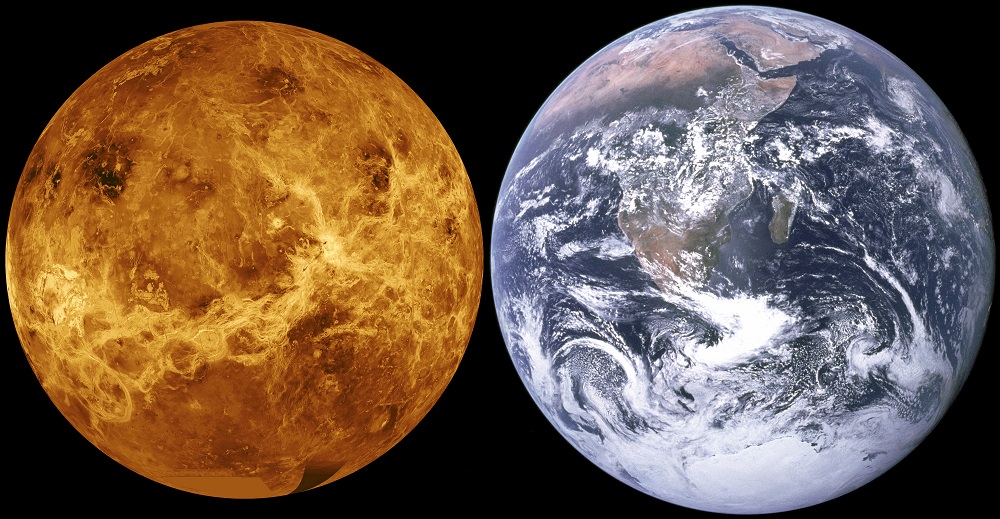

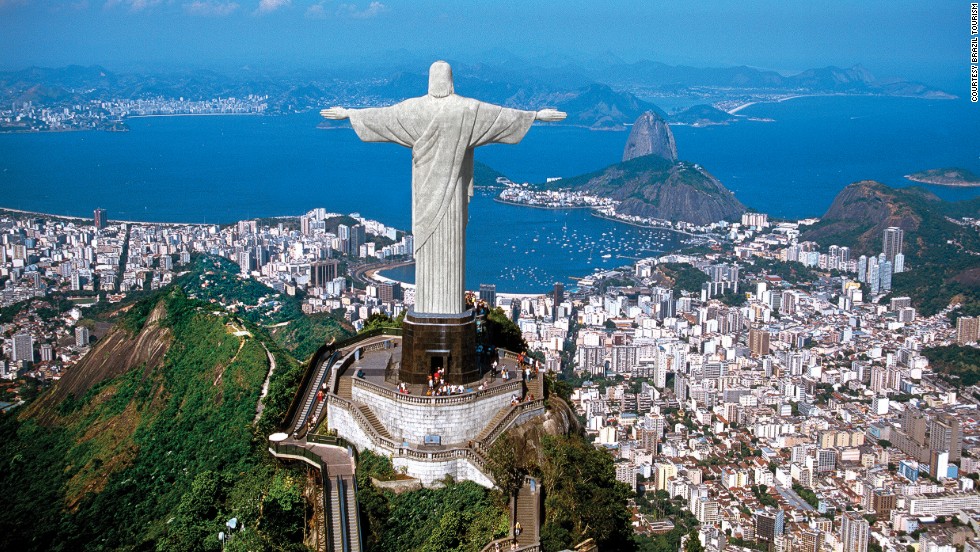

 CONSCIOUSNESS IS NO MYSTERY. Like a seedbed wherein ideas are planted, nurtured by unwavering belief, and given birth in their seasons, consciousness is the matrix for creation. It is very fertile soil, so fertile that one has to be very careful about the nature of the seeds one plants.
 I GREET YOU ON THIS CHRISTMAS MORNING in the Spirit of the Christ, whose birth we celebrate today. Let peace reign in your heart today and throughout the New Year.
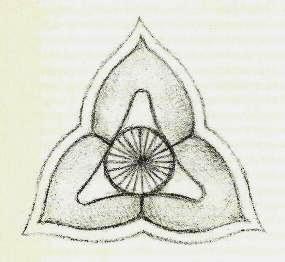
 Healing Tones