Creating the New Earth Together

Archive for June, 2019

SACRED ANATOMY: The Spiritual Significance of the Pineal Gland

The Language of the Body Temple is Frequency 

Continuing with excerpts from my SACRED ANATOMY book, in this post I explore the spiritual significance of the Pineal Gland relative to its position and purpose in the Body Temple.  Tiny crystals inside the pineal gland act as transmitters for the very high-frequency vibrations of the Light of Love. Another name for Love is the Father within. It is Love that fathers life in the body temple. The pineal gland provides for the presence and expression of Love in the physical world. In partnership with the pituitary gland, the “Mother gland” of the endocrine system, life is born anew in each moment in and through human beings. 

Arc of the Covenant


THE “MERCY SEAT”

The Pineal Body can be seen as hovering above and slightly posterior to the Sella Tuscica, a bony saddle etched out in the middle of the wing-shaped sphenoid bone, which forms the base of the skull.  The Sella Tursica holds the Pituitary Gland and correlates perfectly with the “mercy seat” of the biblical “Ark of the Testimony.” More popularly known as the “Ark of the covenant,” it bore the new covenant which God had made with the Israelites through Moses.  In the Ark a ball of fire is said to have hovered over the mercy seat all through the night giving evidence of the presence of the One Who Dwells in the Holy of Holies.  During the day, the tabernacle which housed the ark was enveloped in a cloud.  Similarly, the Pineal Body glows with the light of love, giving evidence of the presence of the One Who Dwells in the inner sanctum of each body temple.  There is obviously more here than meets the eye—and more, as we shall see, as eyes meet.  Since the “tabernacle of God is with men,” what was the source of this ball of fire that hovered over the mercy seat in this ark made of gold? 

From my own personal experience working with deep healing currents in attunement, I have felt a profound quality of what I can only describe as the “mercy of love” pour out through this center behind my own eyes. This experience is particularly strong upon completion of a cycle where healing is acknowledged by the recipient in a deep current of thankfulness.  Here is the place in our body temples where Father God communicates with Man through His Spirit, even as He dwelt with the children of Israel through the Ark of the Covenant and gave them His commandments and instructions as they wandered in the wilderness “in a solitary way.”  So is God’s spirit of love and of mercy constantly available to us, even as we wander in the wilderness of this world feeling quite alone and isolated much of the time.

From the rather detailed description of the Ark of the Covenant in the Book of Exodus, one can see correlation of the design and construction of the Ark to the intricate structure of the human brain. For example, the mercy seat was situated in the middle between two cherubim, the entire piece fashioned out of a single piece of pure gold with the cherubim spreading out their wings on high to cover the mercy seat while they faced one another.

And he made two cherubim of gold, beaten out of one piece made he them, on the two ends of the mercy seat; One cherub on the end on this side, and another cherub on the other end on that side: out of the mercy seat made he the cherubim on the two ends thereof.  And the cherubim spread out their wings on high, and covered with their wings over the mercy seat, with their faces one to another; even to the mercy seatward were the faces of the cherubim.   (Exodus 37:7-9)                                                                                                

Where Angels’ Eyes Meet 

In The Book of Grace, page 181, Grace Van Duzen writes at length describing this magnificent Ark of the Covenant and its construction.  About the cherubim she writes: “In descriptions found in other sources, it is said that a powerful ray, or beam, was emitted from the eyes of the cherubim, each making a connection with the other, the mercy seat between them.”

The ball of fire hovered in the space precisely where the gaze of these two cherubim met as they looked into each other’s eyes.  I am in awe just imagining this rather sizeable structure overlaid in pure gold, with these two solid golden cherubim gazing into one another’s eyes beholding and worshiping the living God. For us this experience is not in some far distant heaven somewhere but right within the human temple and available to behold simply by gazing into the eyes of another incarnate angel.     

So also are the two hemispheres of the brain, which face one another, one single organ connected by the corpus callosum.   Even the name of these two lobes, the cerebrum, is very similar in spelling and intonation to “cherubim.” The cerebrum spreads out like wings hovering over the entire inner chamber where the Pineal and Pituitary glands carry out their sacred rites of transformation and transmutation.  Between these two brain lobes hovers a focus of spirit, like unto a ball of fire, over the Pituitary seated in the Sella Tursica on the floor of the skull, correlating precisely with the mercy seat.  It is unmistakably present and powerfully felt while holding these two contact points during attunement.  This is the fire of the presence of the One Who Dwells.

In the book of Samuel of the Old Testament, we read: “And David arose…to bring up…the Ark of God, whose name is called by the name of the LORD of hosts that dwelleth between the cherubim.”  The One Who Dwells is present in each human temple as a focus of the Spirit of Love between the hemispheres of the brain. 

Then there is the decor of both the Ark and tabernacle which housed the Ark.  Gold was overlaid both inside and outside the Ark and used, along with silver and brass, throughout the entire construction. Curtains of “finely twined linen” and a “vail” were made for the inside of the tabernacle, connecting the “Holy of Holies,” where the Ark was kept, with the “Holy Place,” and their colors were blue, purple and scarlet

The tent covering the tabernacle was made of goats’ hair and a covering for the tent of rams’ skins dyed red, as well as one made of badgers’ skins to cover the covers of the tent.  An intricate pattern of enfoldment and an atmosphere of containment, as well as insulation and protection, is portrayed here.
Tentorium Cerebelli

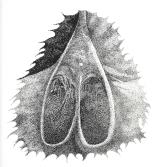
Comparing this construction to that of the brain and the skull, there is a tent-like membrane, a portion of the dura mater, called the tentorium cerebelli . This serves as a protective partition between the cerebrum, in the upper portion of the cranium and the lower occipital lobes of the cerebellum, the motor portion of the brain.  Here we see reflected the design of the Temple in Jerusalem.  The Holy of Holies, representing the place where the Spirit of God dwells, is open only to the Holy place, our heart realm, where we commune with God.  This represents the being aspect of ourselves.  The Holy Place of the heart opens into the outer court of the mind, which represents the achieving aspect.  Mind and heart communicate through this invisible portal.  Just as there was a series of curtains in the Tabernacle, so is there a series of protective and nurturing  membranes around  the brain, including the dura mater, the pia mater and the arachnoid, so that the entire brain is completely enveloped inside this weblike “tent”. These membranes, also known as the meningeal sheath, contain the cerebrospinal fluid in which the brain is afloat and well protected from outside noise and activities.

Protected in Water                                                   

All of the activities of this inner sanctum of the brain take place in a protective container filled with water. In his beautiful and pictorial book, “BEHOLD MAN”, Lennart Nilsson describes the watery consistency of the brain:  

The brain is not a solid mass of tissue.  In the interior are interconnected cavities filled with a watery fluid, the cerebrospinal fluid.  The fluid is produced by a tissue rich in blood vessels, the choroid plexus, mainly in the lateral ventricle of each hemisphere….  The lateral ventricles connect with the third ventricle, a cavity lying between the two hemispheres.  A narrow canal, the cerebral quadrigemina, connects the third ventricle with the fourth.  Openings in the fourth ventricle, located under the cerebellum, enable cerebrospinal fluid to leave the ventricular system to bathe the outer surface of the brain and spinal chord. (p. 171).    

This description reminds me of the story in Genesis of the Garden planted “Eastward in Eden” with the Tree of Life and the River of Life branching out into four river heads.  Truly the Garden of Eden is within our very own body temples.   

The names of these three membranes of the brain themselves tell something of their function. The “dura mater” translates literally into strong mother (matrix), indicating the tough and strong nature of this dense fibrous membrane which lines the interior of the skull and covers the entire brain and spinal column. In three places it is sent inward into the cavity of the skull to form the falx cerebri, the tentorium cerebelli and the falx cerebelli, membranes paring off sections of the brain.  The “arachnoid,” meaning like a spider’s web, so named from its extreme thinness, is a delicate membrane which envelopes the brain, lying between the pia mater internally and the dura mater externally.  The “pia mater” translates as gentle and smooth matrix and consists of a very vascular membrane that invests the entire surface of the brain nurturing this vital organ with blood, much like the endometrial lining of the fertile uterus and the placenta encapsulating the embryo.  Add the significance of the water of the cerebral spinal fluid and one has the distinct impression that this sacred space inside the brain is a very highly protected and enfolded womb for the birth of life in and through this body temple. Comparing it to Solomon’s temple of old, this whole area within the center of the brain could be considered the anatomical location of the “Holy of Hollies” and the “Holy Place” in our body temples, a place well guarded by the wing-like lobes of the cerebrum.   

The biblical “shittim wood,” used throughout the construction of both the Ark and the tabernacle, comes from the Asiatic Acacia tree that puts forth small, delicate yellow-gold flowers. The fine-grain yellowish brown wood is not unlike the bones of the head and of the entire skeletal system. They were overlaid with pure gold, symbolizing the spirit of love which builds, maintains and dwell in this temple of living flesh.  Gold also symbolizes the finest, purest expression of the Soul and is the color of the Soul light. Uranda writes:

When the Ancients spoke of that alchemy by which base metals were transformed into gold, they were expressing the Truth that by the Alchemy of Love-Spirit the base substances of the fleshly body are TRANSMUTED INTO THE GOLD OF SOUL, the MASTER-SELF WITHIN THEE.  (Steps To Mastership, Ch. 42)

 So here we see the temple of old built much like the skull of a man, even down to the final detail of the tent covering the tabernacle which was made of goats’ hair and rams’ skins.  This is parallel to our own skull which is covered by the tougher, hair-growing membrane of the scalp.  

I will continue with this exploration of the pineal gland and its spiritual significance in the body temple in my next post. Until then,

Be love. Be loved

Anthony                            

Credits: 

1) Arc of the Covenant by Live Science (livescience.com); 

2) The Pineal gland between two hemispheres of the brain by Adventures in Boundlessness (adventuresinboundlessness.com);

3) Sketch illustrations are by artist David Stefaniak;

4) Schematic cross-sectional diagram is by Endocrine Surgeon (endocrinesurgeon.com);

5) SACRED ANATOMY.  Contact the author to purchase a copy.                                                        


SACRED ANATOMY: The Pineal Gland–Cornerstone of the Temple

“The physical body is Real and beautiful beyond words to describe. It is wonderful beyond all the imaginings of mankind. In it are revealed the secret things of God.  Through it work the Cosmic Forces of the Universe.”—Uranda

THE PINEAL BODY

The Spirit of Love

Between the two hemispheres of the brain, below the posterior portion of the corpus callosum — the thick tissue connecting the two lobes of the cerebrum which hover over this inner sanctum like two arched wings — is a hallow space called the “Cave of Brama.”  In this cavity, enthroned atop the corpora quadrigemina — four small eminences on the back side of the brain stem serving as relay stations for auditory and visual impulses — is a small protuberance called the Pineal Body, or epiphysis cerebri.  Its pinecone shaped head, from which it derives its name, points back toward the “arbor vitae” (tree of life) of the cerebellum in the occipital cavity of the cranium.

       Situated in the exact position of the Divine Proportion of the Golden Mean (.618 the distance on a line drawn from the front of the brain to the rear, and from the top of the skull to the bottom), behind and slightly above the level of the Pituitary Gland, the Pineal is about the size of the first digit of your little finger.  Its functions, however, are vast and relate primarily to the natural rhythms of the body.  It produces hormonal crystals, such as melatonin and serotonin, which synchronize the body’s circadian rhythms regulating some physiological activities, such as the sleep cycle, with the rotational cycles of the earth, as well as regulating blood flow to the brain, thereby influencing behavioral patterns and mental activity.  –The Pineal Gland located at the Golden Mean of the Divine Proportion of the Brain —      
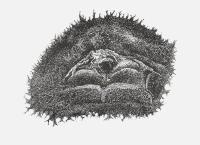
The color frequency of the Pineal is Violet correlating with the seventh wavelength of the light spectrum.  Violet is a passionate color and I wonder if perhaps, it isn’t here in the “seventh heaven” where our sense of deep passionate love for truth and for life itself is most deeply known.  This color also represents the purple garments of royalty befitting a king, and is not Love, rightly, the benevolent King and ruler of our hearts and of this whole holy world?  I perceive its musical pitch to correlate with F Natural. (This pitch shifted to a higher frequency of F# sometime during the dawning of the 21st century.)

       As with all the endocrine glands, the Pineal is ductless and therefore secretes its hormones directly into the blood stream.  Folic Acid and Vitamin B12 are nutrients which support the health and function of the pineal gland.

The “Third Eye”

        In former times the Pineal has been called by various names.  In the fourth century the Greek philosopher, Herophilus said it was the “sphincter of thought,” or the “origin of thought.”  Indian mystics said it was the “third eye,” the “eye within” and the “contemplative eye.”  Rene Descartes, the sixteenth century French philosopher, said the pineal was the “seat of the soul,” the seat of our consciousness.  Science, on the other hand, called it the pineal body, when no one understood what its functions were or if indeed there were any. For a while it was called the pineal gland and in the last decade it has been called the pineal organ because of its direct connection with the brain in producing its primary hormone, melatonin.

       Lawrence Blair, in his book Rhythms of Vision in Chapter 6 entitled “The Subtle Anatomy of Man,” says there is a debate as to whether the “third eye” can be attributed to the Pineal or to the Pituitary, or as he states it:

    …to the Brow or to the Crown Chakra; it is perhaps a somewhat academic point but I personally favor the Crown as being its most likely location. The corresponding physical organ, the pineal, is known to contain vestigial retinal tissue, and its structure is likened by modern physiology to a third, albeit atrophied, photo-receptor.

     A further interesting physiological fact is that the pituitary gland (or the Brow Chakra) is connected to the left eye and governs the lower half of the brain, whereas the pineal expressing the Crown Chakra, is connected to the right eye and governs the upper half of the brain.    

       Perhaps no one has written with as much detail and insight about this little gland as has Dr. Jacob Liberman, optometrist and pioneer in the therapeutic use of light and color,  and the art of mind-body integration.   Dr. Liberman’s work has centered around developing a way for treating the cause of human ailments—physical, mental and spiritual— with light and color. In his brilliant book, Light: Medicine of the Future,  Dr. Liberman integrates the biochemical, psychological and spiritual properties of light.  He says the awareness of how light and color affect our lives was expounded upon as far back as 1840 by Johann Wolfgang von Goethe, whose dying words suggested that  the “second shutter”  be opened in order to let “more light come in.”  He was not referring to the window blinds, but rather to the third eye” of the pineal gland.  Three different eyes were thought to exist: the flesh eyes for visual perception of light, the “eye of reason,” or “mental eye” and the “contemplative eye,” which Goethe says, “appreciates God.”  Dr. Liberman suggests that we must “integrate our vision to incorporate all the three eyes, as well as opening up the second shutter, but in doing so, we begin to open up our vision in a way that opens up our lives.”  Further, he cites Jonathan Swift’s insightful words, who wrote, “‘Real vision is the ability to see the invisible.’”   Liberman’s view is that by integrating these three eyes, we can experience what otherwise seems invisible.

Dr. Liberman explains how the average individual perceives only a small fraction of the stimuli coming at them from the environment.  “My personal experience is that as the inner eye opens, as we begin to see what at one time we felt was invisible, we tune into a broader spectrum, not only of the electromagnetic spectrum, but of the subtle energies that are not even within this electromagnetic spectrum.”   The word subtle relative to energies speaks to me of spiritual or ethereal light; that which is behind and before solar light and fills the spaces between the elements of the molecular world.   We are speaking here of the substance of love which creates a bond between us and with the natural world around us.

       Speaking of the primary function of the Pineal Body, Liberman attributes the very primal instinct of bonding between individual life forms, such as between parent and child, to the all encompassing role of the Pineal.  “This bond,” he writes, “thought to develop out of the ‘heart-to-heart’ synchronization between mother and child, is a microcosm of humanity’s synchronized relationship with nature and the rest of the universe.” 

       Acting much as a light meter and physiological metronome attached to the physical eyes, the Pineal relays information received through the hypothalamus about the outside world of space and time, such as the length of the days and the seasons of the year,  to the body and the mind by way of hormonal messengers, alerting the body to the need to generate changes. These hormones alter moods, circadian (twenty-four-hour) rhythms and seasonal reproductive cycles so as to synchronize with changes in the natural world with which we are connected.

Dr. Liberman continues:  

     The timing of physiological events is very critical to the health and propagation of a species.  Since the pineal gland seems to adjust the entire physiology of organisms to their environment, the physical size of this gland seems to vary according to where animals live.  Thus, the pineal is relatively small in animals living at or near the equator, whereas its size increases proportionately the further north or south of the equator animals live.

     In certain species, such as the elephant seal, the pineal gland at birth occupies 50% of the brain.  If the size of the human pineal gland is directly related to the degree to which living creatures are in touch with their environment, does the size of the human pineal (pea size) indicate something about the state of our consciousness?  Would a change in our consciousness, and a closer connection between us and nature, increase the size of our pineals?  Whatever the answer to these questions, respect for nature by all living creatures is not only a moral necessity but is definitely crucial to the longevity and quality of life. . . .  In creatures such as birds, lizards, and fish, light stimulates the pineal by penetrating directly through the skull.  In many reptiles, the pineal has all the photo-receptive elements characteristic of an eye. It is therefore referred to as a “third eye” because, in many creatures, it resembles an eye in both structure and activity.  However, in humans, as well as in all hairy creatures, light stimulates the pineal exclusively by way of our eyes, therefore making it an integral part of the visual system.  The technical name of the pineal is epiphysis cerebri, which literally means “top of the brain.” It is my belief that humans originally also received light stimulation through the top of the head, as is vividly described in many metaphysical and ancient spiritual writings. This indicates that at one point in human evolution, perhaps prior to the development of the brain hemispheres, the pineal may have actually been positioned at the top of the human brain. . . .  Today, the pineal is recognized as playing a major role in every aspect of human function.  It acts as the “regulator of regulators.”  Aside from its documented effects on reproductive function, growth, body temperature, blood pressure, motor activity, sleep, tumor growth, mood, and the immune system, it also seems to be a factor in longevity. (pp. 31-33)

Whatever the evolutionary history of this tiny gland, its very existence appears to haunt us, as little was known of its purpose and function until recently.  Although it has tended to be rejected as having any significant role to play in the body,  it has been discovered that it plays an intimate and vital role with the eyes.  I suspect at one time—perhaps before “the Fall” when Man lived in the Garden of Eden—it served as an internal eye, a vibrational “window of heaven,” through which we were able to “see” into the realms of light, into heaven, and communicate daily with the LORD God.

–The Pineal enthroned atop the Corpora Quadrigemina–

       Considering its makeup of retinal tissue and its close association with the corpora quadrigemina with its relay stations for auditory and visual impulses, one can even imagine how the Pineal may have served as a transmitter of sorts by which we heard the heavenly sounds of angelic voices singing in the realms of light.

       I like to think of the Pineal Body as the throne of deity on earth, the deity of divine being,  a remarkably exact reflection of the “throne set in heaven” John describes in the Book of Revelation in the Bible, even  down to the fine details of  the “four beasts full of eyes before and behind,” the significance of which we shall explore shortly.

Of the seat of the soul Uranda says this:

   Meditation upon the Cosmic Principles of Light, Love and Life, keeping the attention centered in the Seat of the Soul—that is, IN the Throne of thy Father within thee, in the center of thy head— seeking the while to detect the INFLOW of Cosmic Vibrations through thy hair, followed by the OUTFLOW through thy WHOLE body in a glorious  Radiance of the Christ in which thy WHOLE, HOLY BEING is enfolded, will speed thy conscious comprehension of the ONE TRUTH that thou art ONE with the ALL that is ONE.   (Steps To Mastership, Lesson 43)

An excellent pineal attunement technique is toning with one’s focus in the forehead where the “third eye” is sending out radiant beams of light. Toning a high pitch will resonate with the high frequency of this sacred energy center. 

I welcome your thoughts and inspirations. I will continue in my next post with a consideration of the spiritual significance of the Pineal gland as the focus for the Spirit of Love. Until then, 

Be love. Be loved.

Anthony

Credits: Graphic illustrations by David Stefaniak.

Contact the author to inquire about obtaining a copy of SACRED ANATOMY. 

Hypothalamic Dysfunction and Chronic Stress

Over the past 8 years, since 9/11 actually, I have noticed a marked increase in clients with hypothalamic dysfunction, indicating to me a global increase in chronic stress of epidemic proportion, especially in post 9/11 America where terrorism continues to threaten our lives, our liberty, and our pursuit of happiness. Little wonder our immune systems, shut down by a fermenting culture of fear, are failing us. 

I will speak to the cause of this dysfunction, as I see it, and the conditions that occasion it before continuing sharing excerpts from my book, SACRED ANATOMY.

(Before proceeding, I would direct you to read, or review, my previous post for an understanding of the normal function of the hypothalamus.)

CHRONIC STRESS

Chronic Stress is simply prolonged and unresolved stress.  Let me explain this from a physiological as well as a practical perspective and understanding of the way things work in our bodies. 

I will start with a simple example of chronic stress. Let’s say, just for entertainment, that you have wandered into a pasture and, when you look up, you notice that a big, black bull is charging at you from a distance, which gives you plenty of time to run and get out of harm’s way.  Only you, for some strange reason, freeze on the spot and can’t seem to get your legs moving. This is a classic example of the residual effects of chronic stress. Your fight or flight stress response is in a state of incoherence and dysfunction.  

Now let’s examine how this incoherence and dysfunction come about. As we saw in my previous post, every function in your body depends on the hypothalamus and its ability to receive information from your environment and convey that information to your body — as well as to YOU — and no, you are not your body but the One who lives in and through it.  Every cell also needs adrenal hormones (cortisone, adrenaline and noradrenalin) in order to perform its duties in a timely and effective manner. (See pictures below)

Now, our bodies obey our every command.  they respond to every thought entertained and imbued with spirit and feeling — feelings such as love, compassion and gratitude, as well as those of fear, resentment and worry — in other words, thoughts that WE give credence and energy to. Not the many and sundry thoughts that our net-like minds snare in the stream of thoughts passing through them from out of the mass consciousness we share with everyone else; only the ones that I pay attention to as being worthy of my time  and energy to entertain, and perhaps do something more overt with.

THE CAPTAIN OF YOUR SOUL 

The factual point I am making here is that YOU are responsible for your body’s every function —  yes, even its physiological functions, which cease the moment you vacate your body in death.  As the poet William Ernest Henley put it when he penned INVICTUS,

It matters not how strait the gate, how charged with punishments the scroll. I am the master of my fate: I am the captain of my soul.” 

(Note: The word “strait” means “exact” and not straight as the shortest distance between two points. We find this word used in the scriptural passage: “Because strait is the gate, and narrow is the way, which leadeth unto life, and few there be that find it.” (Matt 7:14).  In other words, exact, precise, with no deviation, no compromise. That’s the integrity inherent in Life’s way.  This saying of Jesus comes just after he articulates the ‘Golden Rule” to do unto others “all things whatsoever ye would that men should do to you.”)

THE PHYSIOLOGY OF THE STRESS REFLEX

Now back to my physiology lesson. As soon as you infuse a thought with fear, for example, your fight or flight reflex kicks in as the hypothalamus sends hormonal messages to your adrenal glands to produce and secrete adrenaline into the blood stream in order to empower your muscles to engage the environmental stress factor — real or imagined matters not.  If you act on the impulse to respond to the stress and DO something to resolve it, one way or another, then you will use up the adrenaline secreted for that event.  

On the other hand, if you do NOT actively respond to the urge to fight back and dispose of the stress factor, or take flight from it — the nemesis that stands in the way of your attainment of peace and security, or some more deeply threatened value in your life, such as the freedom to be yourself and respected in a dominated or abusive relationship — then the adrenaline stays circulating in your blood stream stimulating body cells into frantic and destructive activities, often to the point of exhaustion and chronic disease. Prolonged and mishandled stress is at the energetic root of all chronic diseases, most common of which is chronic fatigue. 

But more detrimental to health and homeostasis is the frustration and consequent shut-down of the hypothalamus due to the abundance of adrenaline in the body tissues, indicating that more is not needed to face the many other stresses that arises in life — along with continued failure to heed its messages and do something about the stress.  Eventually, the adrenal glands themselves shut down due to the lack of clear and coherent directives from the hypothalamus. You can’t even sleep at night for the amount of mental activity going on due to the abundance of cortisol in your brain just running thoughts and worries. You wake up in the morning as tired as or more tired than you were before you went to bed.  Chronic stress has literally taken away your health, as well as your life. 

You need a vacation! So you take one. But, you know, you take your fears and worries with you on vacation.  Without understanding why or how, you may find yourself frozen in place and unable to act quickly in an emergency, such as a vehicle crossing over the median of the highway and heading in your direction.  Or a child in distress in the swimming pool. The consequences of your inaction are potentially tragic and irreversible. You’ve got to “wake up and smell the roses,” as the saying goes. You’ve got to come fully into the present moment.

HELPFUL SOLUTIONS 

Physical exercise, especially walking, helps use up the adrenaline, as well as blood sugar, freeing up cellular receptor cites to receive more adrenaline and sugar-bearing insulin, which, if it remains too long in your circulatory system, will do damage to the arteries and trigger the production of cholesterol in the liver for damage control.  Walking also gives you a chance to process your thoughts and feelings and raise your perspective to see things as they actually are from a higher point of observation. We can only make changes in ourselves and in our worlds as we see and accept things exactly as they are.  It’s the only workable starting point.  

As for the hypothalamus, it needs to be reset to present-time awareness. That requires specific nutrients to support the physiology, along with restful sleep. It also requires spiritual practice of some kind, such as yoga and meditation, along with deep breathing and mindfulness. Energy work, such as Reiki to balance the Chakras, and Attunement to balance the endocrine system with the Chakra centers, especially when facilitated by intentional sound healing, offers potent and immediate return to inner peace and harmony, as well as disengagement of the fight or flight reflex, allowing time and space for the hypothalamus to reset to present-time awareness. We learned how the pleasure-induced neurohormone oxytocin disengages the fight or flight reflex in the previous post.  A little playtime, even a tasty treat, can do a lot for down-regulating stress. All things in moderation, of course. Just be kind to yourself.  

There is a nutritional protocol available to help in resetting the hypothalamus and endocrine system, which I’ve used in my service for many years with favorable, although limited, results. Limited in that honest internal work is needed as well in order to start facing the stresses in life with acceptance and resolve, even opening to embrace them as opportunities to grow spiritually. Developing a sense of right expectancy helps us to be patient with Life’s creative process so as not to spoil the perfect outcome. Remember, it is God’s good pleasure to give us the Kingdom of Heaven right here on earth.   

The instruction “In all things give thanks” is a wise and worthy guide to success in this area of handling stress creatively by redirecting aroused reactive energy.  One simply needs to remember it in the heat of the moment when overbearing circumstances tend to trigger the fight or flight reflex in your hypothalamus. Giving thanks may even interrupt the urge to react and take the negative charge out of your feelings. Love does have a way of dispelling fear and anxiety, as does patience and forgiveness, the gifts of Spirit.    

With so much release of wisdom and council, the coming week will surely hold many opportunities and challenges for walking my talk. And I say: “Bring it on!” These past few weeks have been very stressful. With the grace and mercy of Divine Providence, we have emerged victorious and blessed.  After all, life without stress is impossible.  Pressure is essential to growth in all phases of our development.  In the squeeze of circumstance, look up and you’ll go up. Looking down will only bring you down further.  So, look up!

Your comments are always welcome. If you would like to address any questions or concerns with me by email, please feel free to do so. I will return to the theme of this blog series, Sacred Anatomy, in my  next post.  Until then,

Be love. Be loved. 

Anthony 

Email: tpal70@gmail.com

Noradrenalin

Insulin (top) & Cortisone


Crystals of Adrenaline


Sacred Anatomy: The Hypothalamus, Our Stress Response Center

(The ads inserted by Word Press into my blog are not endorsed by me. I apologize for their intrusion.)

HOMEOSTASIS AT ALL COSTS

As spiritual beings, our incarnation is not accomplished without a great deal of stress being placed upon these flesh bodies. They embody, after all, the Spirit of the Living God.  Angels, such as we are, incarnate to live and create at the lowest level of being, the physical plane, where we are met by challenging and often stressful conditions and events that require a clear and accurate line of communication with and feedback from our environment. 
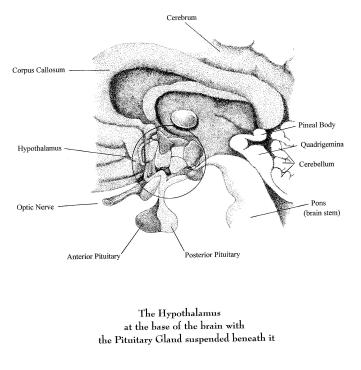
The first means of communicating with the physical plane is the brain and central nervous system, the first organized system to develop in the embryo. Among its many roles, this system provides feedback information about the external terrain in the world around us—the earth.  The endocrine system provides a means for conveying creative commands and directives from the inner realm of spirit in the internal terrain—the heaven. The hypothalamus, together with the thalamus and the amygdala, play roles of mediation between these two communication systems and thereby between these two conjoined worlds, the inner world of spirit and the outer world of form.  It connects the endocrine system with the nervous system, mediating the ongoing management of stress, the process of maintaining homeostasis in the material world, a state of equilibrium between boundless creative power and extremely limiting physical boundaries.  The body is built, nonetheless, in a state of homeostasis.

(Note how the brain stem in this diagram is funnel-shaped as it inserts itself into the hypothalamus, where it downloads information gathered by way of the outer senses and sent up the spinal chord via nerve fibers and spinal fluid.)

Few medical writers have captured both the spirit and function of the endocrine system as a sacred vessel for the administration of life’s fierce and volatile creativity as has Dr. Robert Becker. In fascinating research published in his book, The Body Electric, Dr. Becker speaks of this area of the floor of the brain with high regard, reflecting Dr. Hans Selye’s research into the stress response mechanism in the physical body:

The hypothalamus, a nexus of fibers linking the emotional centers, the pituitary gland, the pleasure center, and the autonomic nervous system, is the single most important part of the brain for homeostasis and is a crucial link in the stress response.

Dr. Sherwin B. Nuland, Clinical Professor of Surgery at Yale University, where he also teaches medical history and “bioethics,” writes about the relationship between the hypothalamus and the pituitary gland. His books—the acclaimed best-selling How We Die and, more recently, The Wisdom of the Body—are an inspiring search within the interior life of our bodies for the biologically elusive quality of life that defines us and a journey through the body’s magical “tumultuous” terrain of chemistry-driven physiology that constantly seeks homeostasis at all costs.  Ironically, such dynamic balance is achieved by means of the “turbulence of chemistry, the seeming chaos of tissue, the volatile responsiveness of cells” upon which tempests the stability of health rides. 

Almost poetically and certainly with profound depth of understanding, Dr. Nuland elaborates on how our bodies care for themselves and “how we have transcended mere survival . . . and . . . made use of our unique biology to travel the long road from the creature Homo to the human being.” He speaks here about the action of “signaling molecules” in the brain, ordinary neurons (neurosecretory cells) that function like endocrine cells and produce “neurohormones” called “neuropeptides.” Some sixty of them are to be found in the human brain, including endorphins that work like morphine for pain and calm us even to a state of euphoria.  He writes:

Not uncommonly, a neurohormone’s action is to make an endocrine gland secrete. Accordingly, the neurosecretory cell allows direct communication between the endocrine and nervous systems.  A stimulus reaching a neuron can thus be converted into an action caused by a hormone.

The relationship between the hypothalamus and the pituitary gland is particularly important in this regard, especially because the hypothalamus is involved with autonomic regulation and the states of the emotions, and it does contain certain neurons that secrete neurohormones.   The interaction of the two structures is facilitated by their anatomic one-on-top-of-the-other juxtaposition at the base of the brain.  So closely integrated is their functioning that they have together been called the neuroendocrine control center….

The relationship among the hypothalamus, pituitary, and adrenal has been formalized in the writings of medical researchers by calling it the hypothalamic-pituitary-adrenal axis, or HPA. Reciprocal relationships among these three structures have been shown to influence the body’s response to stress and the secretion of certain neurohormones that affect the immune system. This is one of the fields of research under the general heading of psychoneuro-immunology, and it has shed considerable light on possible ways in which the brain and even conscious thought may play a role in immune response . . . .

The back, or posterior, part of the pituitary is actually composed not of endocrine cells, but largely of glial tissue and nerve fibers coming down from neurosecretory cells in the hypothalamus.  The axons of these cells extend down into the posterior pituitary, carrying the neurohormones oxytocin [a lactation and uterus-contraction hormone produced in the hypothalamus and stored in the posterior pituitary gland, as well as a disengaging hormone for the fight or flight reflex returning the body to a state of calm and coordination] and vasopresin [the hormone that sets off the fight or flight reflex and acts as an antidiuretic]…. A great deal of the behavior and response of the body’s 75 trillion cells is determined by signaling molecules, whether carried afar by the bloodstream or active locally.  In complex and complementary ways, such chemical substances work in coordination with the wondrous array of responses within the nervous system, all with the aim of maintaining that dynamism of constancy, that exuberance of seeking, which is the substance of human life…. The result of the interactions of electrical and chemical messages is that every part of the body is able to know what every other part needs and is doing.” (p. 347)  

A vibrant community is to be found within these temples on the microcosmic level of cellular activity, a community that is reflected in the macrocosm of the natural world we inhabit where all things are connected by vibrational cords.  Dr. Jacob Liberman, in his book  Light Medicine of the Future, summarizes the essential nature and function of the Pineal Body as a powerful and focal hormonal gland along with the coordinating function of the hypothalamus:

In Oriental medicine, the daily patterns of individuals are associated with the level of health they maintain.  Imbalanced responses to specific rhythms, seasons, and their associated cycles are related to specific kinds of physical and emotional problems.  Harmony within our life processes is related to the level of communion between our bodies and the environment. Can we experience fluid integration of our own minds/bodies/emotions without creating that same level of harmony in our relationships with nature, or vice versa?  Isn’t our internal integration a mirror of our integration with all life (people, animals, nature, work, etc.)?  Perhaps, literally and symbolically, our longevity may be related to our ability to integrate and synchronize ourselves with the planetary and solar-stellar energies that surround us.  The pineal gland and its interdependence with the rest of the body hold the key to the mysteries of our aging as well as our agelessness.

In summary, light enters the eyes not only to serve vision, but to go directly to the body’s biological clock within the hypothalamus. The hypothalamus controls the nervous and endocrine systems whose combined effects regulate all biological functions in humans.  In addition, the hypothalamus controls most of the body’s regulatory functions by monitoring light-related information and sending it to the pineal, which then uses this information to cue other organs about light conditions in the environment.  In other words, the hypothalamus acts as a puppet master who, quietly and out of sight, controls most of the functions that keep the body in balance.

All the body’s systems relate to each other in a constant state of flux, with the hypothalamus at the center.  The hypothalamus interfaces between mind and body, coordinating our constant state affecting our consciousness, and thereby controlling our constant state of preparedness. This critical maintenance of body harmony is effected by synchronizing the body’s vital functions with the environmental conditions, or, as some people say, “becoming one with the universe.” (p. 34)

Thus is life in the body maintained by internal combustion of powerful hormonal and chemical interactions, fiercely but accurately conveying spirit through flesh. Our house of being is a burning bush, much like the one Moses experienced when he rose in his spirit to meet his destiny, stressful as it no doubt was. This is the only way to meet the stress of life, even in the face of certain death.  He did not just see a burning bush. He was himself the burning bush that was not consumed.  

 I am reminded of that powerful scene from Philadelphia where Andrew Becket (Tom Hanks) and Joe Miller (Denzel Washington) are listening to an exhilarating aria sung by Maria Callas as Madelena in Umberto Giardano’s opera, Andrea Chanier, as she watches the family home burning after her mother had died saving her.  It’s a climatic piece in the film where the two are preparing for their final day in court when Andy will testify on his own behalf against his former employer who he contends terminated his association with the firm when it was learned he was an active homosexual with AIDS. Andy pours his heart out, filled as it is with deep love for life amid bitter sorrow for what is transpiring in his defenseless body,  translating with tearful anguish as Maria Callas sings with the fullness of her enormous voice from the depth of her passionate soul: “Look!” he utters through his tears, “The place that cradled me is burning!  . . . I bring sorrow to those who love me . . . It is during this sorrow that love came to me as a voice filled with ardor . . . It said: ‘Live still!  I am life! ….I am divine!  I am oblivion!  I am the God that comes down from the heavens to the earth and makes of the earth a heaven.  I am love!  I am love!’”  

This scene always splits my heart open to its core longing to fully and freely reveal my Self to my world, to let love manifest in all of its beauty and unconditional generosity, all of its non-judgmental acceptance, without consuming this flesh.  As things are now, it will be consumed in the end, even though all that is in me says it could be otherwise — and one day shall be.       

Hormonal chemistry brings the fire of love into the body-temple. Thus is it cleansed, made new and lifted to its true vibratory level as the Cathedral of our Milky Way Galaxy is reordered by cosmic forces.  These forces are at work within Gaia, with whom we share an inseparable bond.  What happens within Gaia happens within us, and what happens within us happens within Gaia.  We are one with our Earth Mother, and through her with the Cosmos.  We breathe the same breath of life. We are one with our Father, the Great Spirit Creator Gaia embodies, along with the entire solar entity. We may well honor this Father and this Mother that our days may be long upon the land which the LORD our God has given us, recalling the promise of Moses’s seventh commandment. 🔯

(Excerpted from SACRED ANATOMY— where Spirit and flesh dance in the fires of creation, and adapted for this blog post.)

I will continue sharing excerpts from SACRED ANATOMY in this blog series.  Until then,

Be Love. Be Loved

Anthony

For information about my books, see my website

Tag Cloud