Kenosis: The Path of Self-Emptying Love
 IN THIS SERIES, I will explore the path of “Kenotic Love” as seen through the passionate heart and Christened mind of one of my favorite authors, Episcopal prelate Cynthia Bourgeault, who has rekindled in my heart an ecstatic love for the Man whom Mary Magdalene called “Rabboni”— and who knew her as his Beloved Companion — the romantic story about which I wrote a post back in August, 2018, The Gospel of the Beloved Companion, which would be a timely read in this day of the rising Divine Feminine. Also my October post Fifth Way Love, A Romantic Path to Transformation.
In this post I will share excerpts from Cynthia’s book THE Wisdom Jesus — Transforming Heart and Mind. This passage speaks to Jesus’s character and his message to humankind. Christianity does not teach the Kenotic path that Jesus literally went down.
JUSUS
There has always been a strong tendency among Christians to turn him into a priest —“our great high priest,” in the powerful metaphor of the New Testament Letter to the Hebrews. The image of Christos Pantokrator (“Lord of All Creation”) dressed in splendid sacramental robes has dominated the iconography of both Eastern and Western Christendom. But Jesus was not a priest. He had nothing to do with the temple hierarchy in Jerusalem, and he kept a respectful distance from most ritual observances. Nor was he a prophet in the usual sense of the term: a messenger sent to the people of Israel to warn them of impending political catastrophe in an attempt to redirect their hearts to God.
Jesus was not interested in the political fate of Israel, nor would he accept the role of Messiah continuously being thrust upon him. His message was not one of repentance and return to the covenant. Rather, he stayed close to the perennial ground of wisdom: the transformation of human consciousness. He asked those timeless and deeply personal questions: What does it mean to die before you die? How do you go about losing your little life to find the bigger one? Is it possible to live on this planet with a generosity, abundance, fearlessness, and beauty that mirror Divine Being itself? These are the wisdom questions, and they are the entire field of Jesus’s concern. If you look for a comparable category today, the closest analogy would probably be the Sufi sheik who wields the threefold functions of wisdom teacher, spiritual elder, and channel for the direct transmission of blessing (baraka), in a fashion closely parallel to Jesus’s himself. The sheik is a distinctly Near Eastern category, and it probably best preserves the mantle that Jesus himself once wore. . . .
In order to go up one must first go all the way down. For flesh to rise, spirit must first descend. To ascend, one must fully incarnate. I love how deeply Cynthia understands the kenotic path Jesus took.
THE PATH OF KENOTIC LOVE
SO FAR WE have been looking at Jesus as typical of the wisdom tradition from which he comes. An enlightened master recognized by his followers as the Ihidaya, or the Single One, he teaches the art of metanoia, or “going into the larger mind.” Underlying all his teaching is a clarion call to a radical shift in consciousness: away from the alienation and polarization of the egoic operating system and into the unified field of divine abundance that can be perceived only through the heart. But how does one make this shift in consciousness? It’s one thing to admire it from a distance, but quite another to create it within oneself.
This is where spiritual praxis comes into play. “Praxis” means the path, the actual practice you follow to bring about the result that you’re yearning for. I think it’s fair to say that all of the great spiritual paths lead toward the same center—the emergence of this larger, non dual mind as the seat of personal consciousness—but they get there by different routes. While Jesus is typical of the wisdom tradition in his vision of what a whole and unified human being looks like, the route he lays out for getting there is very different from anything that had ever been seen on the planet up to that point. It is still radical in our own time and definitely the “road less taken” among the various schools of human transformation. I will fill in the pieces of this assertion as I go along, but my hunch is that a good many of the difficulties we sometimes run into trying to make our Christianity work stem from the fact that right from the start people missed how different Jesus’s approach really was. By trying to contain this new wine in old wineskins, they inadvertently missed its own distinct flavor. In Jesus everything hangs together around a single center of gravity, and you need to know what this center is before you can sense the subtle but cohesive power of the path he is laying out.
What name might we give to this center? The apostle Paul suggests the word kenosis. In Greek the verb kenosein means “to let go,” or “to empty oneself,” and this is the word Paul chooses at the key moment in his celebrated teaching in Philippians 2:9-16 in order to describe what “the mind of Christ” is all about. Here is what he has to say:
Though his state was that of God, yet he did not deem equality with God something he should cling to.
Rather, he emptied himself, and assuming the state of a slave, he was born in human likeness.
He, being known as one of us,
humbled himself, obedient unto death,
even death on the cross.For this, God raised him on high
and bestowed on him the name
which is above every other name.So that at the name of Jesus,
every knee should bend in heaven and on earth and under the earth.And so every tongue should proclaim
“Jesus Christ is Lord!” to God the Father’s glory.’In this beautiful hymn, Paul recognizes that Jesus had only one “operational mode.” Everything he did, he did by self-emptying. He emptied himself and descended into human form. And he emptied himself still further (“even unto death on the cross”) and fell through the bottom to return to the realms of dominion and glory. In whatever life circumstance, Jesus always responded with the same motion of self-emptying—or to put it another way, of the same motion of descent: going lower, taking the lower place, not the higher.
What makes this mode so interesting is that it’s almost completely spiritually counterintuitive. For the vast majority of the world’s spiritual seekers, the way to God is “up.” Deeply embedded in our religious and spiritual traditions—and most likely in the human collective unconscious itself—is a kind of compass that tells us that the spiritual journey is an ascent, not a descent. Most students of the wisdom tradition consider this upward orientation to be one of the foundational attributes of sophia perennis itself, its origins no doubt archetypal. While my own work with the wisdom Jesus has led me to disagree, it is hard to deny that the idea of spiritual ascent has been around for a long, long time. In biblical tradition, the image of the spiritual ladder goes all the way back to the headwaters of the Old Testament, with the story of Jacob’s dream of the ladder going up to heaven. It is probably five thousand years old. Christian monastic tradition returned to this image and developed it still further, as essentially the roadmap for the spiritual journey. The seventh century teacher John Climacus (“John of the Ladder”) even took his monastic name from this powerful image, and through his influential teachings it became the underlying philosophy of monastic practices such as lectio divina and psalmody.
Ascent mysticism was very much in the air in Jesus’s time as well. Earlier in this book I spoke of the Essene community, that apocalyptic Jewish sect whose visionary mysticism and ascetic practices were probably the most immediate formative influence on Jesus. At the heart of the Essene understanding was a particular strain of spiritual yearning known as merkevah mysticism. Merkevah means “chariot,” an allusion to the Old Testament story of the prophet Elijah being taken up to heaven in a chariot. This dramatic episode offered a vivid image of ascent to God, which the Essenes saw as applying both individually and for the entire people of Israel. “The end of the world was at hand,” and all eyes were gazing intently upward as Jesus took birth on
the earth.To rise requires energy, in the spiritual realm as well as the physical one. And thus, the vast majority of the world’s spiritual technologies work on some variation of the principle of “conservation of energy.” Within each person there is seen to reside a sacred energy of being (sometimes known as the “chi,” or prana, the life force). This energy, in itself infinite, is measured out to each person in a finite amount and bestowed as our basic working capital when we arrive on this planet. The great spiritual traditions have always taught that if we can contain this energy rather than letting it leach away—if we can concentrate it, develop it, make it more intentional and powerful—then this concentrated energy will allow us to climb that ladder of spiritual ascent.
This ancient and universal strategy is really at the basis of all genuine asceticism (that is, asceticism in the service of conscious transformation, not as a means of penance or self-mortification). And there is good reason for this: the strategy works. Through the disciplines of prayer, meditation, fasting, and inner witnessing the seeker learns how to purify and concentrate this inner reserve and to avoid squandering it in physical or emotional lust, petty reactions, and ego gratification. As self-mastery is gradually attained, the spiritual energy concentrated within becomes strong enough and clear enough to sustain contact with those increasingly higher and more intense frequencies of the divine life, until at last one converges upon that unitive point. It’s a coherent and powerful path of inner transformation. But it’s not the only path.
There’s another route to center: a more reckless path and extravagant path, which is attained not through storing up that energy or concentrating the life force, but through throwing it all away-or giving it all away. The unitive point is reached not through the concentration of being but through the free squandering of it; not through acquisition or attainment but through self-emptying; not through “up” but through “down.” This is the way of kenosis, the revolutionary path that Jesus introduced into the consciousness of the West.
(to be continued)
THE PRAYER OF ST. FRANCIS
I will leave you to ponder this original prayer of St. Francis, believed to be written by a French Franciscan and based on a little known admonition Francis wrote to his friars, according to James Twyman.
Where there is charity and wisdom, there is neither fear nor ignorance.
Where there is patience and humility, there is neither anger nor disturbance.
Where there is poverty (simplicity) with gladness, there is neither covetousness nor greed.
Where there is quiet and meditation, there is neither concern nor wandering.
Where there is love of God to guard the house (cf. Lk. 11:21), there the enemy cannot gain entry.
Where there is mercy and discernment, there is neither excess nor severity.
I am deeply thankful to God for life, for health, for serenity of mind and peace of heart. I am particularly thankful at this time of harvest when we celebrate Thanksgiving for the abundance of Mother Nature as she clothes the trees with new leaves in the wake of devastating hurricanes. I am profoundly thankful for my companion in life, Bonnie Lee, and for all our family on the West Coast. Thank you, Lord, for the gift of their presence in our life and in our world. To my readers and blog followers, a heartful appreciation for traveling with me these past several rich years of sharing the meditations of my heart. I always enjoy your responses. Until my next post,
Be love. Be loved. Be Thankful
Anthony
tpal70@gmail.com

 The “fire” that Jesus threw on the world was not wild fires like we’re experiencing along the West Coast. It’s the all-consuming flame of love, the atomic power at the heart of creation. In this series I will explore how the design of true community unfolds naturally and organically, fueled by atomic power released under the control of the stabilizing design and dynamics of the atom. Without further intro, I’ll dive right into it.
 Consider what we now know about the structure and dynamic operation of this fundamental building block of Creation. At the center of the atom dwell one or more positively charged Protons and one or more neutral particles called Neutrons. Orbiting around this central hub of focused power are a number of Electrons carrying a negative charge. Looming behind this nuclear structure lies a potential of awesome power held in check by the integrity and stability of the tiny atom. We know this by reason of our experience destroying that integrity and releasing that awesome power to destructive ends.
 Like a bar of soap when squeezed, we go in the direction in which we are pointed when the pressure is on. The pressure’s on like it’s never been before. It’s not a time to look down, but a time to look up and go up.

 Transmutation of substance precedes resurrection and ascension. In order for substance to ascend to a higher vibratory level, it has to be refined. There is only one creative force that can refine and transmute substance so that it can ascend to a higher vibratory level, and that’s the gentle, subtle energy of the fire of Love.
  We have been considering the resurrection. The womb may be said to be the means by which life is born. The substance of love was first necessary if there was to be the substance of the womb. There is nothing else but love substance, all the way through—love substance but at different vibratory levels. And the substance of the womb is the heaven in relationship to the life that is to be born. We find at every level there is a heaven involved—a connection. You may remember that the second day of the creative cycle described in Genesis spoke of the firmament, the heaven, the connection between the waters above and the waters below, between the truth above and the truth below—the means by which what is below may be brought forth. The heaven at any level is rightly a state where there is a particular atmosphere and a particular enfoldment and a particular control, by which the creative process may continue. All that indicates the presence of what is called truth. So there is a heaven connecting the substance of love above with the substance of life below. There is one heaven.

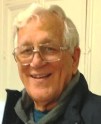 Transmutation is by the unified radiation of love. In this post I will push the envelope a bit to contemplate further the process of transmutation and ascension. We have completed the process of transformation of consciousness sufficiently to move on to what’s next. I will share a presentation by contemporary spiritual teacher Lord Martin Exeter (1909-1988), whom I was honored and privileged to know as my mentor in transformation—words that may bring to remembrance the commission we signed up for as angels before incarnating on Earth. I will share a part here and another part next weekend. I started sharing this consideration in a blog post back in


 Transmutation is by fire—the fire of love. Continuing in this series “Crucibles for Transmutation and Ascension,” and sharing excerpts from my book SACRED ANATOMY—where spirit and flesh dance in the fire of creation. This post delves deeper into the chemistry and alchemy of transmutation, which begins deep within the soil of the earth and continues on up into and through our body temples where ceremonial vessels render gifts of Nature up to pay homage to their Creator.
 Completing the story of King Solomon before continuing in the theme of this series, it is significant in the historical context that Solomon’s kingdom was a failed opportunity for Paradise to be restored on Earth and Man restored to his original role in Eden as co-creator with God.
 Continuing to do what is mine to do amid the pivotal turbulence in the world—and joining my many friends and colleagues who are holding a space of love and right expectancy for a creative resolution to the current crises playing out—I invite you to join me in exploring how the biblical temples of old reflect the design inherent in our physical bodies, temples inhabited by angels for the presence of God on Earth. Let us not forget who we are and what our purpose is for being here at this crucial time of purification of the body of mankind by the fire of Love. These are end-time days for this mind-made world. There is no way forward for it, nor for those who are trapped in its deceitful ways. A passage from the last chapter of the Book of Revelation comes to mind:
 How consciously aware are you that the eggs and bacon, or yogurt and fruit, you had for breakfast this morning are being transformed and transmuted into flesh and bone and lifted up to a higher vibratory level, seeking a path back to the Creator? A rather lofty thought to begin one’s day . . . and why not?
 I received several responses to my
  As angels, we do not wish to behave in a brash manner. At the same time we should never deny our stature in our dealings and relationships with the people. It seems that very often emissaries have felt at a disadvantage somehow when working with people in the world. What is meant when it is indicated that one should be spiritual? In the human view this means innocuous, unimportant, unnecessary. The attitude of human nature is that it can get along very well without anything spiritual, except possibly as some sort of an adjunct to human nature. If spiritual things can be used to advantage in what human nature wants to do, well let’s include spiritual things. But it is all self‑centered, isn’t it? As angels, we are certainly not at any disadvantage with respect to people. Our stature is vast relative to the stature of any particular human nature. And while this should not make us conceited—this is angelic nature—we certainly would not deny our authority or our ability to handle what needs to be handled as angels.
 Healing Tones