Creating the New Earth Together

Posts tagged ‘Healing Tones Blog’

Getting Back To Paradise, part 1: Purification First
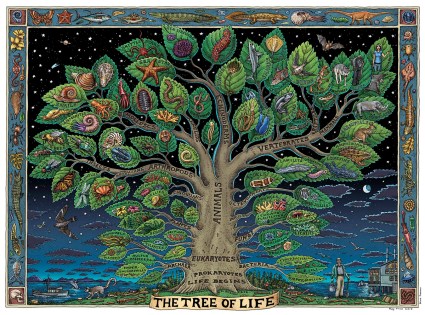
“It may be that some little root of the sacred tree still lives. Nourish it then, that it may leaf and bloom and fill with singing birds.”  Black Elk

In the quiet stillness of these times, I will continue sharing my current stream of thought around the theme of “Paradise Remembered.” In this post I revisit Richard Heinberg’s MEMORIES and VISIONS of PARADISE to start bringing this series to a positive finale, starting with this promising passage: 

A new Paradise awaits, but humanity must first undergo a cathar­tic cleansing. Few prophets have looked beyond the day of Purification to describe the events of the restored Golden Age, for the world to come will be inconceivable in terms of the present one. With the return of Paradise, history — as a chronicle of wars and intrigue, of plots and villains — will be finished. Humanity and Nature, Heaven and Earth will once more be joined in peace and harmony as a new Creation-Time begins. 

PURIFICATION OF THE HEART

In the biblical story of the Fall, an angel with a flaming sword was placed at the entrance to Eden guarding the way to the Tree of Life, lest fallen Man partake of its fruit and live forever in his fallen state.  The angel represents the ONE I AM; the sword represents TRUTH; the fire represents the purifying SPIRIT OF LOVE. The story, of course, is a metaphor indicating that in order to return to Eden, we must pass through the fire of purification and prove that we can be true to the Truth of Love, true to our true Self.

The first order of business is the cleansing of the heart, especially of immune-crippling fear and shame. Buried deeply in the heart of humanity are fearful memories of a cataclysmic past in which the human race and all living things were nearly and literally wiped off the face of the earth, such as what occurred in the days of Noah with the Deluge.  We carry shame in our hearts for having brought this calamity, and all those that followed, upon our own heads by forgetting to live by the Law of One, and fear that calamity will happen again. It was said, however, that the Creator would not destroy the world again by water, and that this generation is “reserved unto fire.” What are some of the implications of this prophecy, and by what possible means would such a fiery cleansing take place?

THE CREATING PROCESS

In addressing these questions, I turn to a consideration of the Creative Process in which matter is drawn together for a season and then undone and recycled for future creative purposes.  Integration is an equal partner to dis-integration in this process—and their cycles run concurrently, only integration tends to be a bit more subtle, and dis-integration tends to gain a lot more attention.

As examples: devastating forest fires make news headlines, while new growth in their wake receives little if any media coverage.  Plagues, like the current pandemic, devastate our sense of security, along with the human population — although to little extent compared to the 1.4% current population growth rate — and the daily death toll makes leading story for the morning news. On the other end of the population spectrum, we’re less likely to see announcements of new births in our daily newspaper as we see obituaries. 

Ironically, while we all celebrate new births with congratulatory sentiment, we may harbor reservations about the wisdom of bringing a child into this turbulent and overpopulated world.  We are, after all, leaving our children a mess to clean up.  My concern for our grandchildren is that they will suffer painful hardship in the collapse of this un-civilized world—and I don’t think there’s any doubt remaining that this will come to pass, if not in our lifetime, in theirs.

On our walk a few days ago we met up with a young friend who, with his wife, have agreed not to have children and bring more human beings into this world. Such conscious thinking and wisdom are exemplary.

As a species, we do need to curb population growth, and the starting place is with individuals.  Family-planning is essential, with conception-and-birth control taking precedence over abortion.  For those who do not wish to bring more children into the world, adoption is a beautiful way to fulfill a couple’s desire to have children and a family. If we the people do not take this matter into our hands, the powers that be, that manipulate the masses for profit, will do it in ways that are ungodly and do irreversible damage to the genetics of our species. 

Dan Brown’s INFERNO may be fiction, but the reduction of the human population by means of a viral epidemic, or vaccinations, has been conceived in human consciousness, the matrix in which the patterns of human civilization are set, and out of which our world is born. That said, let us not energize that conception by focusing our mental judgments on it, nor on those “evil-doers out there,” lest the conceived possibility take on a life of its own and become our-worst-fears-realized.

The creating processes of integration and disintegration are unfolding continually.  The question I pose is this: “Is there a ‘critical mass’ in place on earth sufficient to move the Creating Process in a more dominantly integrative direction?”  I sense that we’re getting there, if we’re not there already.  

FOUR WORLD AGES COME AND GO

Historically, ages end with cataclysmic events. According to the Ancients, there have been four Ages in our history.  Richard Heinberg cites them:

World Ages

If the magical landscape fixes Paradise in space, its position in time is defined by its placement at the beginning of a series of world ages. We have already noted the Greek and Hindu conceptions of the ages or yugas of the world, respectively; there are also close parallels among other cultures. The Iranians, for example, knew four cosmic ages that, in a lost Mazdaean book, the Sudkar~nask, are referred to as the ages of gold, silver, steel, and “mixed with iron.” In the Iranian conception, as in the Greek and Hindu, each age is a step in the world’s deterioration, a process that is leading to a final apocalyptic cleansing.”

The Mayans counted their world ages as consecutive Suns­ — Water Sun, Earthquake Sun, Hurricane Sun, and Fire Sun — according to the nature of the catastrophe that closed the epoch. The Hopi also spoke of four worlds — Tokpela, Tokpa, Kuskurza, and Tuwaquchi — the first of which is described in paradisal terms.  Following their creation in the Tokpela world, the first people went their directions, were happy, and began to multiply. With the pristine wisdom granted them, they under­stood that the earth was a living entity like themselves. She was their mother; they were made from her flesh …. In their wisdom they also knew their father in two aspects. He was the Sun, the solar god of their universe …. Yet his was but the face through which looked Taiowa, their creator …. These universal entities were their real parents, their human parents being but the instruments through which their power was made manifest . . . . . 

THE END OF A WORLD AGE

We are the generation to see the end of the “mixed-with-iron” age and the beginning of the “Information Age”– the age of “Artificial Intelligence” or “AI.” That has such a foreboding sound to it.  Are we actually relegating our intelligence to the computer?  Sounds like a final step downward in the devolution of our species — from spiritual beings who had access to all knowledge — past, present and future — down to the level of these animal bodies with brains that have limited vision, and down further yet to the mineral kingdom where we hand over our “intelligence” to a computer silicon chip in which our vision and view of reality is determined by “data” rather than spiritual discernment.   

Returning to the question I posed earlier, by what possible means will this generation be cleansed by fire? Heinberg speaks to this question in the final chapters of his book. I will conclude with these excerpts in two or three posts.

To Get Back to the Garden

EDENIC CONSCIOUSNESS MAY BE RECOVERABLE by individuals in rare moments of spiritual insight. Perhaps nearly everyone glimpses Paradise at some instant during his or her lifetime. But is it also possible for all of us together to live in the Garden once again — to return and stay? This final chapter will offer two reasons for thinking that it is possible. We will see, moreover, how signs of strain and disintegration in the founda­tions of our present civilization, together with some intriguing developments at the growing tips of society, suggest that a new Golden Age may already be struggling to be born.

The Attainability of Paradise

The evidence of anthropology and archaeology may not prove (though it certainly does not deny) the former existence of a Golden Age — that is, of a unitary culture in which people were universally and continually telepathic, lived close to Nature, and possessed miraculous powers. But, as we saw in chapter 8, anthropological and archaeologi­cal discoveries have shown, almost beyond a doubt, that two of the most destructive aspects of civilization (the use and justification of violence as a means of social change, and the desire for dominance over other human beings and over Nature) were acquired only re­cently. The findings of archaeologists show that in the past human beings did live — and therefore in principle are capable of living — in peace and harmony both among themselves and with Nature.

Moreover, the evidence of psychology suggests not only that a subjective condition of oneness, peace, and innocence is attainable, but also that it is the natural and healthy mode of human consciousness. If the human body functions best in the absence of the ego-states of blame, fear, and resentment (as medical experiments show that it does), then the fact that we are living in an ego-based world, in which Paradise is the exceptional experience, must therefore be an unusual and temporary state of affairs.

If we were able to live in Paradise once, we ought to be able to do so again. And if the most natural and healthy way of life available to human beings is defined by the expression of the essential paradisal qualities of character and the subsequent experience of universal harmony, then what is natural should in principle also be attainable. In short, we may be designed to live in Paradise.

Why, then, do we routinely assume that Paradise is beyond our reach? Perhaps it is partly because we have an unrealistic concept of what that state is or should be. We tend to think of Paradise as a place or time in which all human desires are satisfied; since people’s desires tend to conflict, we therefore assume that Paradise could never actu­ally exist. But the Paradise of myth and vision is not a state in which conflicting personal desires are somehow all fulfilled. Rather, it is one in which all human desires and motives are completely subsumed within a larger creative purpose. If individual desires are satisfied in Paradise, this is only because it is the overwhelming desire of all individuals that the consummate accord of Nature and Cosmos be nourished and maintained.

The inhabitants of Paradise — whether in myths of the First Age or in near-death visions — are universally characterized by their expres­sion of specific values and qualities of character. And, as Aldous Huxley (among others) has shown, a comparative study of the relig­ions of the world reveals that these values and qualities — honesty, compassion, and love — are universal and innate. Whether it was a historical reality or not, Paradise exists in the eternal present as an image expressing our deepest sense of what is right and true about ourselves.

Looked at in this way, Paradise may be seen as serving a specific function, as a design for living embedded in the circuitry of human consciousness. All biological organisms, including human beings, contain elements of design. We know, for example, that the pattern of the DNA molecules in our cells governs the basic design of our physical bodies. Perhaps we also contain within us a neurological or psychic program for the optimal design of social and spiritual relations between ourselves, the Cosmos, and Nature — a design of telepathic oneness and interspecies communion that represents the goal toward which our individual and collective experience would naturally tend to unfold.

Provided there are no significant interferences, the design inher­ent in the DNA molecules in our cells is expressed automatically and accurately in the formation of our physical bodies. Perhaps the same is potentially true of the neurological design of Paradise: provided its expression is not blocked, the pattern of oneness with the universal currents of life, as well as of miraculous abilities, should be automati­cally and accurately reflected in our ordinary experience.

At present, however, it is not. As we have seen, nearly all of the world’s spiritual traditions agree that the innate paradisal design is being thwarted in its expression by certain now-universal patterns of attitude, thought, and behavior.

Could it be that simple?  Could Paradise be, as Scott Peck imaged, A World Waiting To Be Born ?  Awaiting our expression of it?  Of its Spirit?  Is the “fire” unto which this generation is reserved the fire of Spirit in expression through us?  The spirit of love, of truth and of life?  Energetically, cosmic conditions are just right for the birth of a new world and a new human race, with our conscious participation as “spiritual midwives,” as we travel with the planet and solar system, at breakneck speed, into uncharted waters in space.  Our once clouded vision is clarifying and expanding to encompass the image of a Golden Age coming down from God out of a New Heaven manifesting a New Earth.  Let us welcome it with joy and celebration.

Rise up, my love, my fair one, and come away. For lo the winter is past, the rain is over and gone; The flowers appear on the earth; the time of the singing of birds is come, and the voice of the turtle is heard in our land. . . .  Make haste, my beloved, and be thou like to a roe or to a young hart upon the mountains of spices. (Song of Solomon

The Teacher taught that fear is cast out of the heart by “perfect love”— unconditional love consistently expressed in living.  Shame is cleansed by forgiveness. That’s one means of purifying the heart of humanity.  Another way is by the fire of nuclear fission.  But then there would be no flesh left with which to start over, as in the days of Noah and his family.  Let us opt for the fire of Love — and grant God his wish that none should perish but that all should come to enjoy life eternal in Paradise restored — for, as Black Elk encouraged, It may be that some little root of the sacred tree still lives. Nourish it then, that it may leaf and bloom and fill with singing birds.”

Until my next post,  

Be love. Be loved.

Anthony

tpal70@gmail.com

Paradise Remembered: Tending the Garden of Consciousness

HAPPY EASTER

There are only two ways to live your life. One is as though nothing is a miracle. The other is as though everything is a miracle.” Einstein 

The miracle of life lies in the alchemy it creates to manifest forms from out of “nowhere” to “now here”—out of an invisible Heaven and into a visible Earth. “As above so below.” We invoke this alchemy, consciously or unconsciously, each time we recite the Lord’s Prayer and pray the will of God in heaven to manifest on earth. How this works is by Divine Alchemy — only it can’t and won’t work in human affairs without Man’s/our participation.

Words of the Teacher speak to this order of creation: “Seek ye first the Kingdom of God and his righteousness, and all these things shall be added unto you”– counsel my passionate father imparted repeatedly, and for which I am most grateful.

ALCHEMY Vs CHEMISTRY

In our scientific approach, we employ elemental interactions in chemistry, and physical labor, to manufacture products.  We even view conception and embryonic development as a biologically driven process. We till the ground to grow our foods and rape the earth for our fuel and building materials.

Forms may appear to rise up from out of the earth, and they do, as my sprouting beans in the garden magically demonstrate.  However, it is the subtle energy of life that creates the irresistible force of attraction that draws form up from out of the earth.  Man uses chemistry to make things.  Life uses Divine Alchemy to manifest Creation.  Everything is a miracle, including the chemistry. Even this coronavirus!

What is it that drives these alleged “lifeless” germs, made of RNA messaging molecules with protein mooring apparatuses, held together with fat, to attach themselves to cells so they can steal their DNA to reproduce themselves?  As Krishna exclaims in the Gita: “Life it is! Life’s urge it is! . . . man’s enemy or friend!” A harbinger of death, perhaps, nevertheless a miracle of life!

Consolation may be found in words penned by Charles Eisenstein in an excellent online article entitled The Coronation: “Remember, death is no ending. Death is going home.” Why, then, do we fight it and stave it off? Seems we would be happy to be going Home.

That said, my heart goes out to those who are mourning the loss of loved ones and dear friends, and to those special souls, heroes all, who are taking care of the afflicted, putting their lives on the line while struggling with fear and uncertainty, yet passionately going about their tasks caring for the sick. God bless and protect them each one. 

ORIGIN MYTHS ABOUND 

There are many myths about the origin of our species, including the Creation Story of Genesis.  In the previous post I excerpted passages from The Book of Grace in which its author, my dearest late friend Grace Van Duzen, offers insights into the biblical account of the Creation and Fall of Man from grace, stature and dominion.  I also shared excerpts from Richard Heinberg’s MEMORIES and VISIONS of PARADISE, and I’ve received several comments, one from a friend and fellow wayfarer, Donald White, who offered this critique and encouragement:

While I agree with much of your treatise here, I’m still wondering why the “story of man” as presented by the most ancient cultures known to have lived upon the planet with actual written records (the Sumerians and the civilizations that followed) are not part of your consideration of our origins on planet Earth. Atlantis (and Lemuria) may have existed…I don’t dispute that they MIGHT have…but we really don’t know (with apologies to the late Edgar Cayce!).

(True, even the Greek philosopher Plato used the Atlantis legend in his Socratic Dialogues as a fictitious tale, a mythical parable about the cultural and political deterioration of life in the state — casting a shadow onto our modern day.)

The biblical texts regarding these ancient times are highly mythologized, having been translated several times so that we have a version in English (King James Bible), but they still allude to more substantive, extant ancient writings in cuneiform from Mesopotamia (Sumer, Assyria, Akkadia & Babylonia). It just seems that what these ancient scribes had to say about their ‘gods’ and the origins of their culture (attributed to their gods) should have at least equal validity to any of today’s lucid dreamers, biblical pundits, and scholarly professional authors on this subject.

Are we as a species the product of a ”magical’ divine Creation or a design-driven, divine Evolution? Are we still evolving (with fits and starts from proto-human to Neanderthal to Cro Magnon) where angelic consciousness emerges as a whole in the world, or do we need to experience a resurrection from a fall from a place of divine identity where we already knew that identity in human form? These questions are key to your subject matter and I welcome your current focus in this area as it has allowed some deep meditation on my part about where we are today as God’s vessel and representation for this world. This I agree with wholeheartedly, beyond belief!

THE GARDEN OF HEAVEN 

In the Beginning, Man was given a garden called Eden to dress and to keep. No tilling was required because this garden was, and still is, an invisible one.  It was the Consciousness of the Creator, who was willing and eager to share with Man its care and creating magic, along with its material manifestation — a desire that awaits fulfillment.  That’s why we are here today.  Eden awaits Man’s return to dressing and keeping it — the topic of my next post.  

In this series I have also been sharing some of Peter Watson’s commentaries, which have actually provided thought-provoking upgrades for my own understanding of things hidden in the Creation Story handed down to us in the Book of Genesis, for which I am profoundly grateful.  Here is an excerpt from his most recent dialogue:

As the heaven – the realm of preform – must logically precede the realm of form, as with invisible life that designs and then grows the forms it inhabits, the idea of debris from dead suns being drawn together by gravity, so that under the right circumstances, with water air and earth, and a safe distance from the fire of a sun, the collection of debris would be suitable to support animated ecosystems is far-fetched to say the least. Such a materialistic view is clearly in denial of heavenly preordination, and is therefore flawed inasmuch as it cannot account for our invisible animating force, life, nor its origin; i.e. the Father and Mother of Life.

Fortunately Jesus foresaw the scientific dilemma that would eventually surface as men of intellect probed only the heavens, and the past, for mankind’s meaning and origins, instead of looking within, and perceiving the kingdom-of-heaven as instructed. His remedial advice, and blueprint for the way life works, are contained concisely in the so-called Lord’s Prayer, portraying the simple outline of the order in which life works (i.e. from the heaven and then into the earth; “Thy will be done on earth as it is in heaven”), which must be complied with if our latent human potential is to be realized and made manifest. All of this he liberally demonstrated in working with the four forces, starting his ministry in a water cycle, and miraculously healing those who responded appropriately to his presence, “Wilt thou be made whole?

(His brief earthly life and ministry ended in a Fire cycle with his celebratory entrance into Jerusalem, commemorated in the Christian world on Palm Sunday, and his crucifixion and victory over death that led to his resurrection from the tomb and ascension back into Heaven from whence he came — commemorated during Holy Week and Easter Sunday throughout the Christian world.)  

It’s now up to a precious few of us who are remembering and enacting the instructions of Jesus, so that what he initiated may be brought to fruition as intended. I rejoice in sharing these words with you and seeing the seeds planted by Jesus replace the superstitious seeds of religious fear, and bring the Garden-of-God, Eden, back to life on earth. “I am come that they may have life, and have it more abundantly.

MAKING SENSE OF IT ALL

Having followed up on Don’s encouragement to at least expand my research to include the Sumerian and other ancient mythical stories of the formation of the human species, and having meditated on Peter’s commentary on the two accounts of the Creation story in Genesis 1 and 2, as well as on Grace’s insightful interpretation of the biblical Creation Story, I have finally come to terms with my own inner struggle to make sense of it all — and it all comes down to the first paragraph of this post: the Heaven gives form and birth to the Earth.

In Genesis 1, God, Elohim, created Man male and female, in their own image and likeness and placed them in Eden, a Paradise where everything they needed in the way of food and sustenance was freely provided, requiring no tilling but only a thought form to manifest what they needed to sustain their heavenly forms. God blessed them and gave them dominion over all the life forms in Eden, instructing them to be fruitful and multiply and “replenish the earth.” We’ve done a lot of multiplying of our species, but very minimal replenishing of the earth.

In Genesis 2, “The LORD God” (a conclave of God Beings, as Grace explained) is said to have “formed” man (male only) from the dust of the ground and breathed into his nostrils the breath of life, and the man “became a living soul.” Life, the originating and organizing force of Creation, is given to this man after he is formed by matter — the heaven and the earth in reversed order — “when the earth and the heaven were created”— contrary to the way the Law of One works to bring forth Creation out of Heaven.

Here we again have a committee of God Beings, not creating but forming a man out of clay, as many myths describe their various “gods” did.  As for woman, well, she was an after-thought by the rogue creators seeing as how the man was alone and in need of a “help mete”— not an equal partner but a helper.  So, it’s been a man’s world ever since the Fall.

This conclave of God Beings “planted a garden Eastward in Eden, and there they placed the man whom they had formed.” Here we have the first division, that of Man, created by God male and female in His own image and likeness, divided into a man and a woman, a pair of opposites — from oneness to duality.  One myth describes the First Man as being male on one side and female of the other.  Hmm?

Peter’s Comments:

Let it be said that any compromise, or reversal of the principle of cause-and-effect, heaven-and-earth in that order, would inevitably result in a state of decay, and eventual death. We cannot deny or ignore the way-of-life; i.e. what Jesus demonstrated admirably, with impunity.

Let’s say, in Genesis chapter one, we have a true account of creation, with Man, male and female, designated to share God’s dominion . . . .  Alongside, we have chapter two that denigrates mankind (not Man) to have come from the dust-of-the-ground, subject to externals and a tree-of-the-knowledge-of-good-and-evil, a tree-of-death, with no mention of dominion, only subjection, and we have a reliable perspective of how humanity has been coerced into falsely interpreting God’s will.

Earlier on in this commentary:

Fortunately, death and decay can only spread so far in either direction in the microcosm and the macrocosm at a form (material) level, beyond which life reclaims waste and renews it in the mineral kingdom and on up. As is recognized by physicists, no energy is ever lost; you cannot have a ‘dead’ (motionless) atom, or indeed a motionless galaxy. Where there is motion there is evidence of life; where there is life there is the ever-present origin-of-life.

We cannot separate matter from motion. Even using negative numbers, Euclidian geometry, or quantum mechanics, matter and motion are inseparable except in human imagination. However, designed as it is to participate in the furtherance of creation, imagination of the human mind can and will manifest if concentrated over a sufficient period of gestation. Beyond a certain point it becomes questionable as to what human imagination manifests is of any practical value; we may use disease and weaponry as examples of negative manifestation.

Stephen Hawking asks, “What place for God” in his imaginary universe.  Einstein said “There are only two ways to live your life. One is as though nothing is a miracle. The other is as though everything is a miracle.” Observational science limits itself to the analytical view of “nothing is a miracle.” Participatory science (ontology) expands its parameters to see “everything is a miracle.” Einstein’s vision extends the reach-of-science beyond the grasp of mankind.

The grasp of mankind is limited to material observation and measurement, a phenomenal mental approach to understanding the universe, but which denies or otherwise ignores the essential encompassment of a motivating force, such as that which makes vegetation grow, human digestion allocate protein where it belongs, and guides the constellations along their celestial paths.

And from an earlier commentary:

So there’s the so-called Fall-of-man in a few lines, sustained by, but not initiated by Eve — the cloned after-thought companion of a simple gardener when it was noticed, “It is not good that the man should be alone”. Unfortunately, Sunday-school translation has made them both appear to have been the original sinners, upon which religion has capitalised in using a ‘sinner’ identity to cover up the rogue’s role of Godlessness, and at the same time keep congregations in the dark regarding our true identity in original Man, male and female, not made from the dust-of-the-ground, but by the male and female spirits of God incarnate. “BIG mistake!” as Schwarzenegger would say.

ANCIENT MYTHS 

Now, the Sumerian, Babylonian and other ancient myths tell of many gods flying in the heavens and roaming the earth making things they needed, which included laborers — more like slaves — to till the ground; and warring with one another over the manner in which things were being done, especially in the slave-making department.  They also created “giants” to do the heavy lifting. 

Donald’s Commentary:

Here’s a short summary of the story of mankind’s creation as told in the Sumerian ‘Enuma ‘Elish’ (deciphered from clay tablets uncovered when ancient Ninevah was excavated circa mid 19th century):

“… What is extremely interesting in the ancient Sumerian Creation Story is the fact that initially, man created by the Gods was not able to reproduce on their own. This is why the Gods ‘MODIFIED’ mankind with the help of Enki and his sister Ninki. After the Gods had modified mankind, Adapa was created as a fully functional human being which had the ability to reproduce. However, this ‘modification’ was done without being approved by Enlil, brother of Enki and Ninki, which created a conflict among the Gods.

The conflict made Enlil the first adversary of human beings and according to ancient Sumerian texts, mankind went through an extremely difficult time while serving the gods.”

As you can see, there are numerous similarities between the creation story of Ancient Sumer and other ancient cultures and religions around the globe, but interestingly, in all of them, we learn that mankind was literally CREATED by the GODS in their own image.”

Perhaps the beginning of religion and slavery imposed upon our earliest ancestors? What an awful implication (and indictment) on our false ‘god/creators’!

I think Don is onto a hidden truth.  Here’s an interesting side-story I came upon in my limited studies of ancient cosmology. The word El, as in Elohim, is feminine in gender, indicating that it was a Goddess who created Man — or at least the Elohim may have been a group of feminine deities who were commissioned by the Godhead to create the world and Man in it.  Heinberg cites a man’s near-death-experience in which the God he saw was a woman.  I rather like this kind of musing about God being both male and female and how this works in the invisible order of angelic and creator beings.   

RECLAIMING OUR ORIGINAL INNOCENCE

So, Don, I trust I have adequately addressed your queries about who we are and were we are in our evolution of consciousness — our heaven out of which our earthly forms and world continually and momentarily materializes.  I’m right in there with you meditating on our current role as representatives of God on Earth, and as co-creators and keepers of the Garden — and with you Peter, in uncovering the clarifying truth of the Creation of Heaven and Earth, in that order, and of Man and mankind, hidden in myths until a time when we can bear to hear it — realizing that we can correct the “Original Sin” of Adam by reclaiming our Original Innocence.

In our innocence — not by faith and belief in an unknowable God, but by conscious knowing of our own divine identity as Sons and Daughters of God, co-creators with God — we can intelligently engage the Law of One that governs Creation to create Paradise on Earth.  As we hold the image and likeness of God in our consciousness as the template of our outer forms, letting love radiate without concern for results, our bodies will continue to evolve and be transformed, ultimately transmuted into angelic light forms. “As above so below.”

It was Man’s concern for results and his self-determination that reversed his polarity, repelling our first parents from God and ejecting them from Paradise.  We are here to “repent,” literally turn around, restore our polarity in God, in Love, and allow a resurrection and ascension to take place.  All we have to do is dress and keep the Heaven.

I’ll leave it there for your meditation. Until my next post,

Have a Happy Easter and/or a Joyous Passover.

Anthony

tpal70@gmail.com


Paradise Remembered, part 4: Return to Grace, Stature and Dominion

“For in the day thou shalt eat thereof thou shalt surely die.”   Genesis 

As I watch this coronavirus “pandemic” consume fearful minds and hearts, and hear the daily tally of the numbers of those infected and dying, I marvel at the resilience of the human spirit that consistently and predictably rises to the occasion in the presence of a common threat—real or only perceived.

At the same time, I also marvel at the level to which Man has fallen from the grace, stature and dominion over creation we once shared with our Creator and enjoyed in the Beginning when we were divinely created and fashioned and given a Garden of Paradise to call Home and habitat.  Not that we haven’t been given ample opportunities to repent of our aberrant ways and restore Paradise, because we have.

Such an opportunity is with us now in this global crisis that has halted us in our tracks and shut down our survival-and-greed-driven self-activity.  From what I’ve been seeing on social media and the news, there seems to be an awakening to this opportunity in many and an expressed intention, if not commitment, to not return to “business-as-usual” when this pandemic is over.  Some have noticed, as I have, that the level of air pollution has dropped considerably—as much as fifty-percent here in the US according to a recent national weather report—and noise reduction is pleasantly noted as well.  Wow! What an eye-opener and blessing this crisis is giving us just in these two results of reduced human activity on the planet! Not to mention the social impact globally.

This pandemic can be seen as humanity’s 9/11—but it doesn’t come without a caveat that we not to be deceived by the “trickster” yet again.  The caveat in this episode is “Follow the money.”  As someone wrote in a social media post a few days ago, “If you don’t use your mind, someone else will use it for you.” So, let’s use our minds and do our own research, and not follow the proverbial herd of sheep over the cliff.  Fear paralyzes our ability to think for ourselves. (See the video clip below and learn how Science is manipulating the human genetic material in order to control the human population.)

Along these lines, I received  a rather thought-full commentary, entitled THE VAST MAN. from one of my blog followers “across the pond,” as they say in the UK, Peter Watson, a portion of which I will share and see where it takes us:

THE VAST MAN

Logic and reason would suggest that original man, male and female, would have been of far greater stature (if designated to ‘have dominion’, as it was put, over Eden), than the human species that now inhabits Earth. Confirming this, we have extensive mythology speaking of gods and goddesses, giants-in-the-land, men of great renown, crowned by the Gods-of-Olympus ruling the first civilization. Also tending to validate the hypothesis of a vast man, male and female, and of greater stature, there is biblical mention of “Sons-of-God”—surely a reference to those designated to ‘have dominion’—who “saw that the daughters of men”—(certainly a reference to the Adam strain produced to till the ground and dress and tend a garden; hardly in the order of having dominion)—“and took unto them all they chose”—not unlike the sheiks and sultans of mankind’s world.

Historically, between the completion of Eden, and the host of original man, male and female, stretches an unrecorded blank, known in mythology as The Golden Age of Man, that spanned the period between the Sixth Solar Day—midway in the First Universal Age [a cycle of 310,464 years]) and the latter millennia of the Twelfth Solar Day (a cycle of nearly 26,000 years)—at which point an unauthorized garden is planted eastwards in Eden, where “there was not a man to till the ground.

In the midst of extraterrestrial upheavals that wiped out and submerged two civilizations, reducing survivors to the cavemen-stage beginning of the present civilization, spans a feasting-ground for extraordinary mythology, including fire-breathing dragons, witches riding their broomsticks across the night sky, and a temporary race of dinosaurs; all hallmarks of globally-acclaimed recognition.

Little or no memory or recognition of the greater portion of man’s history is now available, other than in myths and legends, a state of mind to which professor Velikovsky ascribes amnesia. With NASA’s computing power, and Hubble’s space-penetrating telescope, we can now trace evidence of past upheavals within Sol’s galactic family of planets to confirm such events as the parting of the Red Sea, and the day the Sun and the moon (apparently) stood still in the sky in Joshua’s record. Slowly but surely parts of mythology, extraordinary as it may seem, can now be confirmed.

The “First Time”

The “First Time”—when Man lived in the Garden of Paradise—spanned a considerable length of time before the “Fall” took place and Man, outside the Garden and hiding from the Creator, began to create living things out of his own imagination and physical desires. In her BOOK OF GRACE, Grace Van Duzen writes evocatively about that sad day:

Gen. 6:1,2:  And it came to pass, when men began to multiply on the face of the earth, and daughters were born unto them, That the sons of God saw the daughters of men that they were fair; and they took them wives of all which they chose.

This incident portrays the obsession which engrossed divine Man as he surrendered to the temptation to control the outer planes of his own being for his own pleasure and purposes. It depicts a further step in the Fall, wherein his expression became subject to that over which he was created to have dominion and thus doomed the earth and its people to the fallen state. It lowered the vibratory rate in human beings, so that the physical forms lost much of their power and beauty.

All of this was a reversal of the working of God’s Law. The self-activity which has character­ized mankind’s function since that time is described by the act of taking “wives of all which they chose.” The basis for the function of human beings, especially in the most intimate areas (as of “wives”), is that of personal choice, desire, wants, without regard to a design inherent in the divine nature of each one. Described later as the “will of God,” that has a reputation of being something imposed, undesirable, when in fact it is the only possible way of fulfillment, joy and satisfaction.

The reference to “multiplying” indicates the exponential process, with the results of self­-obsessed function, divergent from the original state.

Edgar Cayce was a man with a remarkable and accurate ability in the subconscious levels. In a book Edgar Cayce on Atlantis, written by his son Dr. Edgar Evans Cayce, he referred to man­kind’s advent in Atlantis:

The first disturbing forces…in the continent [Atlantis], through the application of spiritual things for self-indulgences of material peoples. . .were the periods as termed in the Scripture when “The sons of God looked on the daughters of men, and saw them as being fair.”

He spoke of the “sons of the Law of One” and of the “sons of Belial.” All were created as sons and daughters of the Law of One. It was the departure from that One Law, indulging in union with the “sons of Belial,” the devil or the wrong use of the serpent in the tree that produced all the mis­ery in the world.

That state included the introduction of slavery, “servitude to many through the aggrandizing of those things that pertained to the gratification of material things, material desires in the body.” 

Gen. 6:3-22:  And the Lord said, My spirit shall not always strive with man, for that he also is flesh: yet his days shall be an hundred and twenty years.

This verse declares the drastic change in human form and substance” for that he also is flesh,” accompanied by the reduction in his life span. Rejection of the ordained process of birth and ascension resulted in the gradual decrease from approximately thousand-year cycles to “an hundred and twenty years.” There was the transition from a high vibrational substance to what is called flesh. This was recorded previously when it was said that God made them “coats of skins.”

The bodies of human beings as originally created were formed “of the dust of the ground,” the purpose being to utilize the substance of this planet to create a vehicle for the Lord’s do­minion in this part of the cosmos. It was the absorption of the consciousness at the physical level that interfered with the vital control from the higher planes, described as “my spirit, saith the Lord.” This reversed the upward movement of the “living soul” to a dying one.

There were giants in the earth in those days; and also after that, when the sons of God came in unto the daughters of men, and they bare children to them, the same became mighty men which were of old, men of renown.

And God saw that the wickedness of man was great in the earth, and that every imagi­nation of the thoughts of his heart was only evil continually.

[The process of the Fall was literally clothing evil thought-forms with Earth’s substance: “heaven and earth” became “heaven and hell.”]

And it repented the LORD that he had made man on the earth, and it grieved him at his heart.

And the LORD said, I will destroy man whom I have created from the face of the earth; both man, and beast, and the creeping thing, and the fowls of the air; for it repenteth me that I have made them.

With His creation in this part of the cosmos at a crucial point, it appeared to the Lord that it might not survive the inevitable working of the Law, resulting from man’s own wrong func­tion, pictured as the Lord destroying man.  All of Earth’s kingdoms are dependent upon the outcome of man’s advent on this planet: “both man, and beast, and the creeping thing, and the fowls of the air.” It was obvious that without a change in man, in the “thoughts of his heart,” this glorious creation would self-destruct. The function of the mind (serpent) is the vital key in the restoration of mankind, which is not separate from the heart, the emotions, the passion which is the substance of first form, as palpable in the subconscious level as the more familiar physical one. When that is “continually evil” the material form and atmosphere cannot be oth­erwise.

My attention was piqued as I read “The process of the Fall was literally clothing evil thought-forms with Earth’s substance: ‘heaven and earth’ became ‘heaven and hell.’” That’s still going on today. Scientists exercise little restraint and take presumed license in their laboratories toying around with they-know-not-what.  Yet does curiosity and desire for fame and fortune compel them onward in their search for the Pulitzer-prize-winning discovery of the day. “Let us make things in the image and likeness of the thoughts and imaginings of our own hearts and minds.”  Those imaginings and thoughts are to this day “only evil continually.” And this self-activity is not limited to science alone but is going on everywhere—in commercial agriculture, for instance. 

Consider, for example, the DNA Sequence recently deciphered, and the tampering of the genome to produce genetically altered foods, even clone animals.  The spiraling DNA helix can be seen as a “tree of the knowledge of good and evil”–or evol.  We were warned not to even touch it, much less eat of its fruit?  The “fruit” would be the end product of genetic engineering, which has had deadly consequences.  “For in the day thou shalt eat thereof thou shalt surely die.”  I think that was a warning rather than a threat by an angry and vengeful God.  To this day our lying serpentine mind whispers “Thou shalt not surely die.”

Some have speculated that this virus may have been created in a laboratory and escaped by accident. I rather suspect that man’s perpetration and rape of the Earth’s natural resources has triggered a global immune response from the Natural World.  Earth is, after all, a living, breathing entity. A viral pandemic could well be her way of giving us pause to reconsider our chosen way or living—or dying.  Let us face the fact that whatever is not in harmony with, and strives against, the Natural Order is constantly being undone and eliminated from the Earth. We fight it to our peril. Yielding to the Natural Order, we live—hopefully to restore benevolent grace, noble stature and loving dominion to Man, God’s representative in this corner of the Universe.  

I will close with these uplifting words of Grace:

The creation of this planet and its inhabitants was unique in the cosmos, with a very special function in the solar system. Man is created with the ability to let the control of the cosmos, “God Almighty,” be operative on Earth, and consequently have vital impact in the entire solar system.

With that, I will leave you to your own thoughts and meditations.  Until my next post,

Be love. Be loved

Anthony

tpal70@gmail.com

World View in the 21st Century

There are more things in heaven and earth Horatio Than are dreamt of in our philosophy. —Shakespeare’s Hamlet

Anima Mundi

Lest we allow our world view be shaped by scientists’ shallow materialistic view of a disenchanted universe, let us remember that the Earth is a living, breathing entity with a soul.  It is the human species that has become disenchanted with its home among the stars by maintaining a materialistic view of the Earth, along with the entire Universe, a view that has turned living, soulful matter into potential resource to be harvested and ripped from the bowels of Earth—with eyes now on her sister planets—and used to build, power and feed a civilization that has overrun its boundaries in an exponential explosion of population, with its towering skyscrapers, sprawling subdivisions, and commercial and industrial complexes.

The good Earth is burdened with concrete plastered all over her fertile, breathing soil, and with structures fabricated of iron and steel erected to refine oil and minerals drilled and dug up from her bowels to pave the way for commercial traffic and to fuel the engines of “progress,” a progress designed to enrich the few on the backs of the many.  It hurts my heart to watch the cold, rigid iron and concrete paraphernalia of the oil industry intrude upon the wet and tender marshlands here in the South. Not a very pretty sight.

But “It’s what it is,” to borrow a coded line from The Irishman used to order a “hit”on some expendable gangster. We have reason to suspect our species may be expendable, seeing as how we are so susceptible to plagues such as the current outbreak of the coronavirus. Richard Tarnas paints a rather bleak and ominous picture of the modern world view in COSMOS AND PSYCHE:

The disenchanted cosmos impoverishes the collective psyche in the most global way, vitiating its spiritual and moral imagination—“vitiate” not only in the sense of diminish and impair but also in the sense of deform and debase.  In such a context, everything can be appropriated. Nothing is immune. Majestic vistas of nature, great works of art, revered music, eloquent language, the beauty of the human body, distant lands and cultures, extraordinary moments of history, the arousal of deep human emotion; all become advertising tools to manipulate consumer response. For quite literally, in a disenchanted cosmos nothing is sacred. The soul of the world has been extinguished: Ancient trees and forests can then be seen as nothing but potential lumber; mountains nothing but mineral deposits; seashores and deserts are oil reserves; lakes and rivers, engineering tools. Animals are perceived as harvestable commodities, indigenous tribes as obstructing relics of an outmoded past, children’s minds as marketing targets. At the all important cosmological level the spiritual dimension of the empirical universe has been entirely negated, and with it any publicly affirmable encompassing ground for moral wisdom and restraint. The short term and the bottom line rule all. Whether in politics, business, or the media, the lowest common denominator of the culture increasingly governs discourse and prescribes the values of the whole. Myopically obsessed with narrow goals and narrow identities, the powerful blind themselves to the larger suffering and crisis of the global community.

In a world where the subject is experienced as living in—and above and against—a world of objects, other peoples and cultures are more readily perceived as simply other objects, inferior in value to oneself, to ignore or exploit for one’s own purposes, as are other forms of life, biosystems, the planetary whole. Moreover, the underlying anxiety and disorientation that pervade modern societies in the face of a meaningless cosmos create both the collective psychic numbness and a desperate spiritual hunger, leading to an addictive, insatiable craving for ever more material goods to fill the inner emptiness and producing a manic techno-consumerism that cannibalizes the planet. Highly practical consequences ensue from the disenchanted modern world view. . . .

Defined in the end by its disenchanted context the human self too is inevitably disenchanted. Ultimately it becomes, like everything else, a mere object of material forces and efficient causes: a sociobiological pawn, a selfish gene, a meme machine, a biotechnoligical artifact, an unwitting tool of its own tools. For the cosmology of a civilization both reflects and influences all human activity, motivation, and self-understanding that take place within its parameters. It is the container for everything else.”

The point Tarnas makes throughout his book is that we create our cosmology in our psyche and project that image out into the cosmos. We see the cosmos and our world not as they are but as we are. 

Now is the time to remember our immortal Identity in Spirit and let go of our mortal identity in form; identity in transcendent Reality beyond and encompassing our humanity. The Spirit of God is moving upon the face of the sea of our collective consciousness commanding: “Let there be Light.”  We are the Light-bearers for our world.  It is the Spirit of God that inspires and enchants the cosmos.  The presence of God, however, is not enough to lift the human psyche out of its fear, hatred and despair.  Spirit needs to be expressed to be known. To have love in one’s heart is not sufficient. Love must be expressed, in words, with feeling and with action.

Cosmological Context for the 21st Century

Changing gears now, let’s have a look at what we may expect from the planetary configurations this century according to Richard Tarnas’ research. 

For my readers who are not familiar with astrological terms for planetary alignments, here is a crash course. Planets in conjunction are lined up on the same side of the earth; in opposition on opposite sides; square alignments are at 90°; sextile at 60°; and trine at 120°.

Tarnas writes: (Emphasis mine)

We have discussed the various upcoming dynamic or hard-aspect alignments of the outer-planet cycles. There still remain the trines and sextiles of these cycles. Of these, by far the most significant is the century-long Neptune-Pluto sextile, which began in the mid-twentieth century and will continue until near the middle of the twenty-first. This long sextile takes place once each five-hundred-year Neptune-Pluto cycle, beginning about a half-century after the conjunction. Its unusual duration results from Pluto’s eccentric 248-year orbit, which twice each Neptune-Pluto cycle brings it close to and, briefly, even inside Neptune’s orbit—the first time as a sextile, the second as a trine. Historically, such sustained sextile or triune alignments of Neptune and Pluto have coincided with long epochs in which a certain profound evolution of consciousness appears to be propelled and sustained in a gradual, harmoniously unfolding manner, moving beneath and through the fluctuations and crises that might occur at a more immediate empirical level. The grand trine of Uranus, Neptune, and Pluto in the 1760’s and 1770’s cited in the previous chapter, which coincided with the peak of the Enlightenment, the birth of Romanticism, and the beginning of the American Revolution, occurred as part of the most recent much longer Neptune-Pluto trine of the eighteenth century. These century-long epochs generally seem to impel the collective experience of a more confluent relationship between nature and spirit, between evolutionary and instinctual forces (Pluto) and the spiritual resources and idealistic aspirations of the pervading cultural vision (Neptune). The archetypal dynamics involved characteristically provide, at an almost subterranean level in the collective psyche, a sustained stabilizing impulse.

This particular category of alignment has special significance: first, because it involves Neptune and Pluto, the two outermost planets; and second, because it lasts longer than any other planetary alignment. The current sextile is also historically noteworthy because of its role in the larger cyclical movements of all three outermost planets, since it coincided with the first Uranus-Pluto and Uranus-Neptune conjunctions to occur after the Neptune-Pluto conjunction of the 1880-1905 period. From a long-term historical perspective, therefore, we are living today at the moment when all three of these cycles, the largest planetary cycles known to us, have just completed their conjunctions in succession, marking the full initiation of the corresponding archetypal dynamics for the next several centuries.

If we consider, then, the unfolding cycles of the three outermost planets, taking into account the current alignment between Neptune and Pluto, the number of years since the most recent Neptune-Pluto conjunction a century ago, and the completion of the subsequent Uranus-Pluto and Uranus-Neptune conjunctions of the 1960’s and 1990’s, respectively, our present moment in history is most comparable, astronomically, to the period exactly five hundred years ago with which we began the book: the era that brought forth the birth of the modern self during the decades surrounding the year 1500. This too was an epoch of extraordinary turbulence and uncertainty, and also of great cultural creativity and dynamism. It was the moment of the High Renaissance of Leonardo and Michelangelo, Erasmus and Thomas More, in the immediate aftermath of PicodelIa Mirandola’s new vision of human possibility in the Oratia and Ficino’s Platonic Academy in Florence-a period shaped by the rapid spread of a powerful new medium of universal communication, the printed book; the first expeditions to a vast new world that, at enormous human and ecological cost, led to the opening of the global community to itself; and the immense spiritual and cosmological transformations, still unfolding, represented by Luther’s start of the Reformation and Copernicus’s conceiving of the heliocentric hypothesis.

Our postmodern age of ceaseless flux and irresolvable complexity, for all its metaphysical disorientation, and despite the collective entrancement produced by the mass media and corporate marketing, has nevertheless brought forth new conditions and possibilities that could prove invaluable for our future. As a result of the many extraordinary changes—cultural, psychological, spiritual—that have unfolded in the past half-century, the collective psyche has undergone a pervasive and in certain respects deeply benign transformation that cannot easily be measured and yet, for all its subtlety, is no less pregnant with historical significance. The rapid dissemination during this era of a fundamental new openness to the perspectives and realities of different cultures, eras, religions, races, classes, genders, sexual orientations, age groups, even different species and forms of life has been an essential characteristic of our time. It is perhaps not too much to say that, in this first decade of the new millennium, humanity has entered into a condition that is in some sense more globally united and interconnected, more sensitized to the experiences and suffering of others, in certain respects more spiritually awakened, more conscious of alternative future possibilities and ideals, more capable of collective healing and compassion, and, aided by technological advances in communications media, more able to think, feel, and respond together in a spiritually evolved manner to the world’s swiftly changing realities than has ever before been possible.

 All of this is, of course, occurring below the radar of the mass media. To paraphrase Shakespeare’s line from Hamlet: There are more things in heaven and earth than are reported by the media.  There is a saying about the content guidelines for media coverage: “If it bleeds it leads. If it tells it sells.”

Attunement with the material world has kept human beings earthbound in a “dust-to-dust” mindset.  We are called to a Light-to-Light level of consciousness and to a greater awareness of being more than “only human.”

Consumed by Fire 

There is a groundswell of spiritual awakening that’s been growing since the 1960’s.  Many who have sufficient resonant substance are being drawn by Love to find attunement with the Tone sounding in the center of our Milky Way Galaxy where the design for a New Earth is established in a New Heaven.  With the current cosmic configuration of stars and planets in our solar system and galaxy, we have the support of the entire Universe to move to a higher dimension and to transform our world by the fire of love into a Paradise—the topic of my next blog series.  Until then,

Be love. Be loved.

Anthony

tpal70@gmail.com  

Planetary Archetypes . . . . . . . . . . Man in a Cosmic Context

Out beyond ideas of wrongdoing and rightdoing there is a field. I’ll meet you there. When the soul lies down in that grass the world is too full to talk about….  Rumi

Thank you, Rumi, for your rumination. The world is indeed too full to talk about, so I will simply write about it.  In this series, I’ve been considering the history of archetypes and its parallel evolution with that of human consciousness. The source of my research is Richard Tarnas’ epic book COSMOS AND PSYCHE, which I am finding incredibly fascinating and enlightening a read and study.  

In the previous post I shared Tarnas’ research into the history and evolution of the concept of archetypes and how human consciousness has evolved with it, as though the archetypes and human psyche are intimately blended and impacted by one another. (It may well be that the human psyche itself is the originator of the concept of archetypes.)  In this post, I will share the planetary aspects of the author’s perspective gained in his exhaustive and detailed research.

Listen to the Message of the Planets Aligned

It is not by happenstance that this material has come into my hands just prior to the time of the current planetary alignment, which will end on February 20th, two days before this post will be published. My consciousness is attuned to the energetic messages being transmitted to Earth at this pivotal and chaotic time when the most powerful person in man’s world is about to be chosen by the citizens of the United States of America—who are divided amongst themselves with fear and hatred governing hearts and minds. There is an encoded message for us in the music streaming from these aligned spheres, and one message I am hearing is
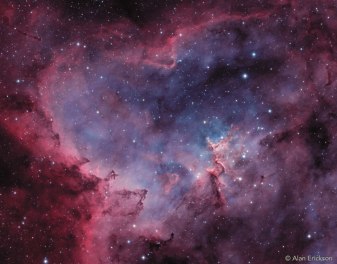
“Nothing is wrong. Everything matters. Let not your hearts be troubled. Let love fill them and radiate without concern for results.” 

As I write, I am aware that some of my readers may not have space in their minds and hearts to think and care much about these cosmic events. There is so much to keep up and deal with in our lives these days. And with one’s “nose up against the grindstone,” so-to-speak, one is understandably oblivious to the larger drama of life taking place in the cosmic context.  I say this not in judgment or criticism but with compassion for the busy human state. For reasons that are emerging even as I write, these larger events taking place in our cosmic habitat have projected themselves into my consciousness for consideration at this time.  So I will indulge them and give them due consideration—and I do welcome and appreciate comments and feedback from my readership, which fluctuates up and down with the subject matter.  Currently it’s up, so I’ll keep moving with this consideration—the next one already presenting itself in the back of my mind and having something to do with myths and memories of Paradise.  Hmm, sounds inviting.

Asking your forbearance, I burden you once again with an excerpt from COSMOS AND PSYCHE for your consideration and, hopefully, your edification and intellectual pleasure.  My mind loves to be engaged by truth—not that what follows is true at all levels, as there is always a higher truth.  This author writes from a higher level of consciousness than simply scientific and mental. It’s his spiritual perspectives, which he shares amidst all the astronomical and astrological data, that draws me to his writings—and to sharing them here. (Emphasis mine) 

PLANETARY ARCHETYPES

The astrological thesis as developed within the Platonic-Jungian lineage holds that these complex, multidimensional archetypes governing the forms of human experience are intelligibly connected with the planets and their movements in the heavens. This association is observable in a constant coincidence between specific planetary alignments and specific archetypally patterned phenomena in human affairs. . . . It does not appear to be accurate to say that astrologers have in essence arbitrarily used the mythological stories of the ancients about the gods Jupiter, Saturn, Venus, Mars, Mercury, and the rest to project symbolic meaning onto the planets, which are in actuality merely neutral material bodies without intrinsic significance [I cannot agree with Tarnas here, as all material forms, especially the planets, have spiritual, or vibrational, significance.] Rather, a considerable body of evidence suggests that the movements of the planets named Jupiter, Saturn, Venus, Mars, and Mercury tend to coincide with patterns of human experience that closely resemble the character of those planets’ mythical counterparts. That is, the astrologer’s insight, perhaps intuitive and divinatory in its ancient origins, appears to be fundamentally an empirical one. This empiricism is given context and meaning by a mythic, archetypal perspective, a perspective that the planetary correlations seem to support and illustrate with remarkable consistency. The nature of these correlations presents to the astrological researcher what appears to be an orchestrated synthesis combining the precision of mathematical astronomy with the psychological complexity of the archetypal imagination, a synthesis whose sources seemingly exist a priori within the fabric of the universe.

Here is where the distinction between the ancient philosophical (Platonic) and the modern psychological (earlier Jungian) conceptions of archetypes becomes especially relevant.  Whereas the original Jungian archetypes were primarily considered to be the basic formal principles of the human psyche, the original Platonic archetypes were regarded as the essential principles of reality itself, rooted in the very nature of the cosmos.  What separated these two views was the long development of Western thought that gradually differentiated a meaning-giving human subject from a neutral objective world, thereby locating the source of any universal principles of meaning exclusively within the human psyche. Integrating these two views (much as Jung began to do in his final years under the influence of synchronicities), contemporary astrology suggests that archetypes possess a reality that is both objective and subjective, one that informs both outer cosmos and inner human psyche, “as above, so below.” 

In effect, planetary archetypes are considered to be both “Jungian” (psychological) and “Platonic” (metaphysical) in nature: universal essences or forms at once intrinsic to and independent of the human mind, that not only endure as timeless universals but are also co-creatively enacted and recursively affected through human participation. And they are regarded as functioning in something like a Pythagorean-Platonic cosmic setting, i.e., in a cosmos pervasively integrated through the workings of a universal intelligence and creative principle. What distinguishes the contemporary astrological view is the additional factor of human co-creative participation in the concrete expressions of this creative principle, with the human being recognized as itself a potentially autonomous embodiment of the cosmos and its creative power and intelligence. 

In Jungian terms, the astrological evidence suggests that the collective unconscious is ultimately embedded in the macrocosm itself, with the planetary motions a synchronistic reflection of the unfolding archetypal dynamics of human experience. In Platonic terms, astrology affirms the existence of an anima mundi informing the cosmos, a world soul in which the human psyche participates as a microcosm of the whole. Finally, the Platonic, Jungian, and astrological understandings of archetypes are all complexly linked, both historically and conceptually, to the archetypal structures, narratives, and figures of ancient myth. Thus [Joseph] Campbell’s famous dictum: 

It would not be too much to say that myth is the secret opening through which the inexhaustible energies of the cosmos pour into human cultural manifestation. 

. . . .  For conceptual clarity, then, when we consider the meaning and character of each planetary archetype in the following chapters, it will be useful to understand these principles in three different senses: in the Homeric sense as a primordial deity and mythic figure; in the Platonic sense as a cosmic and metaphysical principle; and in the Jungian sense as a psychological principle (with its Kantian and Freudian background)—-with all of these associated with a specific planet.

For example, the archetype of Venus can be approached on the Homeric level as the Greek mythic figure of Aphrodite, the goddess of beauty and love, the Mesopotamian Ishtar, the Roman Venus. On the Platonic level Venus can be understood in terms of the metaphysical principle of Eros and the Beautiful. And on the Jungian level Venus can be viewed as the psychological tendency to perceive, desire, create, or in some other way experience beauty and love, to attract and be attracted, to seek harmony and aesthetic or sensuous pleasure, to engage in artistic activity and in romantic and social relations. These different levels or senses are distinguished here only to suggest the inherent complexity of arche­types, which must be formulated not as literal concretely definable entities but rather as dynamic potentialities and essences of meaning that cannot be localized or restricted to a specific dimension.

Finally, alongside this essential multidimensionality of archetypes is their equally essential multivalence. The Saturn archetype can express itself as judgment but also as old age, as tradition but also as oppression, as time but also as mortality, as depression but also as discipline, as gravity in the sense of heaviness and weight but also as gravity in the sense of seriousness and dignity. Thus Jung:

The ground principles, the archai, of the unconscious are indescribable because of their wealth of reference, although in themselves recognizable. The discriminating intellect naturally keeps on trying to establish their singleness of meaning and thus misses the essential point; for what we can above all establish as the one thing consistent with their nature is their manifold meaning, their almost limitless wealth of reference, which makes any unilateral formulation impossible.

This discussion is directly relevant to the outcome of our earlier consideration of free will and determinism in astrology. If I may summarize that thesis in a single statement: It seems to be specifically the multivalent potentiality that is intrinsic to the planetary archetypes—their dynamic indeterminacy—that opens up ontological space for the human being’s full co-creative participation in the unfolding of individual life, history, and the cosmic process. It is just this combi­nation of archetypal multivalence and an autonomous participatory self that engenders the possibility of a genuinely open universe. The resulting cosmological metastructure is still Pythagorean-Platonic in essential ways, but the relationship of the human self and the cosmic principles has undergone a metamorphosis that fully reflects and integrates the enormous modern and postmodern developments.

Our philosophical understanding of archetypes, our scientific understanding of the cosmos, and our psychological understanding of the self have all undergone a profound evolution in the course of history, and they have done so in complexly interconnected ways at each stage in this development. Our experience of all these has evolved, century by century, and thus our theories have as well.

Theories abound in the mind-made world, but they only tend to confuse rather than clarify understanding. The questions I ask are: “Who is it that is trying to understand? And what self?”  It seems that the self who is looking IS the self who are trying to “psychologically” understand.  However, as we know, a state cannot observe itself.  I am reminded of words attributed to Saint Francis:  “What you are looking for is who is looking.”

There is one final excerpt I wish to share from Richard Tarnas’ book in which he speaks to where we are now in the 21st century relative to a century-long planetary configuration.  I think you will enjoy his take on the archetypal profile presently at play in the human psyche shaping human behavior and global events.

In the next series I will do my best to offer clarification and enlightenment from a higher perspective. Until then, I greet you in Rumi’s field “beyond ideas of wrongdoing and rightdoing.” 

Be love. Be loved.

Anthony

Email: tpal70@gmail.com


Archetypes, Gods and Planets and The Evolution of Consciousness

“The earth is the LORD’S, and the fullness thereof: the world and they that dwell therein. For he hath founded it upon the seas, and established it upon the floods.” (Psalm 24)

The Heart Nebula

Our conscious presence in a cosmic context has been more vividly and visually brought to our awareness, as well as recalled to remembrance, by pictures of the vast cosmos made with the Hubble Telescope and shared with the world by our tenaciously adventurous astronomers who keep peering deeper and deeper into the “dark space” around us. 

What they have brought to us is virtually overwhelming, certainly unfathomable. The greater wonder of it all, however, is our ability to take it all into our consciousness through our very tiny eyes and our very tiny brains. This speaks to the largeness of our Being and our shared Consciousness. We are truly Gods in the midst of Creation enjoying what We have co-created with the Great Spirit Creator, the Lord God and heavenly King, whose Earth it is, “and the fullness thereof, the world and they that dwell therein.” 

ARCHETYPES, GODS AND PLANETS

With that inspirational preface, I will continue from where I left off in my previous post with a consideration of the nature of archetypes and their planetary associations as explored by cultural historian and philosopher Richard Tarnas in his epic work COSMOS AND PSYCHE.

[A graduate of Harvard University and Saybrook Institute, Tarnas is also author of The Passion Of The Western Mind, currently holding professorship of philosophy and cultural history at the California Institute of Integral Studies in San Francisco, where he founded the graduate program in Philosophy, Cosmology, and Consciousness, and at Pacifica Graduate Institute in Santa Barbara.]

As we were considering, archetypes in Greek mythology were gods and goddesses who were enshrined by heavenly bodies, such as planets and constellations. As the Greek mind evolved out of “myth to reason,” archetypes lost their divinity with Plato’s philosophical mentality: (Emphasis mine)

Plato gave to the archetypal perspective its clas­sic metaphysical formulation. In the Platonic view, archetypes–the Ideas or Forms–are absolute essences that transcend the empirical world yet give the world its form and meaning. They are timeless universals that serve as the fundamental reality informing every concrete particular. Something is beautiful pre­cisely to the extent that the archetype of Beauty is present in it. Or, described from a different viewpoint, something is beautiful precisely to the extent that it participates in the archetype of Beauty. For Plato, direct knowledge of these Forms or Ideas is regarded as the spiritual goal of the philosopher and the intel­lectual passion of the scientist.

In turn, Plato’s student and successor Aristotle brought to the concept of universal forms a more empiricist approach, one supported by a rationalism whose spirit of logical analysis was secular rather than spiritual and epiphanic. In the Aristotelian perspective, the forms lost their numinosity but gained a new recog­nition of their dynamic and teleological character as concretely embodied in the empirical world and processes of life. For Aristotle, the universal forms primarily exist in things, not above or beyond them. Moreover, they not only give form and essential qualities to concrete particulars but also dynamically transmute them from within, from potentiality to actuality and maturity, as the acorn gradually metamorphoses into the oak tree, the embryo into the mature organism, a young girl into a woman. The organism is drawn forward by the form to a realization of its inherent potential, just as a work of art is actualized by the artist guided by the form in the artist’s mind. Matter is an intrinsic susceptibility to form, an un­qualified openness to being configured and dynamically realized through form….

The Aristotelian form thus serves both as an indwelling impulse that orders and moves development and as the intelligible structure of a thing, its inner nature, that which makes it what it is, its essence. For Aristotle as for Plato, form is the principle by which something can be known, its essence recognized, its universal character distinguished within its particular embodiment.

The idea of archetypal or universal forms then underwent a number of important developments in the later classical, medieval and Renaissance periods.” It became the focus of one of the central and most sustained debates of Scholastic philosophy, “the problem of universals,” a controversy that both reflected and mediated the evolution of Western thought as the focus of intelligible reality gradually shifted from the transcendent to the immanent, from the universal to the particular, and ultimately from the divinely given archetypal Form (eidos) to the humanly constructed general name (nomina) after a final efflorescence in the philosophy and art of the High Renaissance. The concept of archetypes gradually retreated and then virtually disappeared with the modern rise of nominalist philosophy and empiricist science. The archetypal perspective remained vital principally in the arts, in classical and mythological studies, and in Romanticism, as a kind of archaic afterglow. Confined to the subjective realm of interior meaning by the dominant Enlightenment world view, it continued in this form latent in the modern sensibility. The radiant ascent and dominance of modern reason coincided precisely with the eclipse of the archetypal vision.

The concept of archetypes evolved further over the decades, which Tarnas details further. I will conclude with his summary of its evolutionary journey: 

It was not until the turn of the twentieth century that the concept of archetypes, foreshadowed by Nietzsche’s vision of the Dionysian and Apollonian principles shaping human culture, underwent an unexpected renascence. The immediate matrix of its rebirth was the empirical discoveries of depth psychology, first with Freud’s formulations of the Oedipus complex, Eros and Thanatos, ego, id, and superego (a “powerful mythology,” as Wittgenstein called psychoanalysis), then in an expanded, fully articulated form with the work of Jung and archetypal psychology. Jung, as we have seen, drawing on Kant’s critical epistemology and Freud’s instinct theory yet going beyond both, described archetypes as autonomous primordial forms in the psyche that structure and impel all human experience and behavior. In his last formulations influenced by his research on synchronicities, Jung came to regard archetypes as expressions not only of a collective unconscious shared by all human beings but also of a larger matrix of being and meaning that informs and encompasses both the physical world and the human psyche….

Finally, further developments of the archetypal perspective emerged in the postmodern period, not only in post-Jungian psychology but in other fields such as anthropology; mythology, religious studies, philosophy of science, linguistic analysis, phenomenology, process philosophy, and feminist scholarship. Advances in understanding the role of paradigms, symbols, and metaphors in shaping human experience and cognition brought new dimensions to the archetypal understanding. In the crucible of postmodern thought, the concept of archetypes was elaborated and critiqued, refined through the deconstruction of rigidly essentialist “false universals” and cultural stereotypes, and enriched through an increased awareness of archetypes’ fluid, evolving, multivalent, and participatory nature. Reflecting many of the above influences, James Hillman sums up the archetypal perspective in depth psychology:

Let us then imagine archetypes as the deepest patterns of psychic functioning, the roots of the soul governing the perspectives we have of ourselves and the world. They are the axiomatic, self-evident images to which psychic life and our theories about it ever return …. There are many other metaphors for describing them: immaterial potentials of structure, like invisible crystals in solution or forms in plants that suddenly show forth under certain conditions; patterns of instinctual behavior like those in animals that direct actions along unswerving paths; the genres and topoi in literature; the recurring typicalities in history; the basic syndromes in psychiatry; the paradigmatic thought models in science; the worldwide figures, rituals, and relationships in anthropology.

But one thing is absolutely essential to the notion of archetypes: their emotional possessive effect, their bedazzlement of consciousness so that it becomes blind to its own stance. By setting up a universe which tends to hold everything we do, see, and say in the sway of its cosmos, an archetype is best comparable with a God. And Gods, religions sometimes say, are less accessible to the senses and to the intellect than they are to the imaginative vision and emotion of the soul. They are cosmic perspectives in which the soul participates. They are the lords of its realms of being, the patterns for its mimesis. The soul cannot be, except in one of their patterns. All psychic reality is governed by one or another archetypal fantasy, given sanction by a God. I cannot but be in them. 

There is no place without Gods and no activity that does not enact them. Every fantasy, every experience has its archetypal reason. There is nothing that does not belong to one God or another.

Archetypes thus can be understood and described in many ways, and much of the history of Western thought has evolved and revolved around this very issue. For our present purposes, we can define an archetype as a universal prin­ciple or force that affects–impels, structures, permeates–the human psyche and the world of human experience on many levels. One can think of them in mythic terms as gods and goddesses (or what Blake called “the Immortals”), in Platonic terms as transcendent first principles and numinous Ideas, or in Aris­totelian terms as immanent universals and dynamic indwelling forms. One can approach them in a Kantian mode as a priori categories of perception and cogni­tion, in Schopenhauerian terms as the universal essences of life embodied in great works of art, or in the Nietzschean manner as primordial principles sym­bolizing basic cultural tendencies and modes of being. In the twentieth-century context, one can conceive of them in Husserlian terms as essential structures of human experience, in Wittgensteinian terms as linguistic family resemblances linking disparate but overlapping particulars, in Whiteheadian terms as eternal objects and pure potentialities whose ingression informs the unfolding process of reality, or in Kuhnian terms as underlying paradigmatic structures that shape scientific understanding and research. Finally, with depth psychology, one can approach them in the Freudian mode as primordial instincts impelling and structuring biological and psychological processes, or in the Jungian manner as fundamental formal principles of the human psyche, universal expressions of a collective unconscious and, ultimately, of the unus mundus.

The Evolution of Human Consciousness

I bring this consideration of archetypes and the evolution of their meaning to the human experience of life on planet Earth forward for the overview it provides of the evolution of human consciousness and how we human beings viewed the larger cosmic context in which we live and have our being. For one thing, how we have desperately sought out God and our origins in the external world, hoping to find both “lo here or lo there.”  

Finally, after all these decades, our consciousness has evolved sufficiently to bring to our awareness the awakening realization that the “image and likeness of God” is within us and is who and what we are.  The Archetype of all archetypes is the Light from which all things are made. I love this passage from The Gospel of Thomas:

Jesus said: “The images are revealed to people. The light within them is hidden in the image of the Father’s light. He will be revealed. His image is hidden in the light. . . .  You are pleased when you see your own likeness. When you see your images that came into being before you did, immortal, invisible images, how much can you bear?” 

The Archetype of Man is God, is Spirit, and is hidden in the Light of Love. Our Sun is the origin of the light that encompasses Earth and all the planets. In that light is the essence, the Truth, that makes all things created what they are, what their purpose is in the larger Design, and how they function as integral and essential parts in the One Whole.  As the current planetary alignment draws to a close in six day on February 20th, let us let Love be the Archetypal Spirit that moves us forward as we co-create the New Earth.  

I will conclude this series with my next post. Until then,

Be Love. Be loved.

Happy Valentine’s Day !

Anthony

tpal70@gmail.com

“Cosmos And Psyche” page 3 . . . Mazzaroth and Original Man

“Canst thou bring forth Mazzaroth in his season?” (Job)

In this series I am exploring the heavens and cosmic influence of the stars and planets upon human consciousness and behavior, sharing excerpts from Richard Tarnas’s book COSMOS AND PSYCHE — Intimations of a New World View.  I must acknowledge that the current alignment of five planets is having a noticeable impact on my mental and emotional realms. I’ve been experiencing what I would describe as the “Job syndrome” of disillusionment and discouragement, along with a deep sadness about the human condition, globally and especially here in America where we are so divided. On the plus side, cosmic energy is greatly intensified, accelerating the rhythms of transformation and ascension of consciousness. This alignment will last until February 20, 2020, so hold on to your seat. 

The Book of Job has been my favorite Old Testament read.  At a hauntingly deep level, I identify with the story or Job. From what I was taught in Bible class many years ago, Job was not a single individual but rather a people, a remnant of the inhabitants of Eden, who, in spite of much tribulation after leaving Paradise, Job continued to call upon the Lord. When the Lord did finally answer Job, it was “out of the whirlwind,” and his answer was in the manner of a reproach to Job and his three friends after much complaining, useless advice and arguments had passed between them:

“Who is this that darkeneth counsel by words without knowledge? Gird up now thy loins like a man; for I will demand of thee, and answer thou me. Where wast thou when I laid the foundations of the earth? declare, if thou hath understanding . . . Whereupon are the foundations thereof fastened; or who laid the cornerstone thereof; When the morning stars sang together and the sons of God shouted for joy?” 

These questions have haunted me over the years — like we’re supposed to know the answers to them, and the many questions that follow in this encounter between Job and the Lord . . . such as:

“Canst thou bind the sweet influences of Pleiades or loose the bands of Orion? Canst thou bring forth Mazzaroth in his season? or canst thou guide Arcturus with his sons? Knowest thou the ordinances of heaven? canst thou set the dominion thereof in the earth?” (Job 38:31-33)

The cosmos holds much history for Man to remember.  Job is/we are being queried and challenged in this passage about things relating to stars and constellations in the heavens.  Arcturus, for example, is a giant red star that travels around in the Milky Way Galaxy and enters our immediate neighborhood every nine-hundred years. It’s presently in the constellation of Bootes. I think of Arcturus as being a giant tuning fork that goes around tuning up his countless suns in the galaxy, similar to the violin and oboe used to tune up the orchestra before a performance. The Music of the Spheres is kept in tune and on Tone by Arcturus — my thoughts only of course. 

I’ve recently learned that the Hebrew word for the Zodiac is Mazzaroth, the original divine science of what has devolved into modern-day astrology; and the constellations of the Pleiades and Orion, that play pivotal roles in the steadfast positioning of our solar system in the galaxy, exert a magnetic gravitational influence on our sun and the entire solar system. 

Then there are questions about the natural world over which Man was given dominion; about animals he actually named, even created. Apparently Job had forgotten his role in God’s Creation, which is Man’s creation as well, and he was being cajoled and pushed by the Lord to remember and reconnect with his origins and with the Creator. 

Man at one time knew and engaged the Science of Mazzaroth. I spell “Man” with a capital M for a reason. Original Man, made in the image and likeness of God, has long been absent from Paradise. What we are today, and who we are in outer form, is a remnant of Original Man now fallen from grace and stature, disconnected from Divine Consciousness and from the natural world, itself being in a fallen state.

However, these outer forms are not who we are.  They are but vehicles for our incarnation as divine beings — “sons of God” who once “shouted for joy” when the “morning stars sang together.” Original Man is a spiritual being, made in the image and likeness of God, who is a spirit. These earthen forms are, by design and function, temples for the presence of the Spirit of God on earth. They are not Man. Man is a spiritual entity who is embodied by the entire solar system, as I considered in a previous post.

There’s obviously a lot more to this scenario and Biblical story than what has been handed down to us. However, this is far too controversial a subject for a blog. Suffice it to say there is another story in Genesis not being told by our Biblical scholars, perhaps not even recognized.

Along this line of thought, I received an interesting letter in response to my last post from a friend and fellow wayfarer, Peter Watson. With his permission, I will share it here, as he articulates essences that preempted where I was headed in this series. So, without further introduction, here is Peter’s letter:

Dear Tony, it is indeed a great pleasure, and a privilege to read and resonate with the thoughts of others in agreement.

Having been hoodwinked by the subtlety of the trickster, (and seen how others are blindly led, by patriotism, to commit atrocities of war), a thoughtful person becomes wary of profiteering politicians with good intentions that defy the wise commandment to “love thy neighbor.” We are, after all, one race of people on one planet, sharing the same sacred blessing of one life.

How humanity became divided by the trickster is still undoubtedly a mystery, since so many otherwise decent young people are still easily led astray, to indulge in acts of violence, against neighbors they have never met, and would probably treat honorably as friendly guests in non-political and non-denominational encounters.

I’d venture to say it is the true nature of all people to be as little children in a school playground when first meeting others of different creeds and colours. What happens to trick people into thinking otherwise, and adopt fiendish attitudes, between the playground and the killing-fields should be exposed ASAP if humanity is to somehow avoid extinction by self-destruction.

Just think of the waste of time, energy, and material-resources that would be eliminated if the arms-race could be officially ended in a tie, leaving the fear-motivation to die!

We can pin-point that motivation, which so easily leads nice decent young people astray, to indulge in acts of violence against neighbors they have never met, by honestly seeing the point at which seeds of hatred originate. It is not at all hidden, and in plain view for everyone to see as and when we expose it to the light-of-truth. You’ve got it, if you’re on the same thought-wavelength; it’s the human heart, right at the centre of the emotional realm. And you’ve said it Tony, “We have ventured inward to explore the realm of spirit and consciousness, only to realize there’s an invisible One around which the Cosmos and all of Creation orbits—and the “ordinances of heaven” are being set in the earth by this One without our help or interference.

This is certainly so at a microscopic level, on up through the mineral kingdom, and to some extent in the kingdom of vegetation, but above that, in the animal kingdom where many pedigree species survive by tooth and claw, the ordained reflection of the One-who-dwells – the creative-animator – our ordinances-of-heaven become blurred and eclipsed by human diversion.

Unbeknown to humanity-in-amnesia (and we shall need to look into the origin of that state at some point to see the past cause sustaining the ongoing low-consciousness syndrome), the purpose-of-consciousness, and indeed the purpose of the miraculous capacity of the human mind it encompasses, remain to be properly understood.

Job, as rightful representative of the remnant of man in his true stature, is asked several questions – relating to cosmic consciousness — which some theologists have assumed is God’s way of mocking and belittling mankind. And, where consciousness is at such a low ebb-and-flow, it’s an entirely logical and reasonable view of how far mankind has fallen, from the grace and stature of original man, male and female made in the image and likeness of God, to the warring creature who’s highest aspiration is a dust-to-dust reunion, and which apparently is all it merits since it insists upon riding the satanic merry-go-round (eat, drink, and be merry for tomorrow we die), in the carnival-of-death.

That mortal material merry-go-round is an apt adage of the fallen state-of-consciousness, in which humanity worships it knows not what, instead of being in the peaceful and sweet creative consciousness of the One who dwells.

During the Golden Age of Man, prior to the initial disruption and the subsequent patterns of civilization attempting to be as God, and starting with an unordained garden eastwards in God’s Eden in which “there was not a man”, Man, male and female, shared the consciousness of God, knew the ordinances of heaven, and so of course set the dominion thereof in the earth, thus realizing and manifesting the will of God in heaven on earth, precisely as should and would occur if so-called Christians understood, and admitted into consciousness, the sacred meaning of the Lord’s Prayer.

Instead, religion and politics have been used to sow seeds of hatred rather than love, and science is devoted to exonerate, or at least mitigate, the unholy mess mankind thrives and dies in.

However seeds of hatred cannot originate in the heart unless they slyly slip by the unsuspecting and naive mind. Political and religious emotional manipulations are the two main tools in the armoury of the trickster.

Why should we not also be conscious of a dynamic state of oneness between the human psyche and the cosmos?” Only due to non-participation in the way life works, as personified by the prophets, and of course demonstrated by man in his true stature during the Golden Age, before the imitation garden where the first labor-intensive slave was fashioned from the material-realm; much the same as modern labor-saving devices are manufactured, only the dust-of-the-ground creature was animated.

So, while the “ordinances-of-heaven” are being set in the earth (of our earth-forms, else we wouldn’t be here), it is despite human help or interference, whereas it would be so greatly enhanced and accelerated with our understanding cooperation, since that is, after all, the purpose of man. Surely this should focus our greatest endeavor at this particular time, when so much else is coming into the alignment of agreement in heaven on earth.

There’s much to explore and develop further here, and I won’t go there at this time. I do wish to emphasize the temporary nature of the human condition. “This, too, shall pass.” I feel that we are headed toward another Golden Age here on planet Earth. In my next post, I will share my thoughts on how the influence of planetary alignments work to draw forth archetypal patterns of behavior from within the human psyche to move the cycles of transformation and evolution forward. So, stay tuned. Until then,

Be love. Be loved.

Anthony 

tpal70@gmail.com

“Cosmos and Psyche” page 2: Enchanted Universe

“Knowest thou the ordinances of heaven? Canst thou set the dominion thereof in the earth?” (Job 38:33)

I enjoy reading books whose authors agree with my way of thinking and resonate with my depth of knowing. Don’t we all? COSMOS AND PSYCHE, authored by Richard Tarnas, is such a book whose author I’ve come to know and regard as a soul brother and kindred spirit. Although he uses large words and long sentences at times, his spirit flows through the lines and between the pages with unfettered authenticity.  He is a joy to read, and I am happy to share that joy here,

AN ENCHANTED UNIVERSE

There was a time when the cosmos was an enchanted world of mythological characters and soulful presence with which human beings enjoyed an intimate relationship and worshipful communion. The “primal mind” this author ascribes to the Greeks, for instance, knew the cosmos as having a soul. That all shifted with the emergence of the “modern mind” which stripped the cosmos of soul and created a cosmology of  a “disenchanted” universe of lifeless matter, as though Earth were the only planet capable of supporting life.  What ignorance and darkened understanding to limit the vital creative energy of Life to organic matter. Life is everywhere and in all things, organic and inorganic!

Here’s an excerpt from the summary chapter of Tanas’s “epoch making” book that speaks to this evolution of our world view.  In this summation, he addresses the issue of coincidences within the context of accumulated data on the compelling evidence of synchronous events in the heavens with unfolding life experiences on earth, along with his own conviction of a “cosmic ordering principle” governed by a “complex creative intelligence.”

Sources of the World Order

In every field of inquiry, an adequate paradigm reveals patterns of coherent relations in what are otherwise inexplicable random coincidences. A good theory makes observed patterns intelligible. As the physicist and philosopher of science P. W. Bridgman famously observed, “coincidences” are what are left over after one has applied a bad theory. In the course of the three decades during which I have examined  correlations between planetary movements and the patterns of human affairs, I found there were simply too many such “coincidences” evident in the data, which were too consistently coherent with the corresponding archetypal principles, and too strongly suggestive of the workings of some form of complex creative intelligence, to assume that they were all meaningless chance anomalies. Plato’s words from his final dialogue, the Laws, when he criticized the disenchanted mechanistic cosmology of the physicists and Sophist philosophers of the preceding century, now seemed to me uncannily prophetic.

The truth is just the opposite of the opinion which once prevailed among men, that the sun and stars are without soul. . . . For in that shortsighted view, the entire moving contents of the heavens seemed to them only stones, earth, and other soulless bodies, though these furnish the sources of the world order.

Yet the data that has now emerged suggests that what Plato called the “world order” is of a special kind. The evidence points to a cosmic ordering principle whose combination of participatory co-creativity, multivalent complexity, and dynamic indeterminacy was not entirely comprehensible to the ancient vision, even a vision as intricate and penetrating as Plato’s. The relationship between the unfolding realities of human life and a dynamic archetypal order reflected in the planetary movements appears to be more fluid and complex, more creatively unpredictable, and more responsive to human intention and quality of consciousness or unconsciousness than was articulated in the classical tradition.

One important task before us, therefore, is to understand the long development that separates Plato’s vision of an archetypal participatory cosmos from our own. Another is to grasp how the nearly pervasive astrological cosmology of classical antiquity, after deeply influencing the medieval and Renaissance imagination, gradually receded in cultural significance and intellectual legitimacy until it came to appear utterly untenable to the modern mind. Yet another task is to seek insight into why it has reemerged in our own time, radically transfigured. Running through all these questions, I believe, is the great mystery of the unfolding Copernican revolution, which seems to have played the role of cosmological vessel and mediator of a vast initiatory process in the evolution of the modern self.

It was Copernicus in 1543 who proposed a heliocentric model of the solar system, positioning the sun near the center of the then known Universe, motionless, with Earth and the other planets orbiting around it in circular paths. It’s an indictment on the human mind’s myopic and self-centered view of the Universe that less than 500 years ago, a cosmic fraction of a second, we thought the sun and all the planets orbited around us here on Earth.

I would say the human race has emerged from Plato’s “cave” and into the light of day. Since discovering the vastness of the macrocosm, and the bottomless microcosm, we have ventured inward to explore the realm of spirit and consciousness, only to realize there’s an invisible One around which the Cosmos and all of Creation orbits—and the “ordinances of heaven” are being set in the earth by this One without our help or interference. 

Tarnas concludes his findings: 

The current body of accumulated data makes it difficult to sustain the modern assumption that the universe as a whole is best understood as a blind, mechanistic phenomenon of ultimately random processes with which human consciousness is fundamentally incoherent, and in which the Earth and human beings are ultimately peripheral and insignificant. The evidence suggests rather that the cosmos is intrinsically meaningful to and coherent with human consciousness; that the Earth is a significant focal point of this meaning, a moving center of cosmic meaning in an evolving universe, as is each individual human being; that time is not only quantitative but qualitative in character, and that dif­ferent periods of time are informed by tangibly different archetypal dynamics; and, finally, that the cosmos as a living whole appears to be informed by some kind of pervasive creative intelligence—an intelligence, judging by the data, of scarcely conceivable power, complexity, and aesthetic subtlety, yet one with which human intelligence is intimately connected, and in which it can consciously participate. I believe that a widespread understanding of the potent but usually unconscious archetypal dynamics that coincide with planetary cycles and alignments, both in individual lives and in the historical process, can play a crucial role in the positive unfolding of our collective future….

….I have found the archetypal astrological perspective, properly understood, to be uniquely capable of illuminating the inner dynamics of both cultural history and personal biography. It provides extraordinary insight into the deeper shifting patterns of the human psyche, both individual and collective, and into the complexly participatory nature of human reality. It places the modern mind and the modern self in an altogether new light, radically recontextualizing the modern project. Perhaps most important, it promises to contribute to the emergence of a new, genuinely integral world view, one that, while sustaining the irreplaceable insights and achievements of the modern and postmodern development, can reunite the human and the cosmic, and restore transcendent meaning to both.

The oneness of Heaven and Earth is pretty much a given in today’s modern mind that has been awakened to the reality of a multi-dimensional world. Why should we not also be conscious of a dynamic state of oneness between the human psyche and the cosmos?

Since Richard Tarnas published his research in 2007, there’s been a radical shift in our understanding and experience of the oneness of the New Heaven and the emerging New Earth. We have experienced an exponential ascension of human consciousness in the last decade.  And now, with five planets aligning with the earth this month and through February 20, further transformation and awareness are being given an energetic launch into the new decade.

Will we see a Golden Age dawn in the twenty-first century? Not unless and until we include the natural world in it; a world both above us in the heavens and below us in the earth from which we have divorced ourselves. 

“THE WORLD WE STILL HAVE”

I would like to share an excerpt from the SUN of December, 2019, which features a candid and insightful interview by Fred Bahnson with Oregonian “nature writer” Barry Lopez. The title of the article speaks for the essence of the interview: “THE WORLD WE STILL HAVE — Barry Lopez on restoring our lost intimacy with Nature.” His compassion and empathy are inspiring.  

Bahnson: What is it that is looking back at us through the eyes of a wolf, or from a particular landscape? Some would name that God, or some other word for the Divine. How would you name that?

Lopez: I would say it’s an encounter between the two sides of a lopsided divorce. It’s a breach, you know. The agri­cultural revolution was a breach, a divorce. The industrial revolution was a worse breach. The surrounding material world was relegated, in both these instances, to the position of an employee, even a slave; a source of entertainment; a storehouse for natural resources. When wild animals look back at you, I can imagine what they might be thinking if your defense for the massive changes you’ve engineered in their world, and are responsible for, is “But look at this beautiful world we’ve built.” Many divorces are character­ized by incredibly lopsided thinking and misapprehension. I believe one of the reasons our lives are so difficult today is because of the separation from the rest of the natural world that we’ve insisted on having, our insistence on the primacy of human life. Human history, you know, is but one dimension of natural history. It’s not the other way around.

If you can imagine a divorce in which only one mem­ber of the dyad — modern humanity — made the decision to create a breach, and then enforced it, you can begin to understand what the growing malaise in human culture is about. It occurs to humanity that it has lost its spouse. That’s metaphorical, of course. But if you imagine what happens when divorce is forced on just one person, then you can begin to understand why traditional people are reluctant to make that same adjustment. They don’t want the breach. They see the destructive injustice. Why accept a separation from all the rest of creation? Everybody I spoke with in villages across the Arctic in the seventies and eighties, when I asked them to offer me adjectives for people in my culture, the one word I heard repeatedly was lonely. They see us as deeply lonely people — and one of the reasons we’re lonely, if you agree with that, is that we’ve cut ourselves off from the nonhuman world, and have called this “progress.”

Bahnson: So perhaps those moments of numinous encounter are really moments of regrounding ourselves in reality?

Lopez: Yeah, reconnection. It’s reconnection. And this brings us around to the issue of memory. I recall every day the moments of primal contact I’ve experienced with the nonhuman world — with pronghorn antelope and wild salmon and scarlet tanagers — and with the nonhuman world’s most intimate and knowledgeable interpreters: indigenous people. The memories regenerate me; they
boost my desire to try to work in my writing as a media­tor of some sort between the dehumanized natural world and my own acquisitive culture.

Bahnson: What, specifically, are those moments of primal contact?

Lopez: They’re private moments of animated contact with the world outside the human. Watching animals, just sitting with a friend and watching animals for a long time, not saying much. I think of those moments at Lake Clif­ton in Australia that I describe in Horizon: standing out there on the boardwalk with two friends, drinking it in. Or in Antarctica, at Cape Crozier, watching the emperor penguins. It’s not about interpreting or “figuring out” what these wild animals are doing. You just give in to the spectacle. You become a participant.

Can we save the world we still have? Watching Saturday morning “Nature” programs almost every weekend on PBS, I see many incidences of intimate human contact with the wild kingdoms. It’s encouraging, to say the least, and very heart warming. It causes me to believe that we can do this. We must do it.

 Until my next post,

Be love. Be loved,

Anthony

tpal70@gmail.com   


“Cosmos and Psyche”— How History Repeats

“Watch and listen, you solitaries! From the future come winds with a stealthy flapping of wings; and good tidings go out to delicate ears.”
Fried
rich Nietzsche,Thus Spake Zarathustra

My spiritual mentor once stated that the entire solar system, which he rather called a “Solar Entity,” is the embodiment of Man, is Man, with the planets’ orbits serving as “wheels within wheels” turning the thinking Mind of Man, the planets themselves being the manifest form of Mind orbiting a radiant star, the source of his own being and of all life on earth.  When I first heard this scenario back in the 1970’s, I thought it sounded wonderful, even plausible, although I didn’t quite understand what he was talking about, nor how it all worked. 

The idea was only a beautiful theory to me . . . until I read COSMOS AND PSYCHE, an “epoch making” book by distinguished philosopher and cultural historian Richard Tarnas, who shows exactly how it works.  To borrow a quote from the back cover of the book by one impressed reader, “This is the closest my head has been to exploding while reading a book.” It was that powerful a read, all 492 pages.

Basically, the author assigns archetypal energetic characteristics to the influence each planet in our solar system exerts upon the human psyche. The archetypes are not in the energetic fields of the planets themselves, but are rather latent in the collective human psyche and brought forward into manifestation, through individuals as well as the collective body, during specific alignments (conjunctions and oppositions, as well as other dynamic configurations) of the planets. Each planet has its own characteristic and archetypal “personality.”

HOW HISTORY KEEPS REPEATING

These planetary alignments occur repeatedly and with clockwork precision, a phenomenon that the author researches tenaciously and meticulously covering every significant alignment and event that have occurred on the planet since the birth of Jesus in 4 BC, and several decades prior to that, to the present millennium, and every significant historical figure from King Herod the Great and Jesus to the Bush presidencies up until the publication of his research in 2007.  

The author calls these events “coincidences,” but the reader is given the incontrovertible impression of a cause-and-effect relationship.  Just to give a sampling of the author’s comparison of past planetary alignments to present and possibly future alignments and events, here’s an excerpt from his book:

From the survey of planetary cycles we have already studied we can tentatively extrapolate from previous correlations as well as from current trends to assess what kinds of cultural and historical phenomena might coincide with these next alignments. The immediately preceding alignments of any cycle tend to be especially relevant. For example, the already approaching Uranus-Pluto square alignment that will extend through 2020 points to the possibility of a significant cyclical development of the cultural impulses and archetypal dynamics that emerged during the 1960s. Characteristic themes we have observed for this cycle in past centuries include heightened impulses for radical social change and cultural creativity, accelerated technological and scientific advance, the empowerment of progressive and reformist political movements, intensified feminist civil rights, and countercultural activity, increased drive for freedom and autonomy at both the individual and collective level, pressure towards radicalization in many spheres of action and ideas, intensified ecological activism, and awakening of the instincts and nature in many senses, changes in the global balance of power, large demographic shifts, and the activation of mass energies and mass movements of various kinds. Generally speaking, Uranus-Pluto eras have tended to bring forth the catalyzing of powerful forces in many forms, the awakening of a will to power that can be both creative and destructive, and a tangible intensification and acceleration of human experience.

All of these specific themes have been strongly in evidence during past Uranus-Pluto alignments with considerable consistency. Yet as to which of them will be visible during these next fifteen years, we of course cannot know. If we consider feminism, for example—from Mary Wollstonecraft and the women of the French Revolution through the Seneca Falls women’s rights convention in 1848 and the suffragettes of the early 1900’s to the women’s liberation awakening of the 1960’s—the Uranus-Pluto cycle has been highly consistent in its correlation. The developing diachronic pattern suggests that with this next dynamic alignment of Uranus-Pluto another period of both the spontaneous empowerment of women and an intensified striving for equality and self-sovereignty is on the immediate horizon. Because the alignment is a square [90 degrees], the potential for stress and struggle in that process is high, but considering the clear sequence past correlations, it seems to me altogether likely that another feminist propulsion will infuse itself into the culture and that women will emerge from the next decade and a half with considerably more political and economic power than now. Yet one can never be certain how these archetypal forces will become concretely embodied, only that they will tend to do so in a way that is consistent with their character and grounded in the developing cultural context. . . .

The natural human tendency is to want to know that the general outlook for the foreseeable future is uniformly positive and will only get better, with blue skies as far as the eye can see. Yet there are advantages to knowing of a poten­tially challenging reality in advance, facing it squarely, preparing for it, and rec­ognizing its signs and characteristic motifs, its dangers, and its positive potential when it is consciously assimilated and enacted. Perhaps equally important, it can be psychologically centering and spiritually fortifying to recognize that such periods may represent the unfolding of larger cycles of archetypal development and human evolution in a context that is in some sense cosmic, subtly ordered and intelligible, rather than arbitrary, random, and meaningless.

The overall perspective one is afforded as one moves with the author through the centuries of the previous two millennia and into the current era is the progressive nature of the evolutionary continuum guiding the transformation of human consciousness, orchestrated by the symphony of our Solar System performing the “Music of the Spheres,” all accomplished and performed under the hand of Divine Providence, whose Presence is clearly evident, as well as acknowledged by the author himself.

Each major event initiates a cycle, or advances the previous ongoing evolutionary cycle in its field, and one historic legend or memorialized actor on the world stage (inventor, artist, philosopher, writer, scientist, astronomer, discoverer) gives birth to something new, such as new ideas or inventions, or further develops and implements the ideas and inventions of those who had gone before—all guided and moved along by the clockwork precision of the repeating planetary alignments, one such occurring even as I write.

FIVE PLANETS ALIGN THIS MONTH

Mercury, Venus, Mars, Jupiter and Saturn moved into alignment on January 6th and will stay in alignment through February 20, 2020. We are likely to experience an energetic jolt and upgrade from this once-in-a-decade alignment. The last one occurred in 2005.

Richard Tarnas describes the archetypal characteristics of these planets in his book. Here is a brief summary:

Mercury: the principle of mind, thought, communication, that which articulates the primary creative energy and renders it intelligible; the impulse and capacity to think, conceptualize, to connect and mediate, to use words and language, to give and receive information….

Venus: the principle of desire, love, beauty, value, the impulse and capacity to attract and be attracted, to love and be loved, to seek and create beauty and harmony, to engage in social and romantic relations, sensuous pleasure, artistic and aesthetic experience; the principle of Eros and the Beautiful; Aphrodite, the goddess of love and beauty. 

Mars: the principle of energetic force; the impulse and capacity to assert, to act and move energetically and forcefully, to have an impact, to press forward and against, to defend and offend, to act with sharpness and ardor; the tendency to experience aggressiveness, anger, conflict, harm, violence, forceful physical energy; to be combative, competitive, courageous, vigorous; Ares, the god of war.

Jupiter: the principle of expansion, magnitude, growth, elevation, superiority; the capacity and impulse to enlarge and grow, to ascend and progress, to improve and magnify, to incorporate that which is external, to make greater wholes, to inflate; to experience success, honor, advancement, plenitude, abundance, prodigality, excess, surfeit; the capacity or inclination for magnanimity, optimism, enthusiasm, exuberance, joy, joviality, liberality, breadth of experience, philosophical and cultural aspiration, comprehensiveness and largeness of vision, pride, arrogance, aggrandizement, extravagance; fecundity, fortune, and providence; Zeus, the king of the Olympian gods.

Saturn: the principle of limit, structure, contraction, constraint, necessity, hard materiality, concrete manifestation; time, the past, tradition, age, maturity, mortality, the endings of things; gravity and gravitas, weightiness, that which burdens, binds, challenges, fortifies, deepens; the tendency to confine and constrict, to separate, to divide and define, to cut and shorten, to negate and oppose, to strengthen and forge through tension and resistance, to rigidify, to repress, to maintain a conservative and strict authority; to experience difficulty, decline, depri­vation, defect and deficit, defeat, failure, loss, alienation; the labor of existence, suffering, old age, death; the weight of the past, the workings of fate, character, karma, the consequences of past action, error and guilt, punishment, retribution, imprisonment, the sense of “no exit”; pessimism, inferiority, inhibition, isolation, oppression and depression; the impulse and capacity for discipline and duty, order, solitude, concentration, conciseness, thoroughness and precision, discrimination and objectivity, restraint and patience, endurance, responsibility, seriousness, authority, wisdom. . . .

This will be an intense seven weeks under the stars . . . and a fabulously exciting decade of radical change and evolution for the human species, as astrologist Pam Gregory foretells in the clip below—well worth viewing.

Today, January 10th, we have a Lunar Eclipse.  Lots happening in our solar system and cosmos. I will share more from Richard Tarnas’s epoch book, COSMOS AND PSYCHE, in my next post of this new series. Until then,

Enjoy the ride,

Anthony

Email: tpal70@gmail.com


“The Windows of Heaven”

“Jesus said: I have thrown fire on the world. Look! I watch it until it blazes.” (The Gospel of Thomas)

In this series, I have focused on the function and spiritual significance of the Thymus Gland and the role this endocrine gland plays with the Spirit of Purification in keeping the body temple, especially the inner sanctum in the center of the brain, protected from the intrusion of harmful bacteria, viruses and toxins. This role involves the purifying fire of Love carried out energetically by the fierce and sweeping activities of the immune system, which I have called the “immune alliance” because of the whole body’s involvement in the conflagration and elimination of toxins and metabolic waste from the body. The spiritual heart is where the purifying fire of love is generated. 

Purification is all about energy and frequency. Everything vibrates at a specific and unique frequency. The purifying fire of love vibrates at a higher frequency than do toxins and metabolic waste. The higher vibrations of love penetrate the lower vibrations of toxins, transmuting them and rendering them harmless while being eliminated from the body. This post speaks to this process and to the importance of maintaining a fire in one’s heart . . . and identifying with the fire as the one burning, not being burnt. 

Windows of Heaven  

   The Thymus, located by perfect design just above our physical heart, opens up a vibrational gateway into the spiritual heart and the subconscious mind.  Here the bloodstream may be continually bathed in the purifying currents of love.  The bloodstream, along with the lymphatic system, carry the nourishing gifts of the natural world throughout the temple for blessing and incorporation into its sacred anatomical architecture.

  In the last book of the Old Testament (Malachi 3:10) are found these words:

 Bring ye all the tithes into the storehouse, that there may be meat in mine house, and prove me now herewith, saith the Lord of hosts, if I will not open you the windows of heaven, and pour you out a blessing, that there shall not be room enough to receive it.

   This instruction and promise may be seen in at least two different ways.  One way relates to being given a blessing from God out of heaven and the other relates to being the blessing poured out through the windows of heaven we each one are. Either way, when all of the tithes of the natural world are brought into the storehouse of the Lord, which the human body is, they are blessed and they provide the means by which the blessing that I AM may be poured out of heaven into my world.

   All of creation seeks the Lord of Creation in and through Man so that it might provide clothing for His spirit.  We are designed with a spiritual heart — as well as a physical heart and digestive system — so that this natural process of ascension of the tithes of creation might occur.  Our hearts provide an altar of sacrifice whereby all things that come into it might be made holy. They are made holy by our love for them and in their union with us.  The word “sacrifice” can be traced to its Latin root, “sacher facere,” which translates “to make holy.”  The root meaning of the word holy is whole, complete.  All things are connected up to Source through natural relationships with all aspects of creation.           

   In the story of the Israelites we have been revisiting, a fire burned upon the altar seven days of every week, and they brought sacrificial tithes from out of the animal and vegetable kingdoms to the altar to be offered up to the Lord through the fire.  Anything that even touched the altar was sanctified.  In order for this to have happened, the altar itself must have been holy.  The altar of the tabernacle was holy by reason of the fact that it served as a symbol of connection between the Spirit of God, symbolized by the Ark of the Covenant, and the Israelites.  It was holy by reason of the fact that it provided for a sense of wholeness, a state of oneness, between them and their God, and whatever came between them and their God to defile that sacred place of connection was immediately purified or eliminated.

   This representation of the altar as the place of worship, the place where the people came to offer their sacrifices to God and to receive the blessing of the Most High through Aaron, the High Priest, is essentially what the priesthood, embodied by the tribe of Levi, provided. This connection with God was all important to the children of Israel.  God was their savior and redeemer from the land of bondage in Egypt. He was their “shield and buckler” in the face of their enemies.  They had every reason to believe in and rely on their God, who was the God of their forefathers all the way back to Abraham. Thus the importance of this connection through the tribe of Levi, the altar, and the sacrificial service.     

  The fact of a need for connection with God implies the experience of a state of disconnection, of separateness.  In reality God and Man are not separate but are one.  Only in human consciousness has there been a sense of disconnection and separation.  This sense of separation has been due to an absence of the spirit of God in the human heart.  God has not been welcomed there, not because human beings have not wanted to be connected with God in some way, but because of the state of turmoil maintained by them in their troubled hearts and their failure to heed the command of love to “Let not your hearts be troubled.” There has been a need, then, for an external symbol of the presence of God all down through the history of mankind. 

   The temple service was to so please God through sacrifice that he would bestow his blessing upon the nation of Israel so as to make it not only a holy nation but a strong nation which could defeat its enemies.  So the altar is a very accurate symbol of holiness, of wholeness, to the extent it has provided that sense of connectedness, sanctified by the evidence of the presence of the Spirit of God.  It had, as I said, a fire upon it seven day a week, no doubt made possible by the burning of oil, which reminded them of that Presence.

   What about my own heart?  Is there a fire of love burning in it at all times keeping it pure and holy?  Are the people in my world, and the creatures of the natural world and all living things, safe and made whole and holy when they touch my heart—or when I bring them into my heart, or into my body for nourishment?  They are to the extent I maintain my heart as a holy place, fiercely guarded and anointed daily with the oils of love and forgiveness.  They are to the extent I care for my heart as an altar where the offerings of the natural world may easily find their way Home to the Lord of Creation, and to the extent I receive them in the name of the Lord of Creation.  How can I receive them in the name of the Lord of Creation unless the Lord of Creation is present in the temple of my body?

   To the extent I am present at the altar of my own heart, as an angel of fire, who stands in representation of the Lord of Creation, then the altar of my heart is holy and anything that touches it is made holy and wholly connected up with God.  The world of creation comes Home to rest in the presence of God right here inside of me, to the extent that I provide a Home for God to rest on earth.  This was what occurred on the seventh day of creation. “And on the seventh day, God rested,” because he had created Man to steward his creation and to provide a Home on earth in which he might dwell with and enjoy the works of his hand.  

   The Master said the pure in heart shall see God.  Do I see God in all that comes to me to worship at my altar and to receive my blessing as a lord of creation?  Happy is that one who can see God in all people and in all things, for that one has a pure heart.  A pure heart is a happy heart.  A happy heart pours out blessings into the world.

Bound Back to God

  “What I am touching upon here are the giving and receiving aspects of the Creative Process.  Love and the breath of life are being given by God to all of creation continually seven days a week.  What comes back is creation’s response to the radiant outpouring of love in the rhythmic ebb and flow of the breath of life.  We are the means by which this process is designed to be stewarded and guided, and it is in our body temples where all this is designated to take place.  Since all things are connected back to God through Man, the crowning creation, it has always been so that men and women have sought to restore this connection through religion.

   It is perhaps pertinent and appropriate here to note that the true meaning of the word “religion” embodies this very process.  It literally means “to bind back to.”  True religion helps us to mindfully connect back up with God in ourselves and in others, not so that we can get to where God is up in some imagined heaven somewhere, but so that we might become consciously aware of the reality that God is here present with us already.  The extension of religion into our daily lives, then, is for the purpose of connecting and binding the world back to God. We cannot successfully escape this responsibility, which is truly a privilege no other life form shares with us in quite the same way.

   This can take place anywhere I am, such as while I am enjoying a nourishing meal with friends, or even alone doing my chores, working in the office or tending my vegetable or flower garden. Do we need a church and a time-worn ceremony to make and maintain that connection?  I find it easier to connect with God in the cathedral of a beautiful forest with tall pine trees hovering overhead than I do in a stone building lighted artificially going through the motions of rituals that have lost their passion and meaning.  I find it easier to connect with God looking across the dinner table into the eyes of a friend or family member while doing what we seem to do best and enjoy most—eating!  And who doesn’t enjoy eating!  God enjoys it a whole lot!  No doubt that’s why he designed us so we would need to eat as often and as much as we do, not just for our nourishment but more for his enjoyment and communion with his beautiful world. 

   Father God enjoys receiving the fruits of his giving and the pleasure his creation brings back to him at the hands of Mother God and together they have chosen to do this through you and through me.  He keeps giving love and She keeps returning in kind back to him on our dinner tables, completing the never ending cycle of the Creative Process. We may participate in this process of giving and receiving by embracing it with a thankful heart, the essence and meaning of the Blessing before meals. ♥                                                      (SACRED ANATOMY)

  This post brings this series to a close. I welcome your comments and any thoughts you wish to share.  Here’s a cute little video to lighten your heart:

https://mail.google.com/mail/u/0?ui=2&ik=f24c188fad&attid=0.1&permmsgid=msg-a:r-7932048461183660138&th=16f059ae75962767&view=att&disp=safe&realattid=16f059ab1727dafd1812

Until my next post,

Be love. Be loved.

Anthony

Email: tpal70@gmail.com

Tag Cloud